-
-
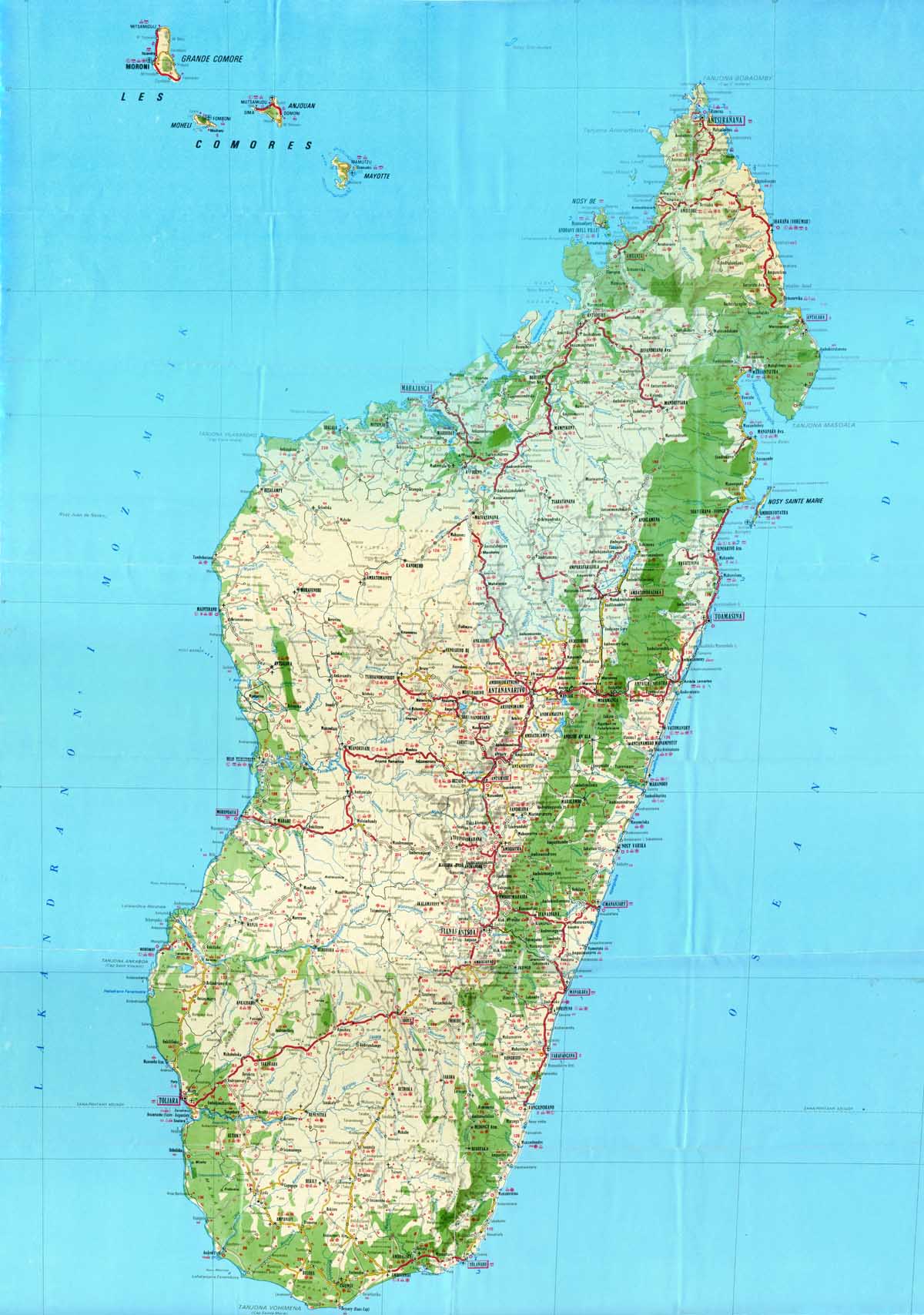
- Madagascar Map
|
-
-
-
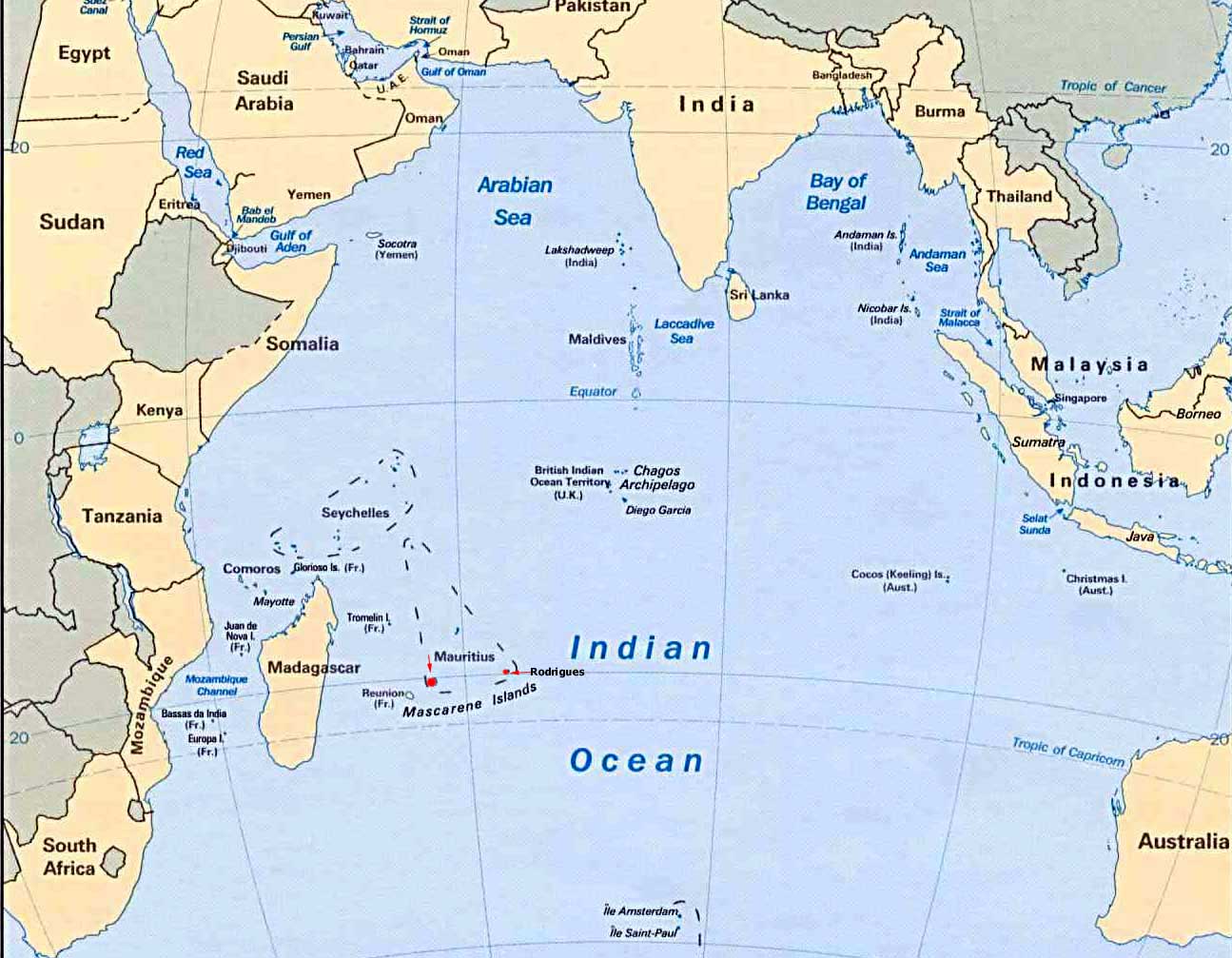
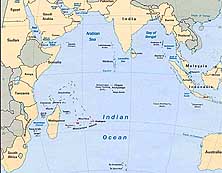
- Map of the Indian Ocean
|
|
-
|
- latest picture: October 17, 2011
|
|
-
-
-
-
|
-
-
|
-
-
-
-
|
- 076
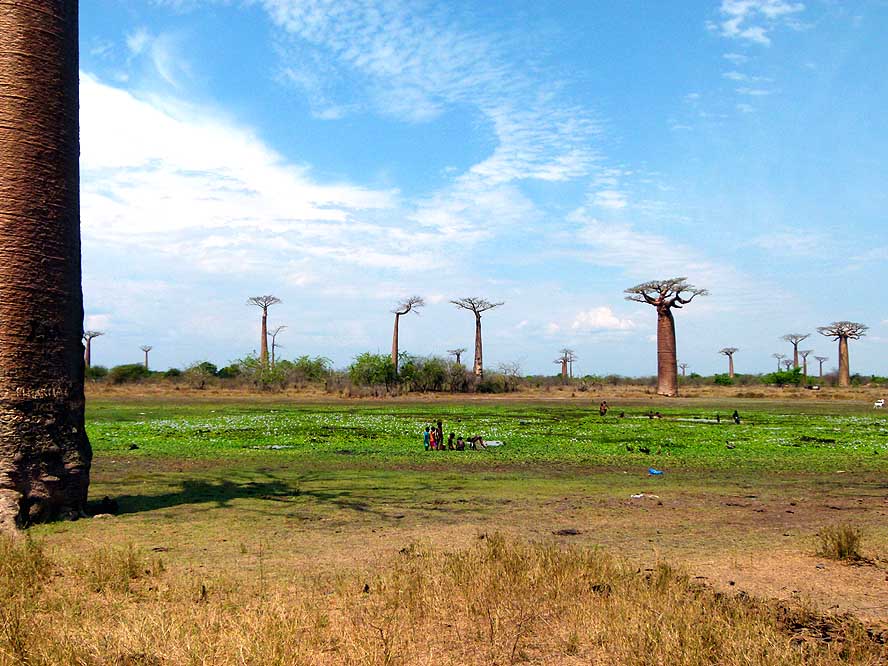
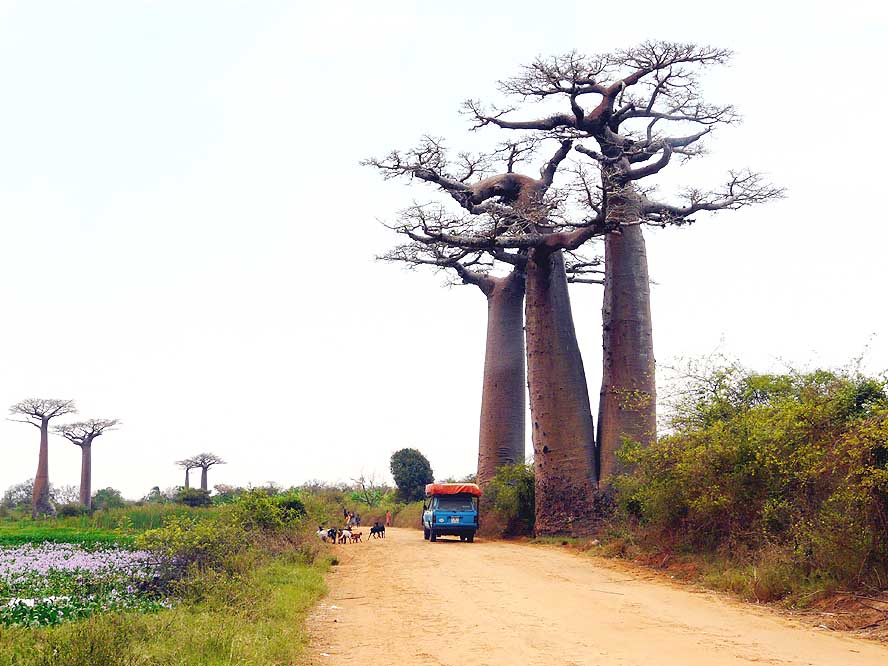
We approach Morondava at the
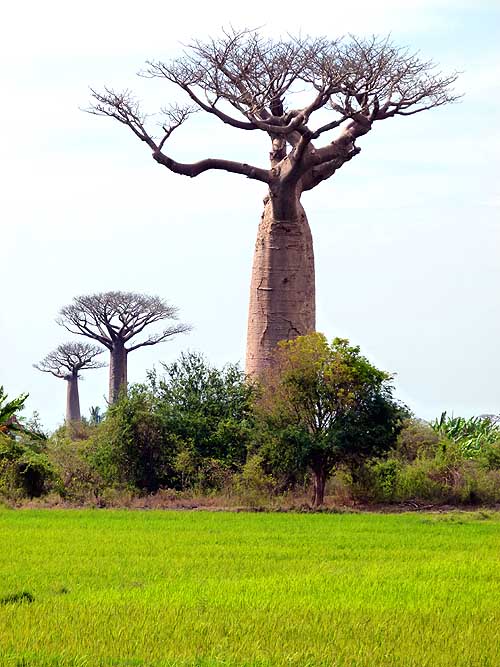
- West coast: Cylindrically shaped Baobab
- trees, also called bottle trees, (Adansonia grandidieri) loom already
on the horizon
|
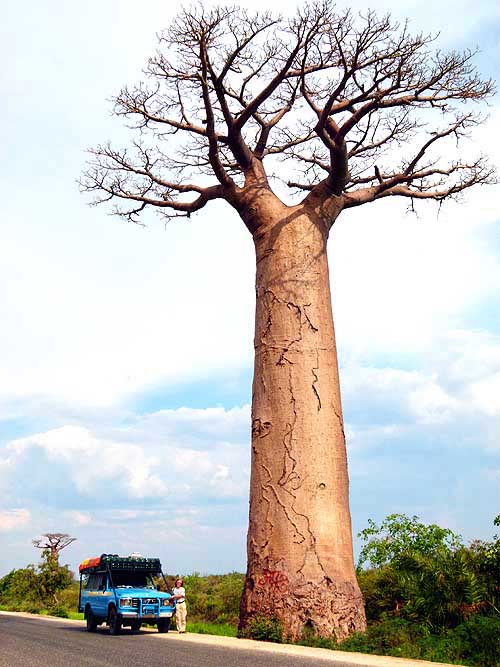
- 077
How insignificant are the almost
- 30 years of our LandCruiser compared
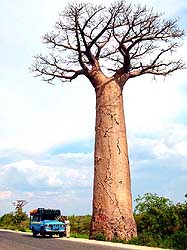
- to the age of this majestic tree. A
- Baobab can get as old as 1’200 years
|
- 078
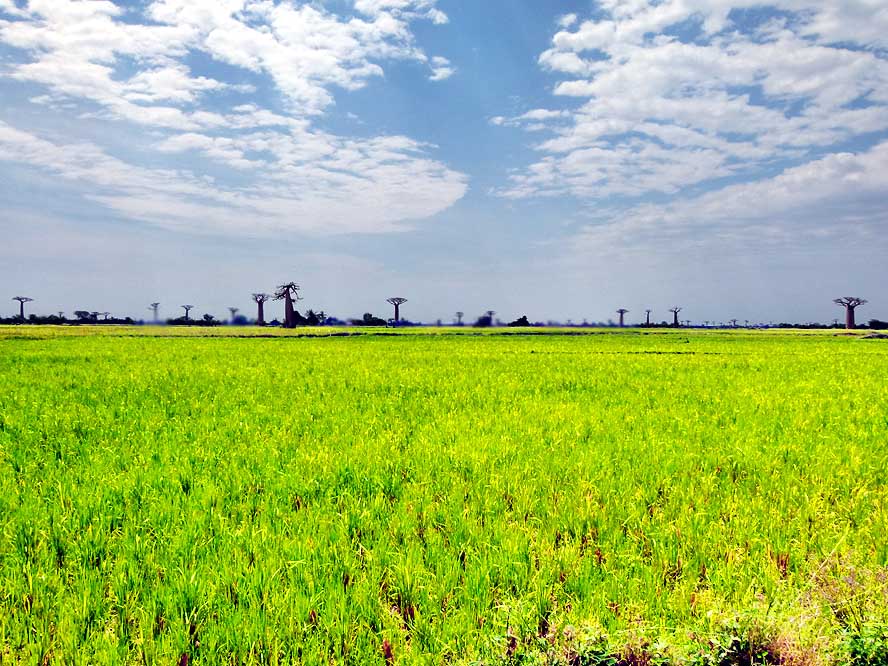
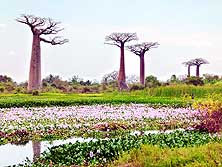
A landscape like off the picture
- book: Blooming hyacinths and Baobabs.
- In Malagasy, the giant tree is called
- “Reniala” (Mother of the Forest)
|
-
- Miandrivazo-Morondava = 160 miles; 6.3 hours
At 8.40am we cleave our way through the already crowded village street back to the main
road. For some miles we follow now the Tsiribihina River with fertile banks. But only a
few hundred meters away from the river, the hills are bone-dry and we drive now for miles
through an arid landscape. It reminds us very much to the African Sahel zone. Herdsmen
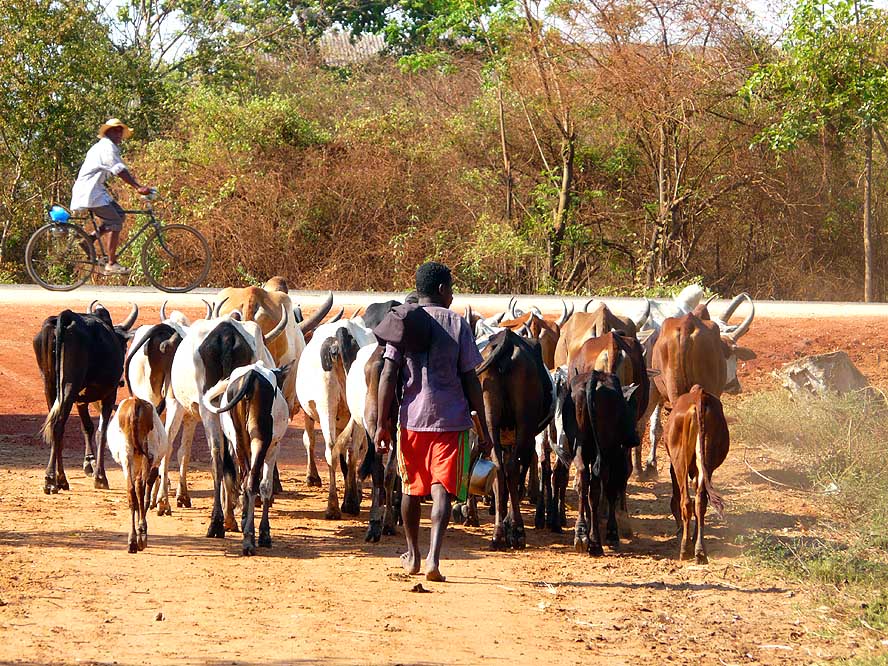
guide their zebus (Malagasy cows) and goats along the street or dried-up river beds. Often
they ask us to fill up their water bottles and thank us with a bright smile. Life is hard
on them.
|
-
-
-
-
|
-
-
|
-
-
-
-
|
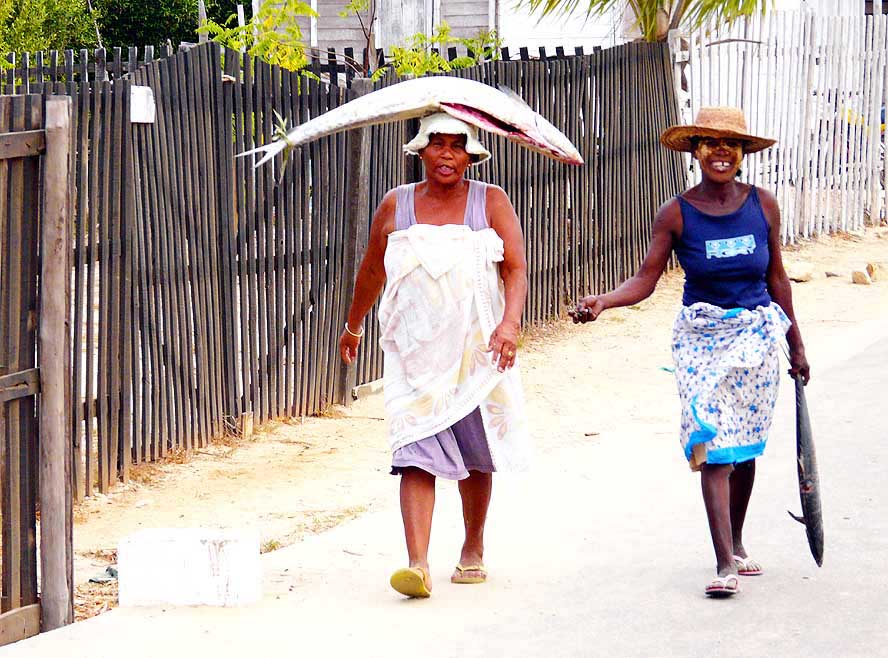
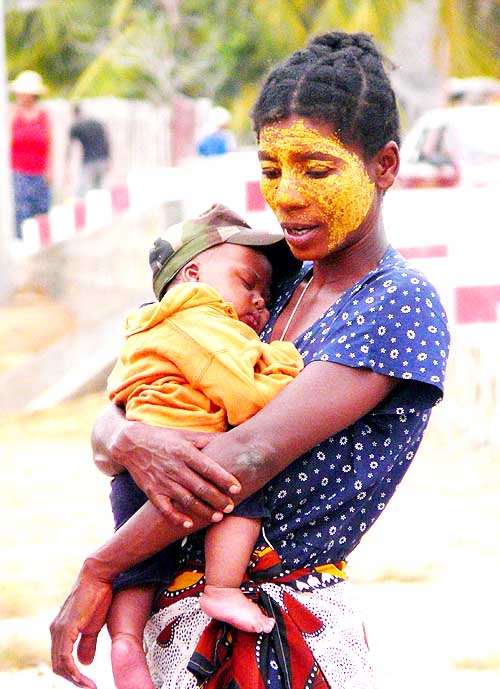
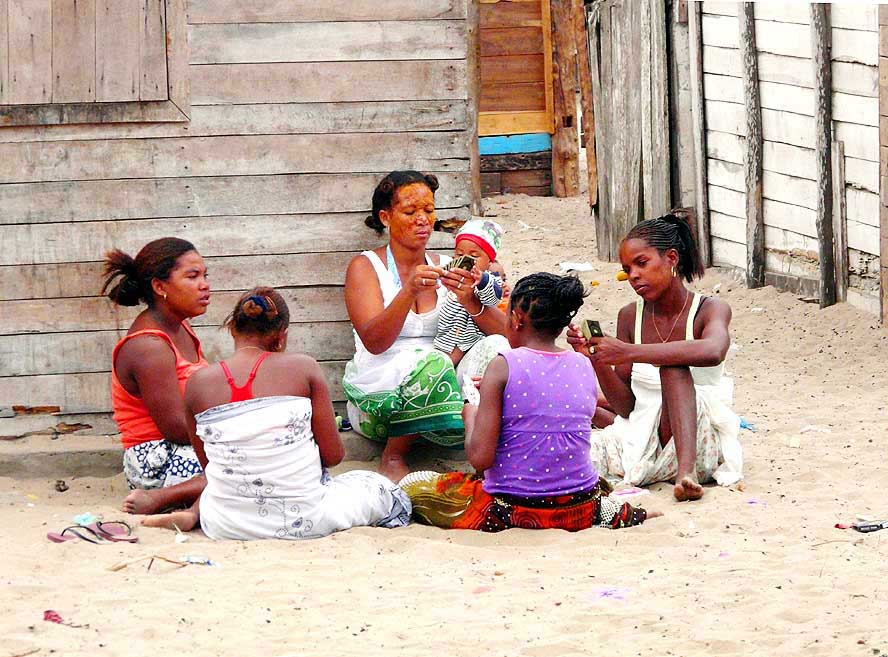
- Village life in Morondava
|
- 079
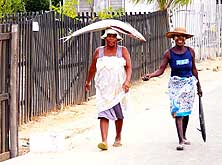
Two women are on their way
- home with a big fish. There is close to
- nothing that is not carried on the head!
|
- 080
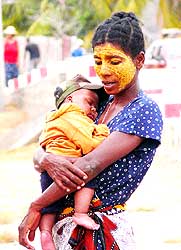
A woman has rubbed her face
- with a paste of the Masonjoany plant.
- This mask protects not only against the
- sun, but is said to clean also the skin
|
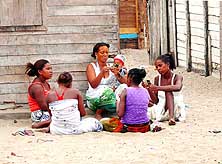
- 081
Playing cards is a popular
- pastime for young and old
|
-
- After an 8 miles long road construction site, we reach Morondava on the West coast
mid-afternoon and check in for the night at the Hotel Renala lying at a wide sandy beach.
Shacks line the sea shore, where people are cooking outside, playing cards or simply
gather and chat. Morondava is the starting point to the place Emil is longing the most
for: The famous Baobab alley.
|
-
-
|
-
-
|
-
-
|
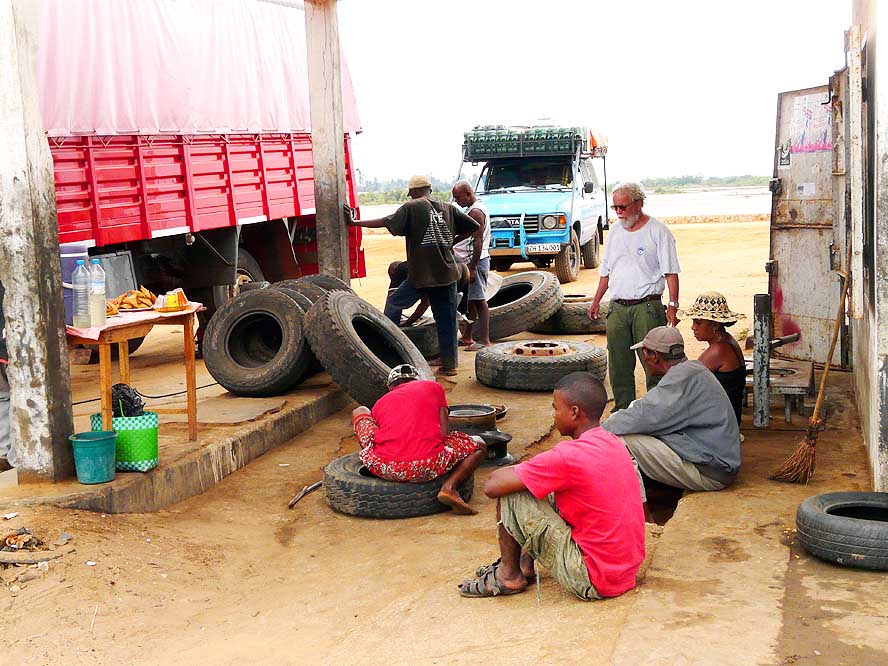
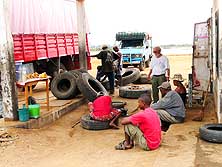
- 082
At the tire works barrack
- in Morondava: The tube cannot
- be repaired anymore.
- We buy a new one for US$15
|
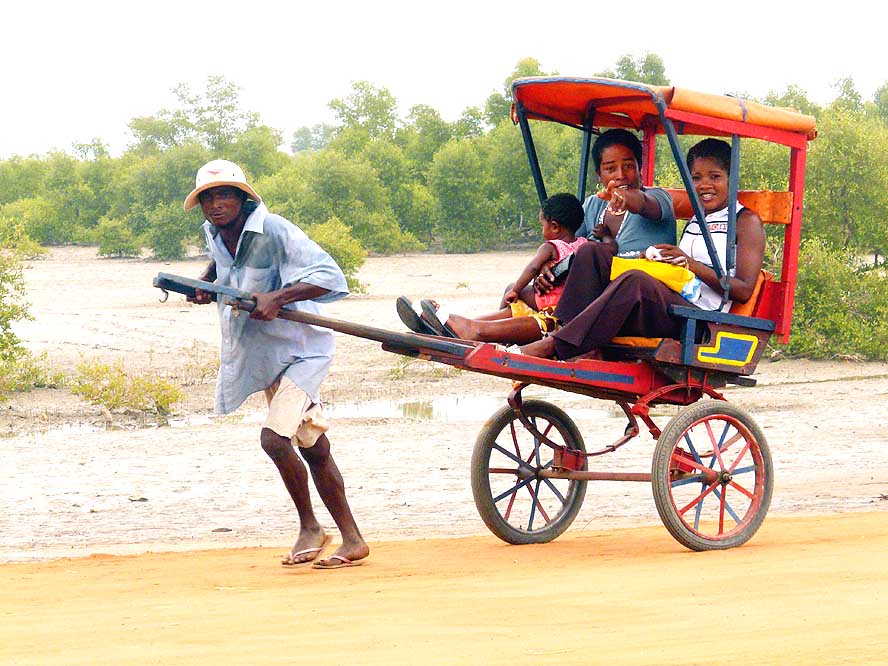
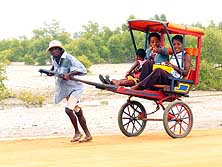
- 083
Hand drawn rickshaws are common
- in Madagascar (in the capital Antananarivo
- all rickshaws are prohibited). We are
- amazed at what speed rickshaw men often
- maneuver bare feet through the traffic
|
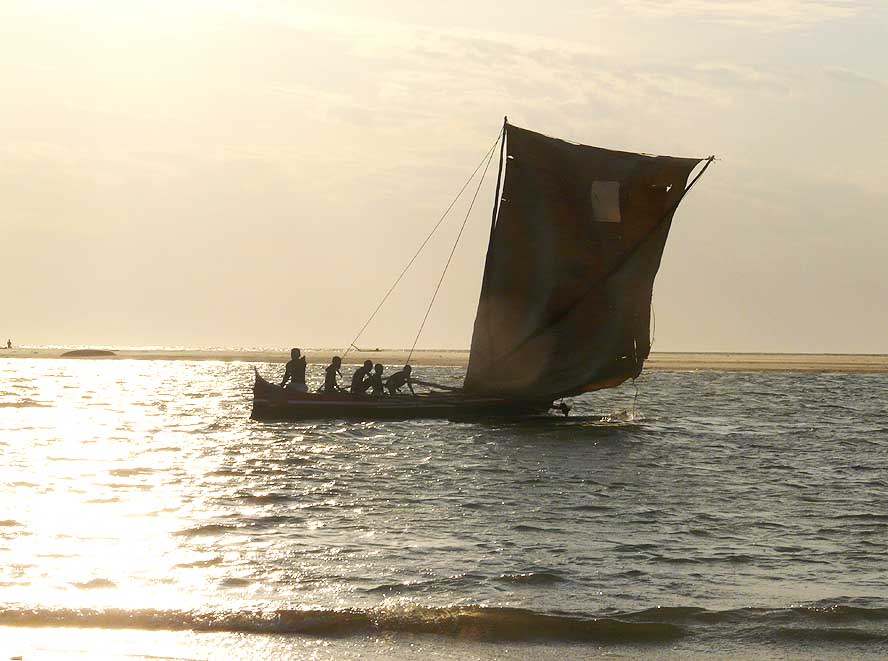
- 084
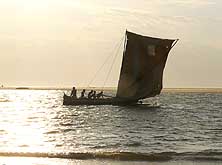
A canoe with set sail glides
- soundlessly over the water
- as the sun sets
|
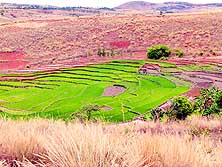
-
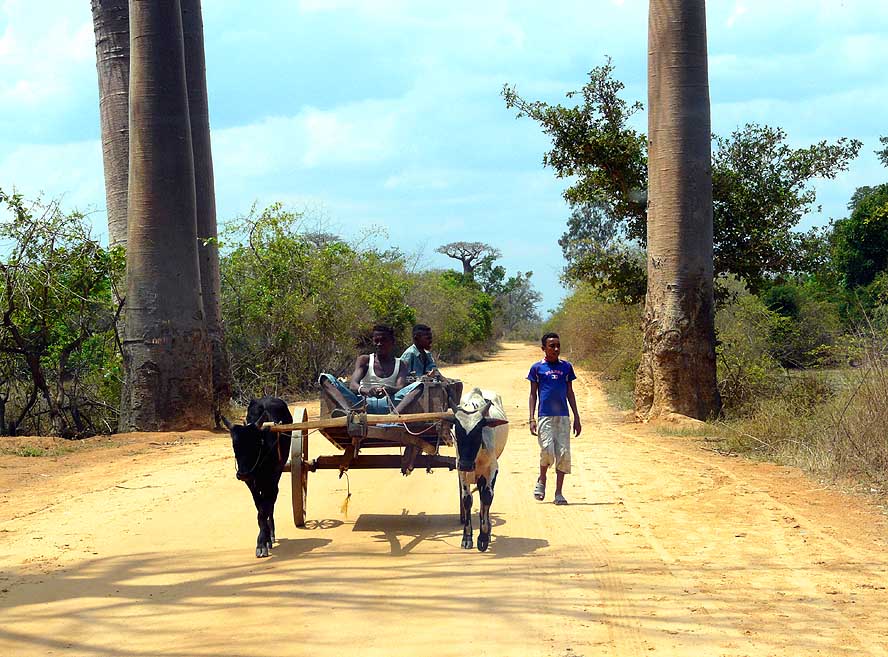
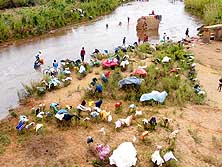
- Next morning we are on our way to it. 8½ miles Northeast of Morondava, we take a dusty
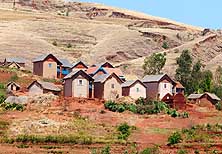
and sandy track – the RN8 – which leads North to the Tsiribihina River through
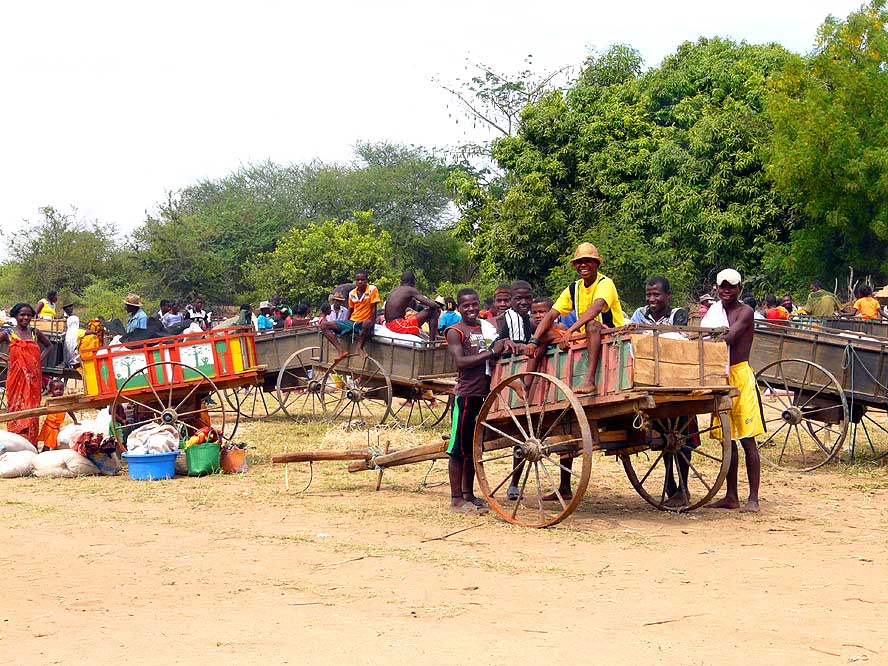
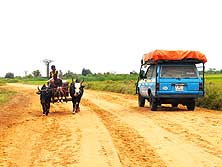
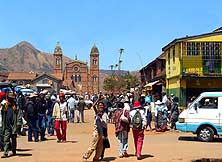
typical African bush. Creaking antique oxcarts, loaded with
people, goods and goats are crossing us unhurriedly. We encounter women with bags, pots
and baskets on their heads walking from somewhere to somewhere. A single cyclist and two
elderly men with a pushcart wave at us. We are the only vehicle. It is a scene like from
another world.
|
-
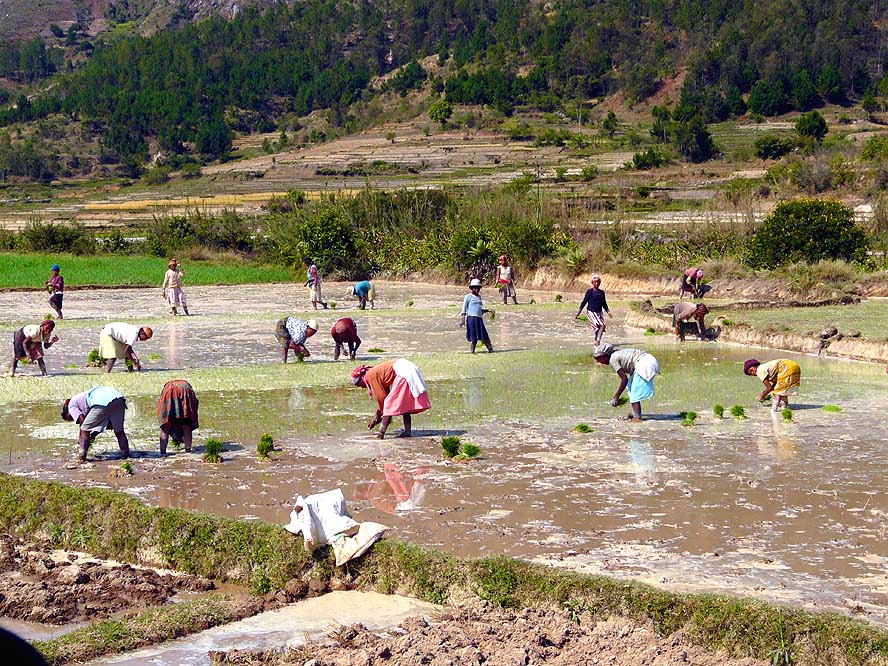
-
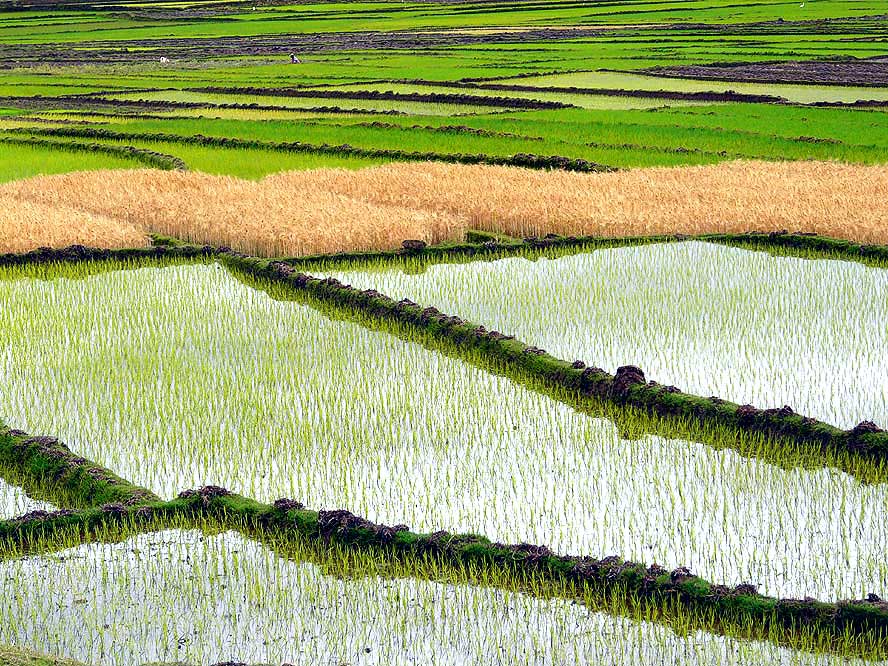
-
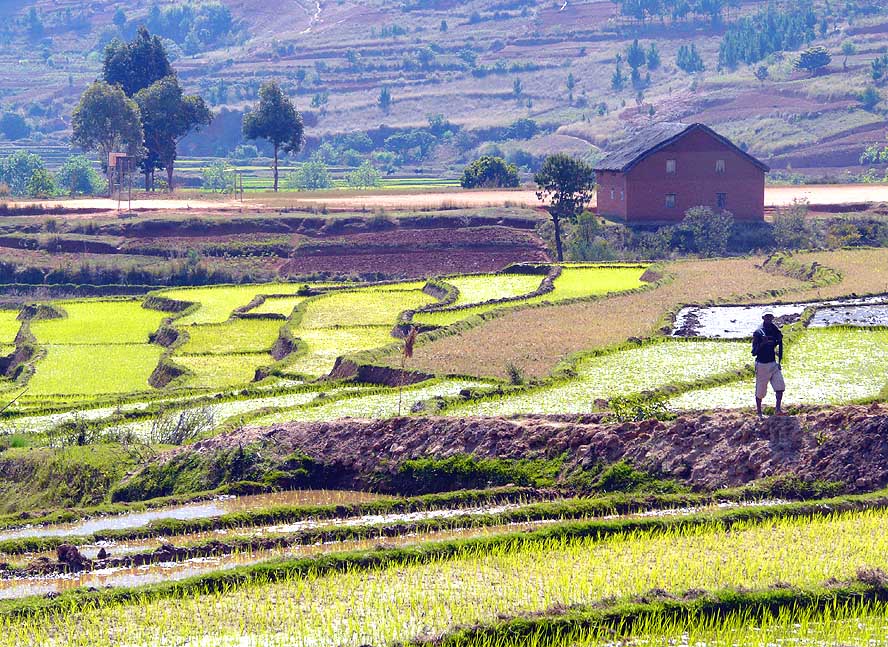
-
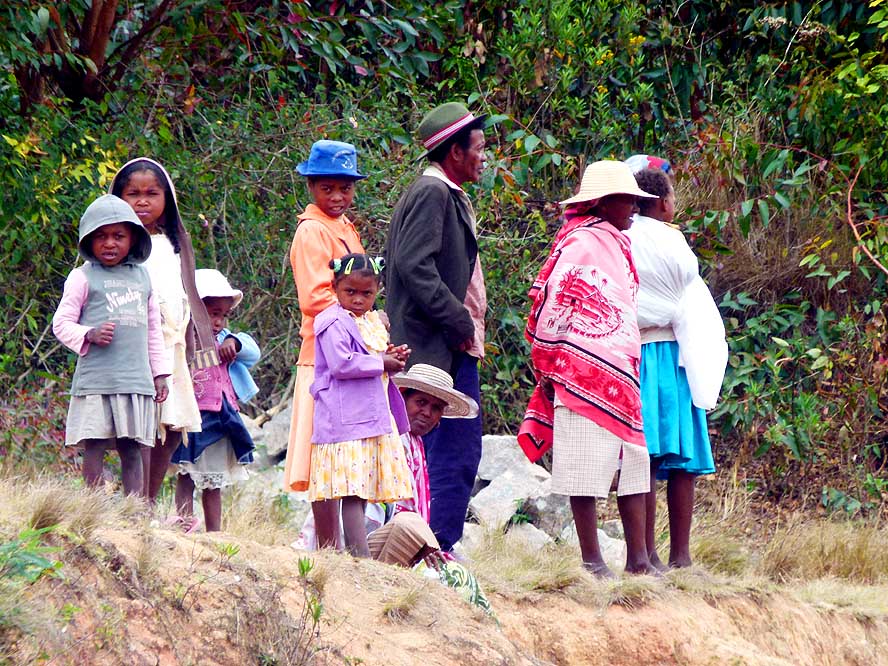
|
-
-
|
-
-
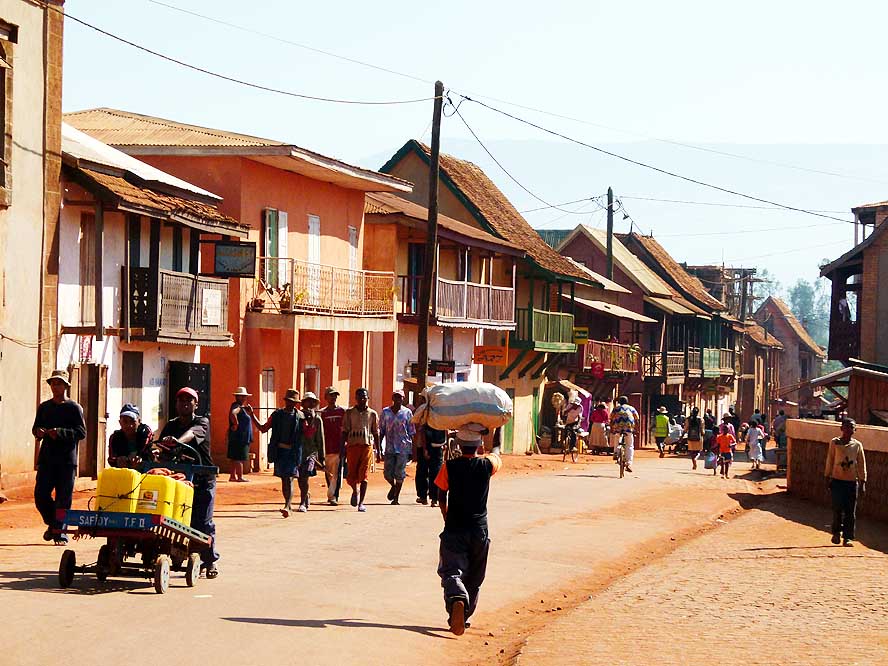
-
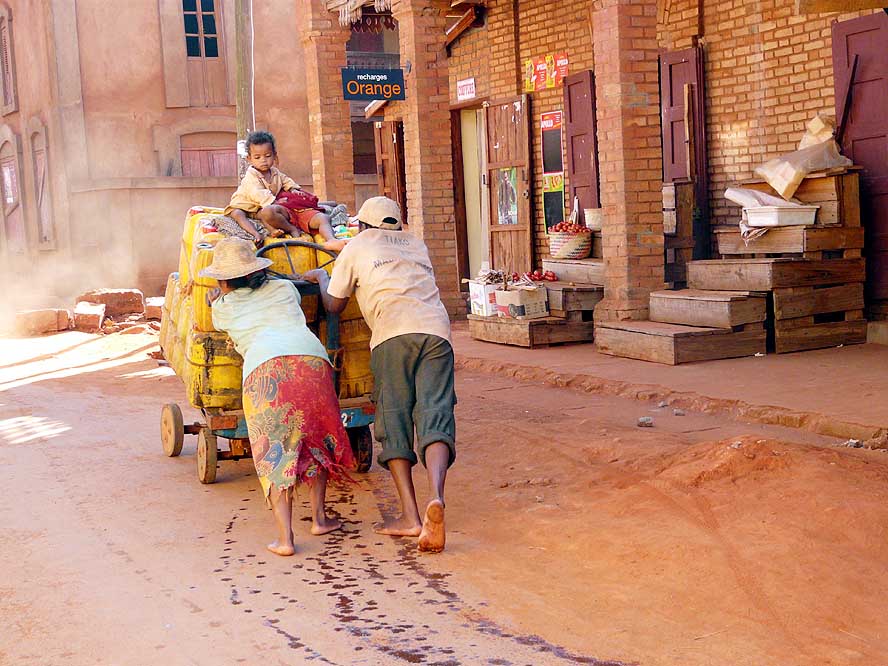
-
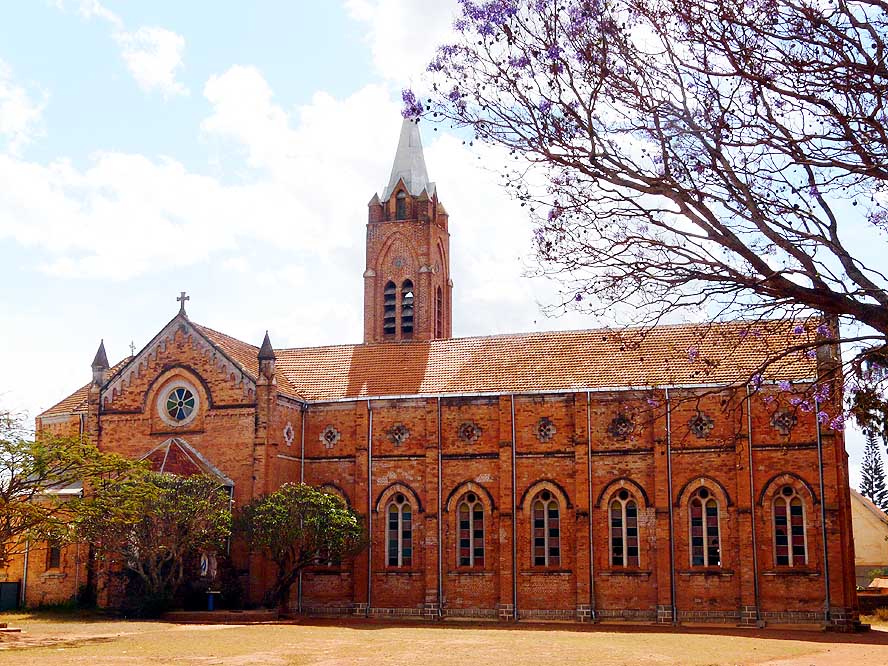
|
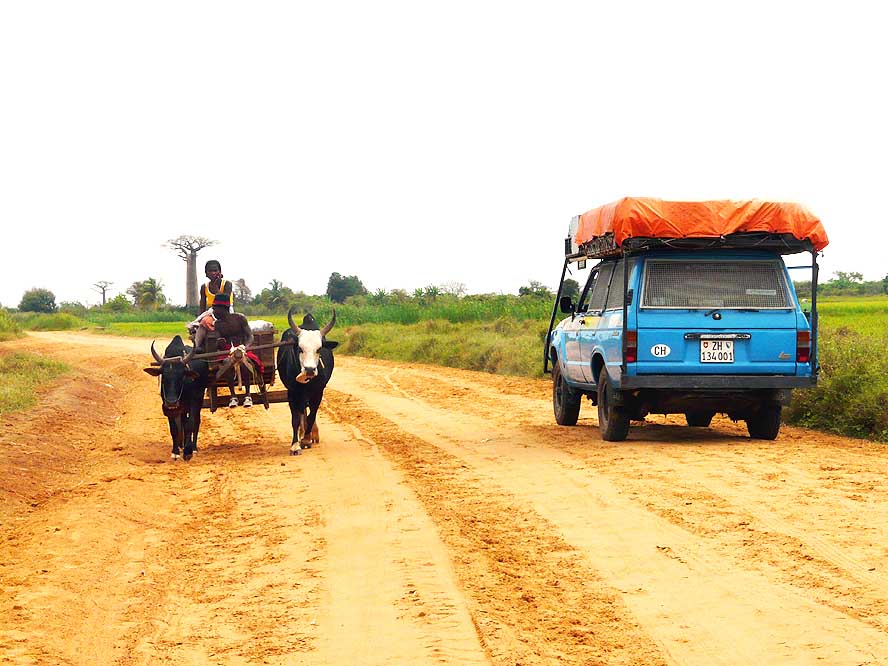
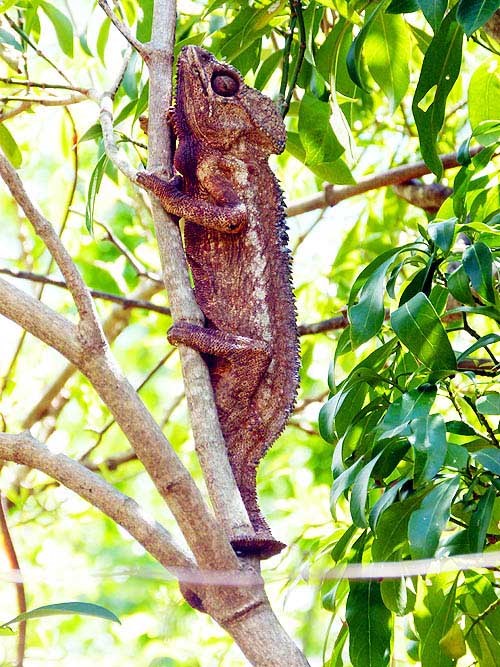
- 085
Crossing of two “antique”
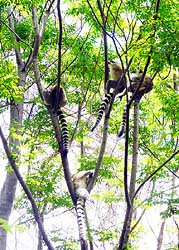
- means of transport on the way to
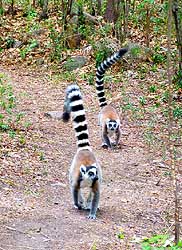
- the baobab alley near Morondava
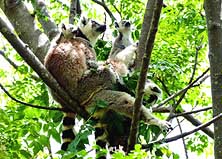
|
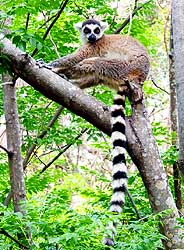
- 086
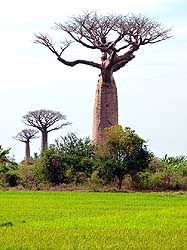
Baobabs near Morondava (about
- 10 miles North): Every part of the baobab
- is useful: Its bark is used for roofs, its
- fiber for ropes and its fruit is edible
|
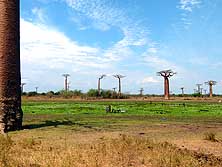
- 087
In the region around Morondava
- often dozens of these giant baobab
- trees pop up on the horizon
|
-
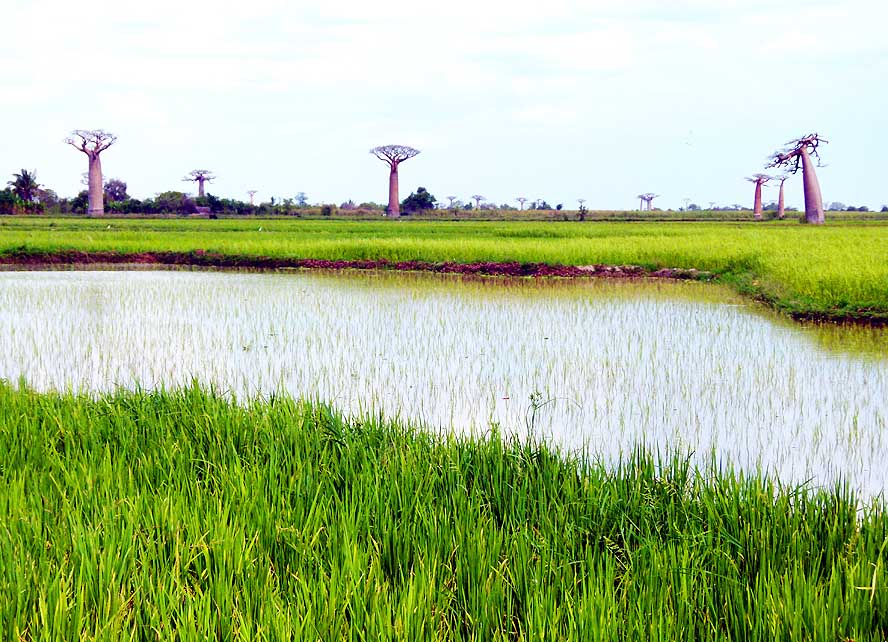
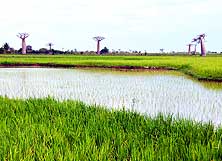
- All of a sudden the first groups of the cylindrically shaped Baobab come into view. Some
are framed by newly planted lush paddies, some by a compact carpet of flowering lilac
water hyacinths – it always is a very beautiful sight. But these are only the
“forerunners” of the majestic Baobab alley with its trees, which can get as old
as 1’200 years.
|
-
-
|
-
-
|
-
-
|
- 088
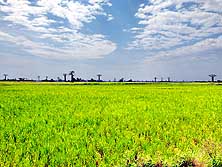
Behind a newly planted rice paddy
- a new “forest” of Baobab is looming
|
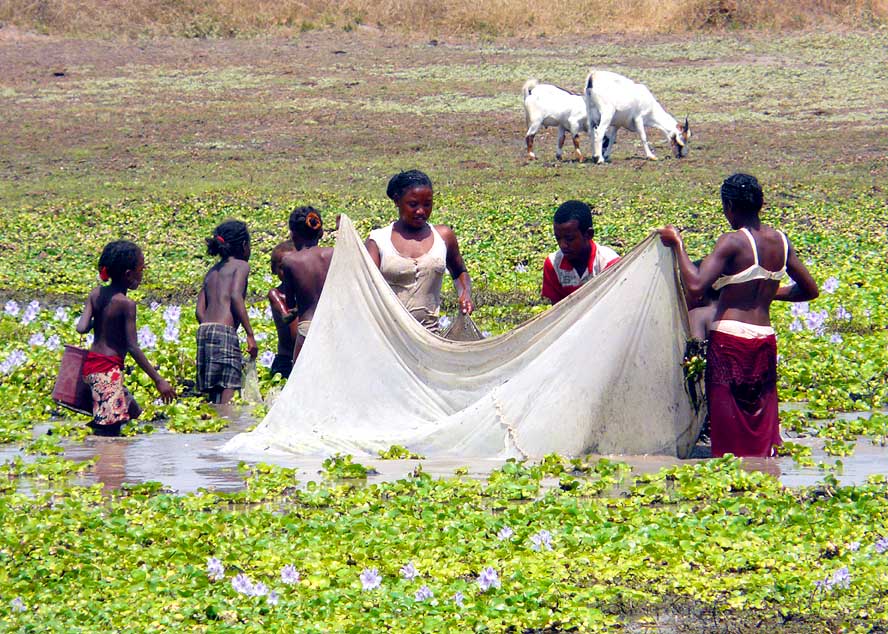
- 089
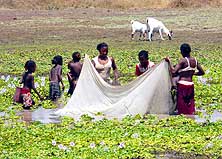
Looking for fish in the swamps?
|
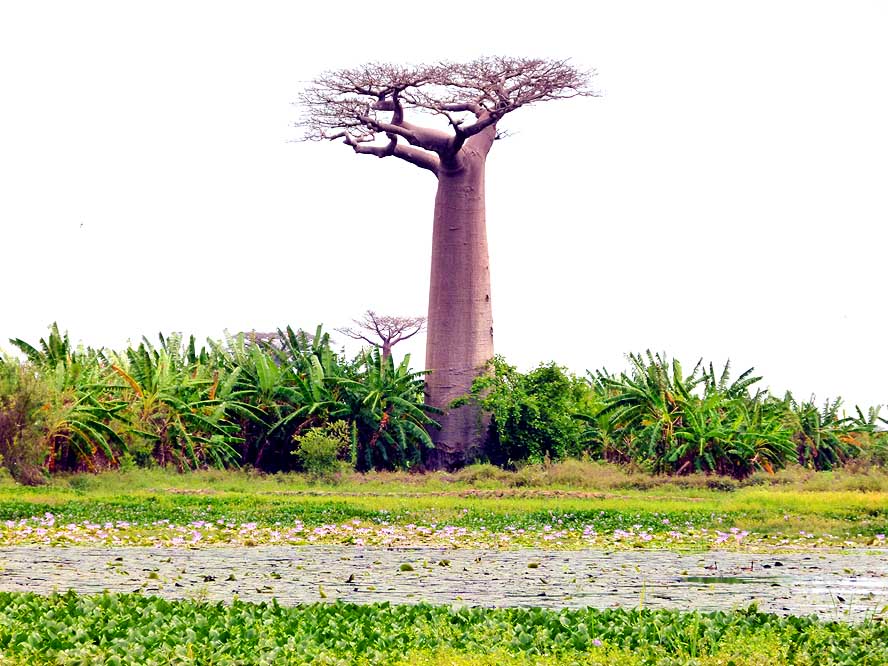
- 090
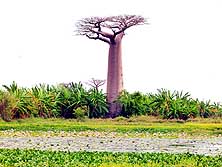
A giant baobab surrounded by
- banana bushes and water hyacinths
|
-
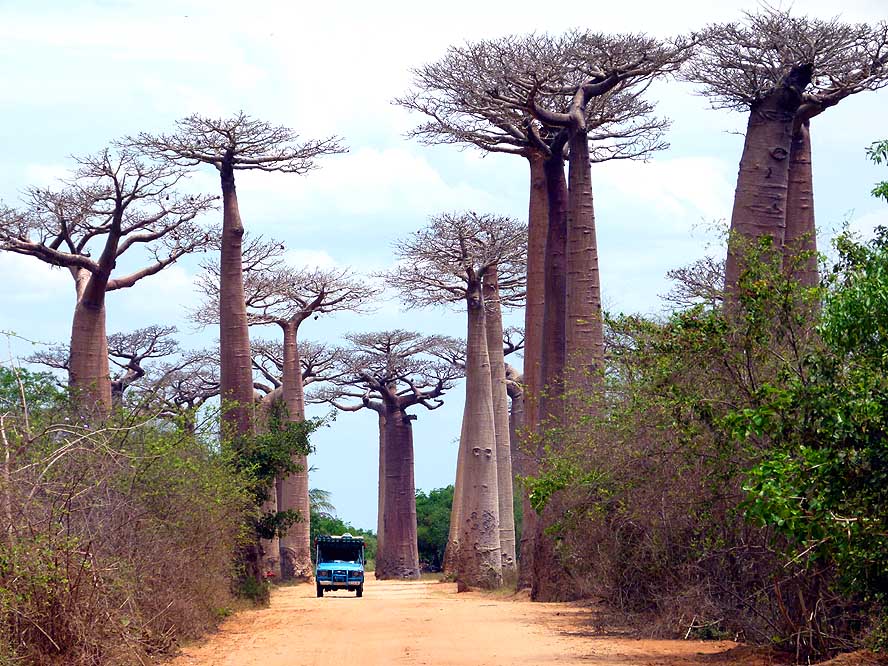
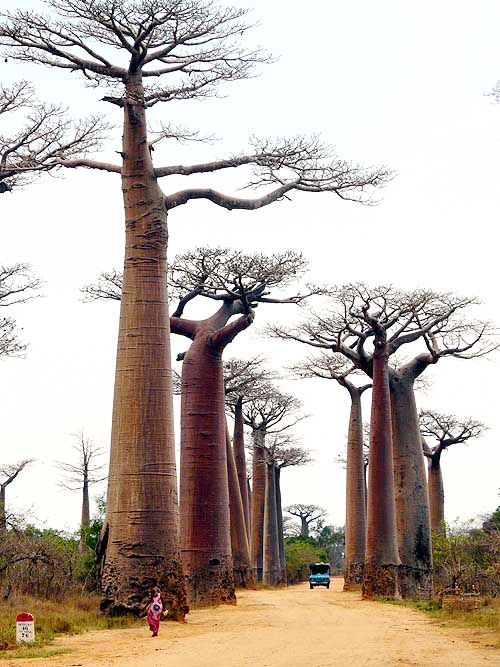
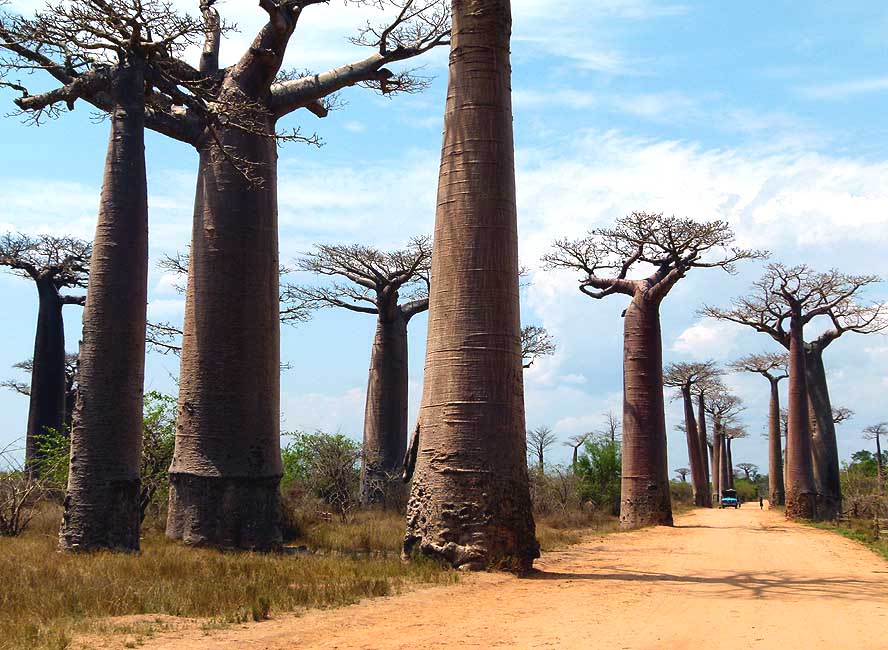
- When they are appearing in front of us, it’s really a “wow”-experience.
In Malagasy language, this giant Baobab is called “Renala” – mother of the
forest. “The souls of the ancestors live in this tree and protect us” people
tell us. Every part of the Baobab is useful: Its bark is used for building roofs, its
fiber for ropes, its pits produce oil and the fruit is edible. There are about 25 65-80
ft. tall trees along an 850 ft. long stretch down the track, with another 25 standing in
the surrounding meadows; its circumference is up to 33 ft. respectively 10 ft. wide. Like
the lemurs the Baobabs are also marked on the red list as an endangered species – which
doesn’t mean much in Madagascar.
|
-
-
-
-
|
-
-
|
-
-
-
-
|
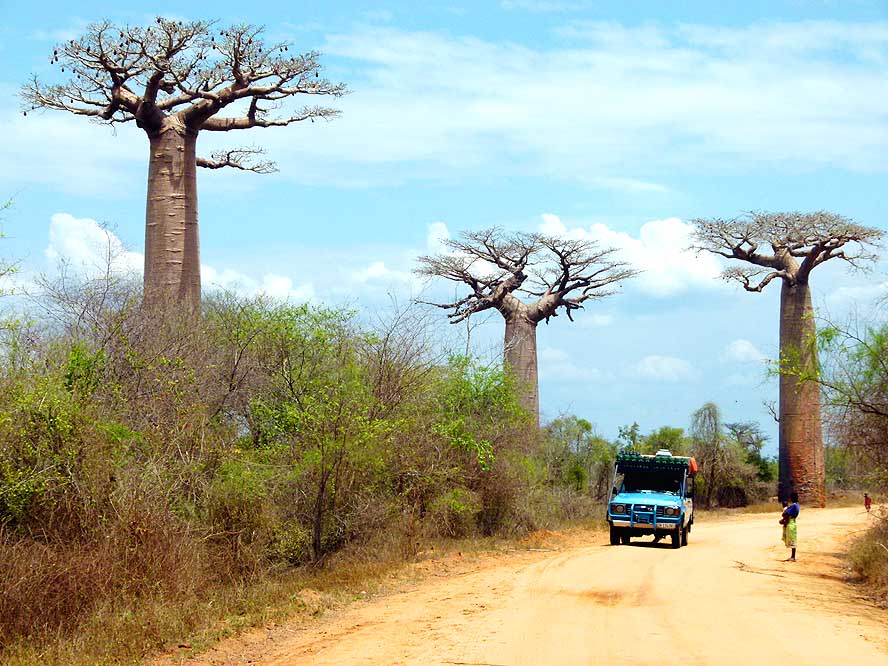
- 091
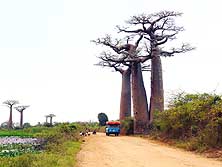
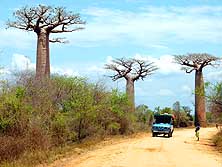
We are coming closer to the center
- of the Baobabs near Morondava: Our
- LandCruiser rolls past the first giants
|
- 092
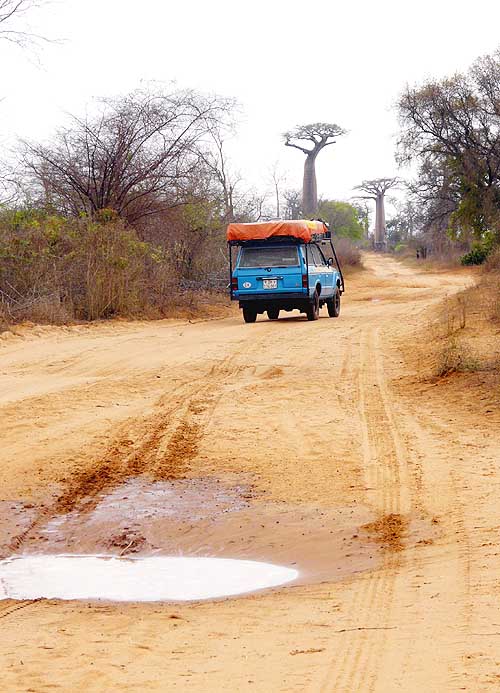
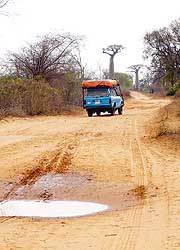
The access to the famous
- Baobab alley near Morondava
- leads through typical African bush
|
- 093
These giant trees are so impressive
- that again and again we are tempted
- to take a picture
|
-
- People, who are sitting right across in front of their primitive huts cooking a meal on
their fireplace, miraculously leave us in peace also here, also when we set up our camping
table in the middle of the road – due to the lack of a tripod – to make a
picture with the self-timer. Not even children come hurrying along. In this quiet corner
it seems to be (still) unspoiled land. However, along the main tourist path in the South
it is a different thing. Begging children asking for bonbons, biscuits, T-shirts and money
are never far away.
|
-
-
|
-
-
|
-
-
|
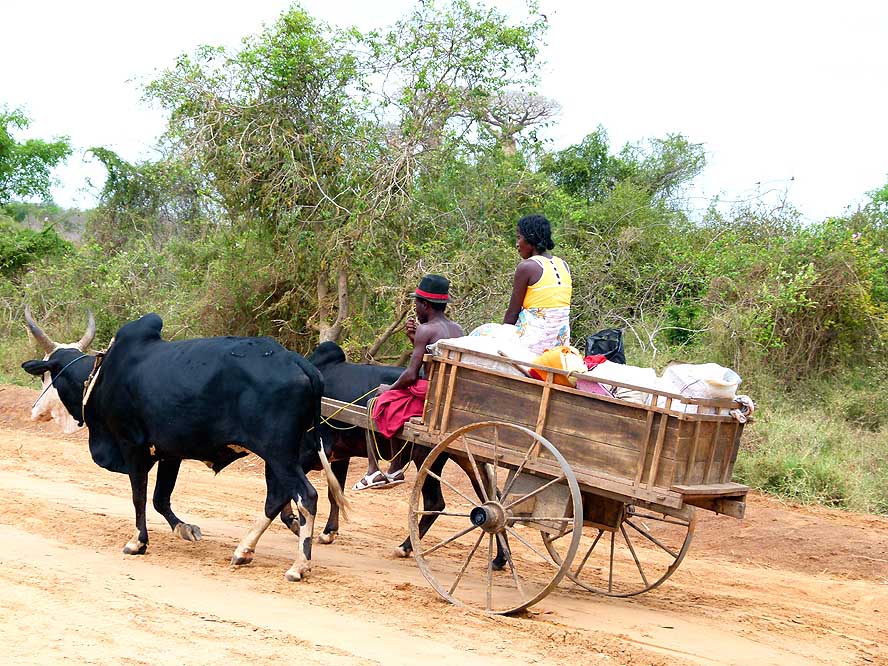
- 094
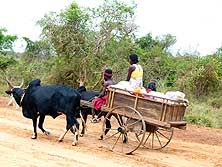
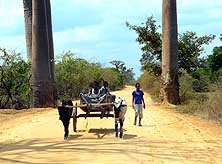
There is no car traffic. Our encounters
- on the lonely dusty sand track are an oxcart
- on its way to the village …..
|
- 095
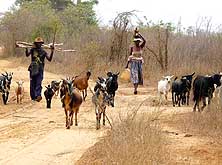
.…. a herdsman with his wife,
- his dog and his goats …..
|
- 096
….. and another oxcart
|
-
|
-
-
-
-
|
-
-
|
-
-
-
-
|
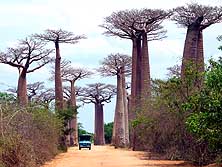
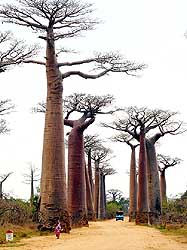
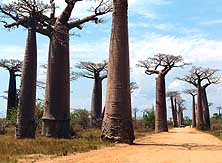
- The famous baobab alley near Morondava
|
- The belief of the Malagasy people is that their ancestor’s souls live in this tree
and protect them
|
- 097
|
- 098
|
- 099
|
-
- Richer by a beautiful experience, we leave Morondava next morning at 9am and drive East
again – on the same route we came, with the same two tiring transit legs and with the
same sticky night in Miandrivazo and the following freezing one in Antsirabe. There is
only this East-West-Connection. The direct road via Ambatofinandrahana to Ambositra is
interrupted since a long time. It has anyway little traffic, hence our road has to be
sufficient for the people. We are blessed with a blue sky and it is a pleasure to roll
through the highland with its golden shining grass and scattered mountain villages and
browsing through the little markets on the way.
|
-
-
|
-
-
|
-
-
|
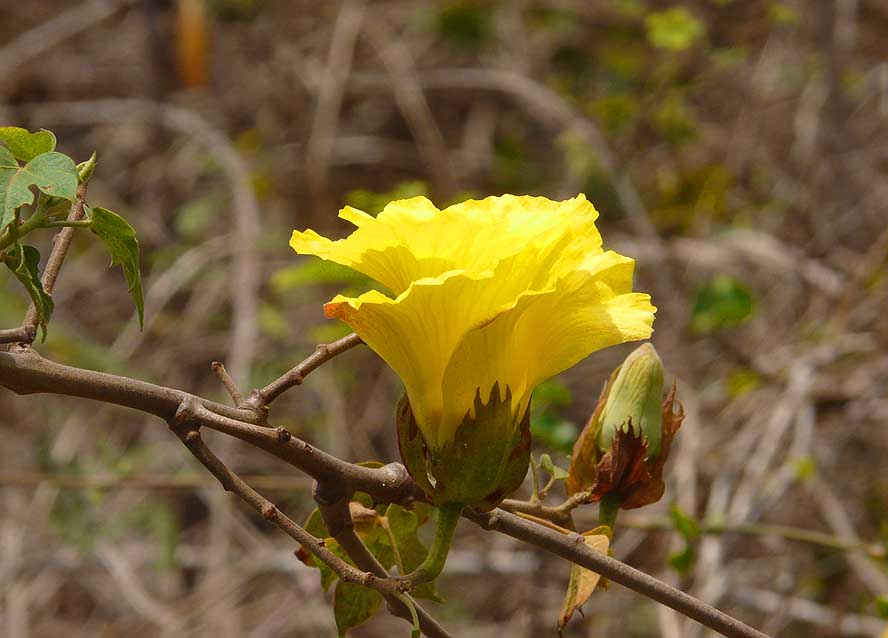
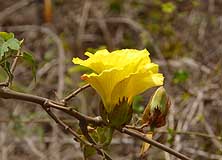
- 100
On the dry bushes miraculously
- bright yellow flowers are blooming
|
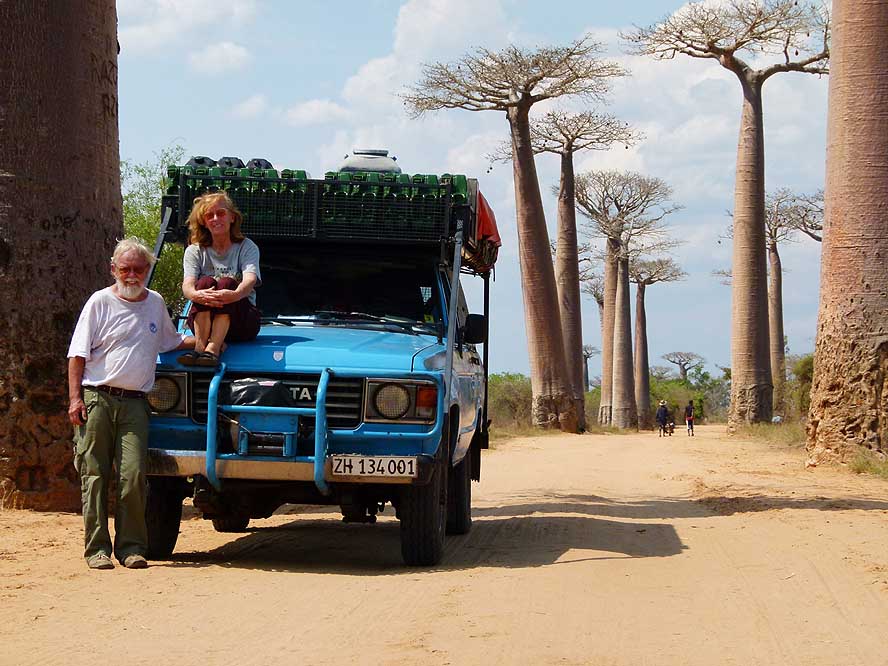
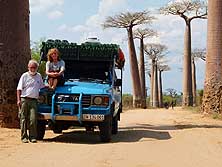
- 101
The three of us pose for a picture at
- the famous Baobab Alley near Morondava
|
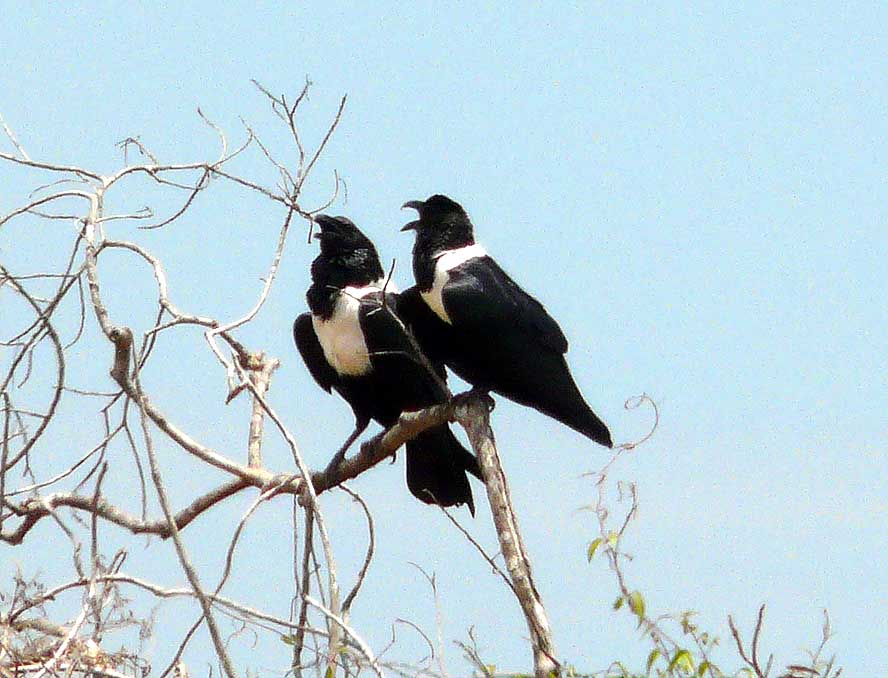
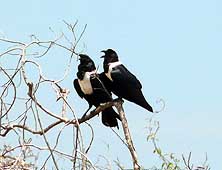
- 102
Two Madagascar pied crows
- (Corvus albus) croak in complete harmony
|
-
|
-
-
|
-
-
|
-
-
|
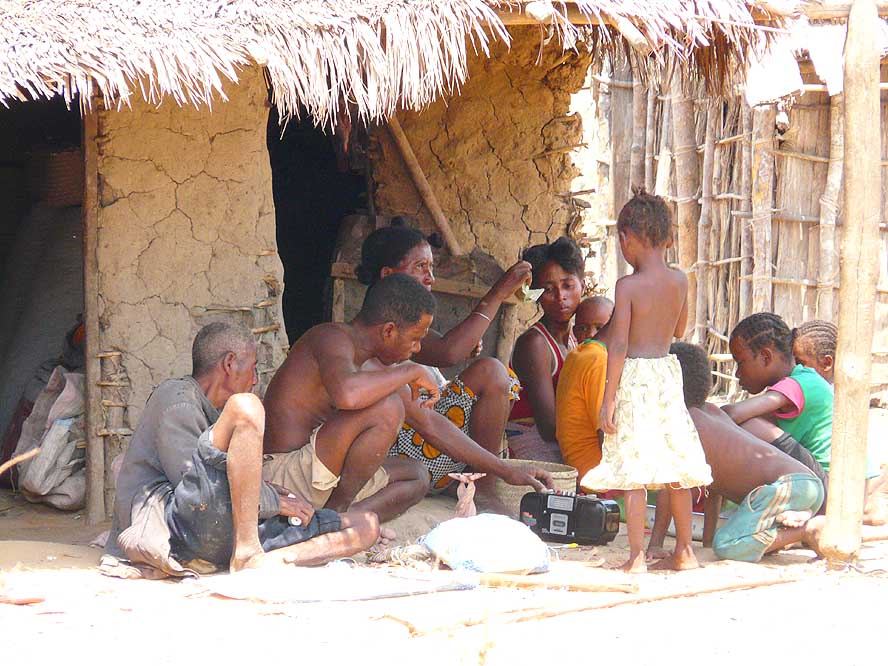
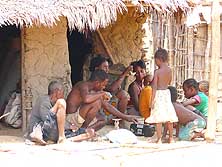
- 103
A family is sitting in front of their
- bush hut, gathering around a radio
|
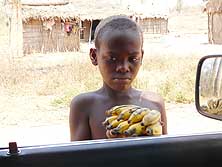
- 104
The little boy asks us shyly to
- buy bananas. Who can say no?
|
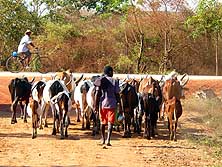
- 105
Zebu’s are flocking to
- a new grazing area
|
-
- Thereby we always hope just one thing: To reach our next target without any break-down
still by daylight. Again and again we are warned by locals not to drive at night. At
least, our only spare tire is on standby again. The tube was torn beyond repair, but in
Morondava we found new ones for US$ 14 a piece and bought two of them.
|
-
-
|
-
-
-
-
|
-
-
|
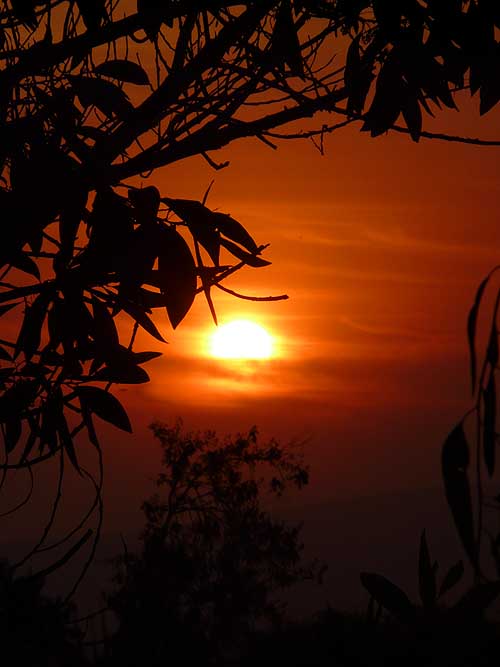
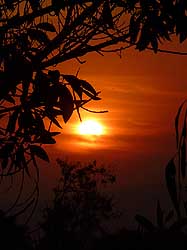
- 106
In Miandrivazo, said to be the
- hottest place in Madagascar, the sun
- is setting with a beautiful red glow
|
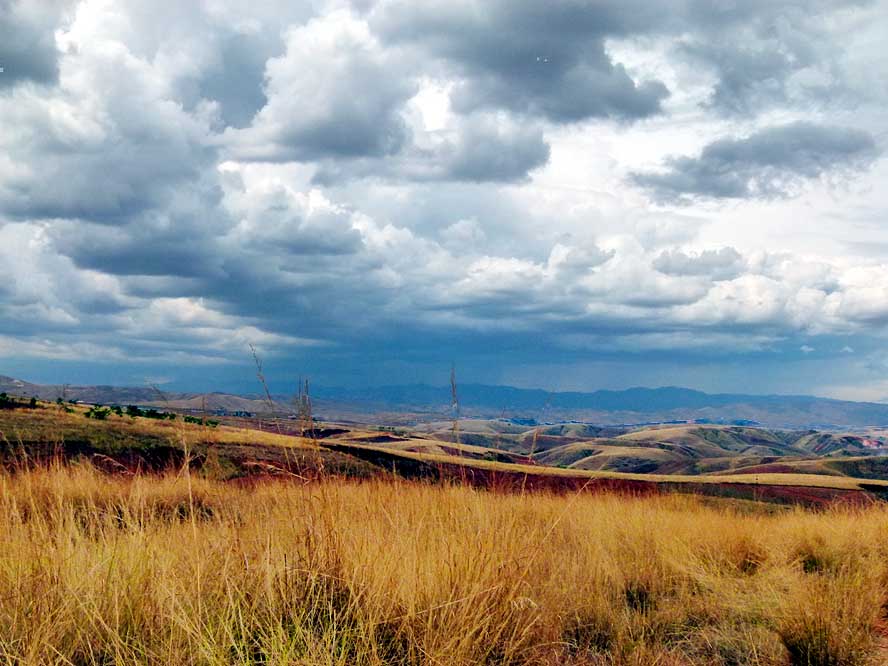
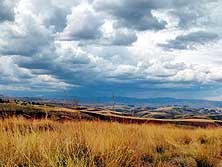
- 107
On the RN 34 between Miandrivazo
- and Antsirabe we drive through a hilly
- highland covered with golden shining grass
|
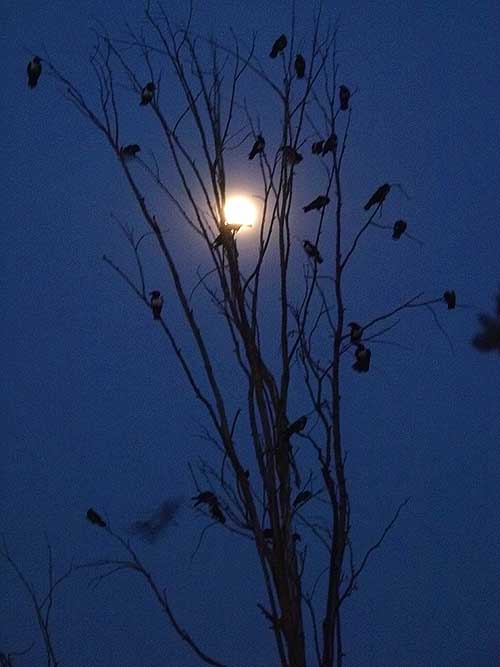
- 108
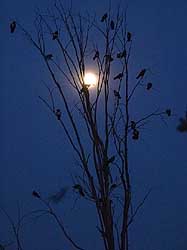
The moon is rising beautifully
- and serene behind a tree where
- birds settled down for the night
|
-
|
-
-
|
-
-
|
-
-
|
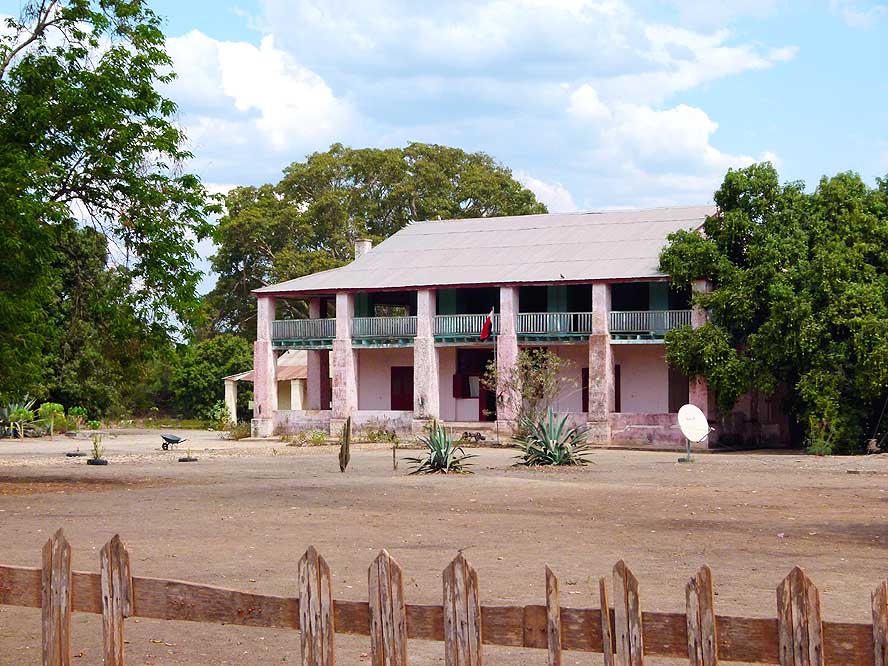
- 109
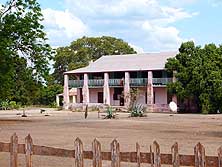
A home from the colonial French
- time in Analaivo before Morondava.
- Remaining from that era are also the
- French language, the fresh baguettes, the
- cheese boxes “La Vache Qui Rit”, the ball
- game “Pétanque” and the liqueur “Pastis”
|
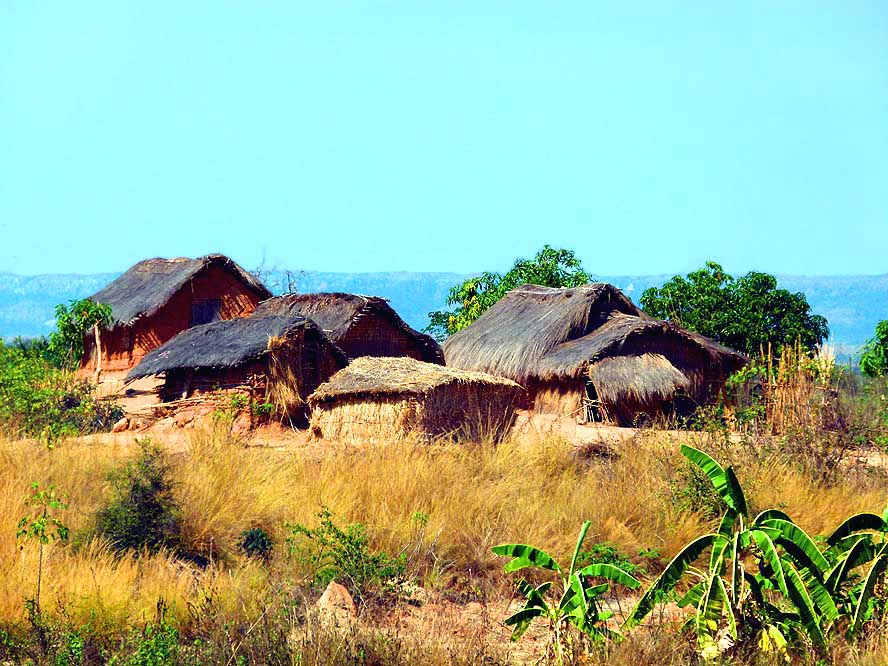
- 110
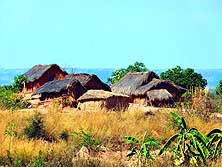
People in the hot coastal areas
- live in simple airy straw huts. The
- “kitchen” is always outside. Most of
- the life takes place anyway outdoor
|
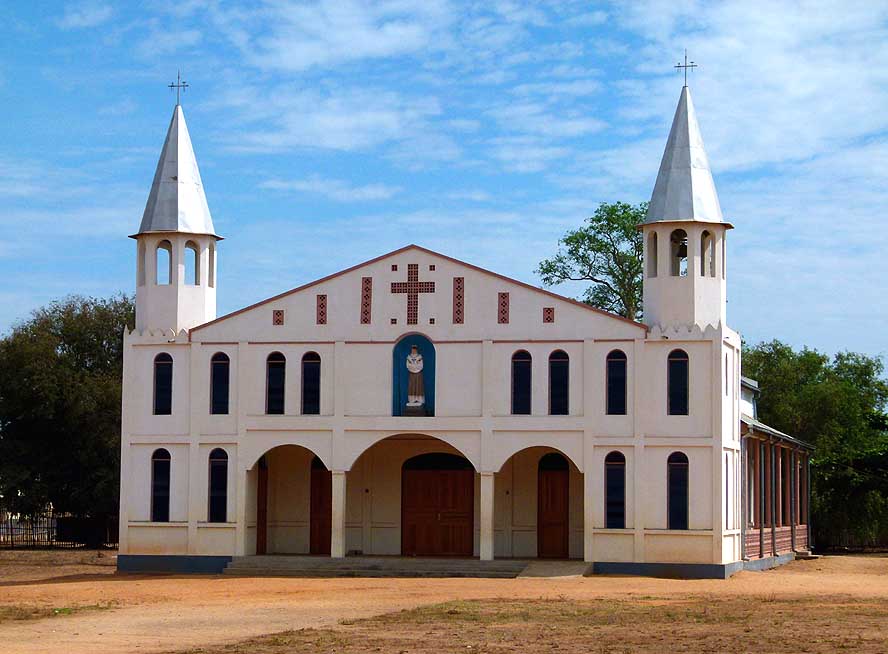
- 111
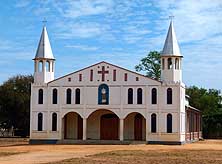
A Catholic church built in a
- modern architecture – here in Mahabo
- – is rather seldom in Madagascar. The
- old traditional architecture prevails
|
-
- Antsirabe-Fianarantsoa = 144 miles; 7.4 hours
In Antsirabe it’s pouring down buckets when we arrive. We check into a modest
guesthouse and due to the persistent rain leave our room only next morning at 8am. From
here we will hit new land again. We take the important North-South route RN7 towards the
South through the highland of the Betsileo, the third biggest island tribe with its
artfully laid out rice terraces. Their planting skills allow three harvest a year instead
of only two.
|
-
-
|
-
-
|
-
-
|
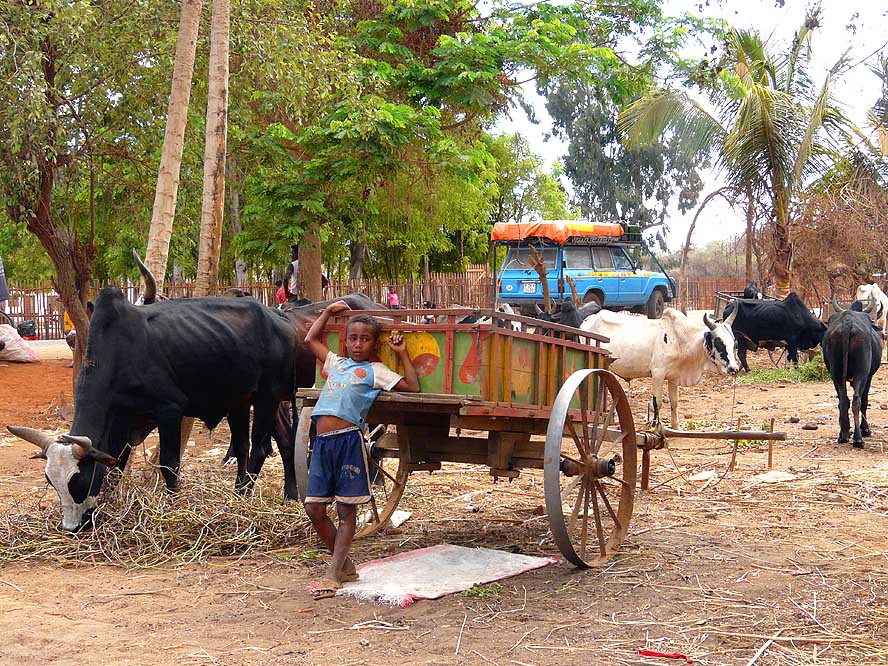
- 112
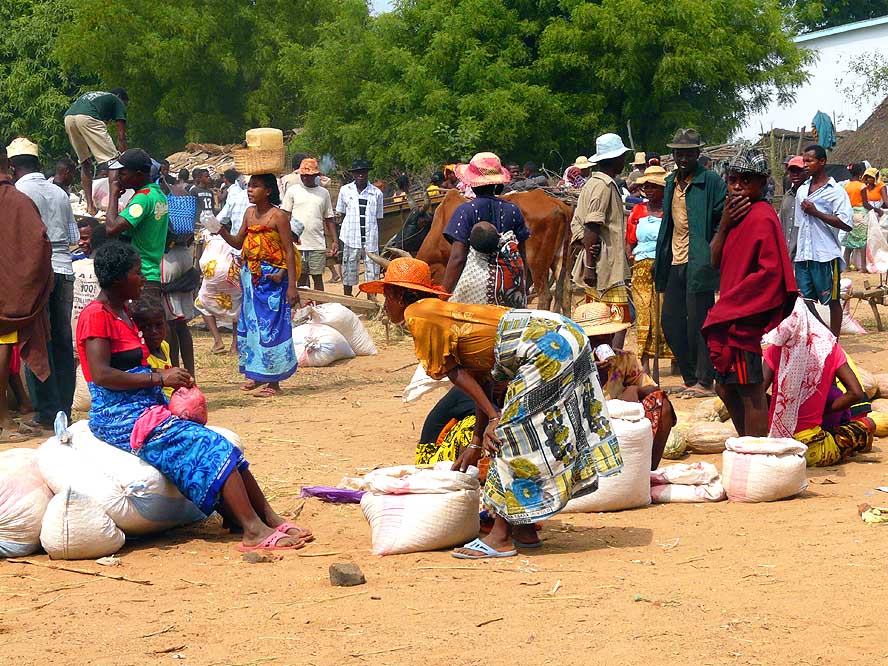
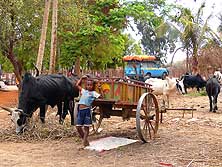
We stop at the village market in
- Mahabo besides the parking place of the
- oxcarts that carried the goods to the market
|
- 113
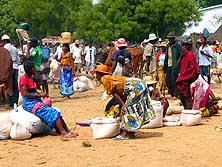
Trading and bargaining is going
- on at the market square. But it
- is also a place for socializing
|
- 114
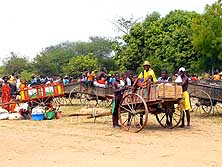
Everywhere smiling faces: Waiting
- for the market to end in Mahabo
|
-
|
-
-
|
-
-
|
-
-
|
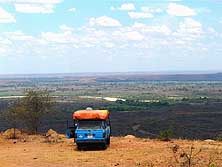
- 115
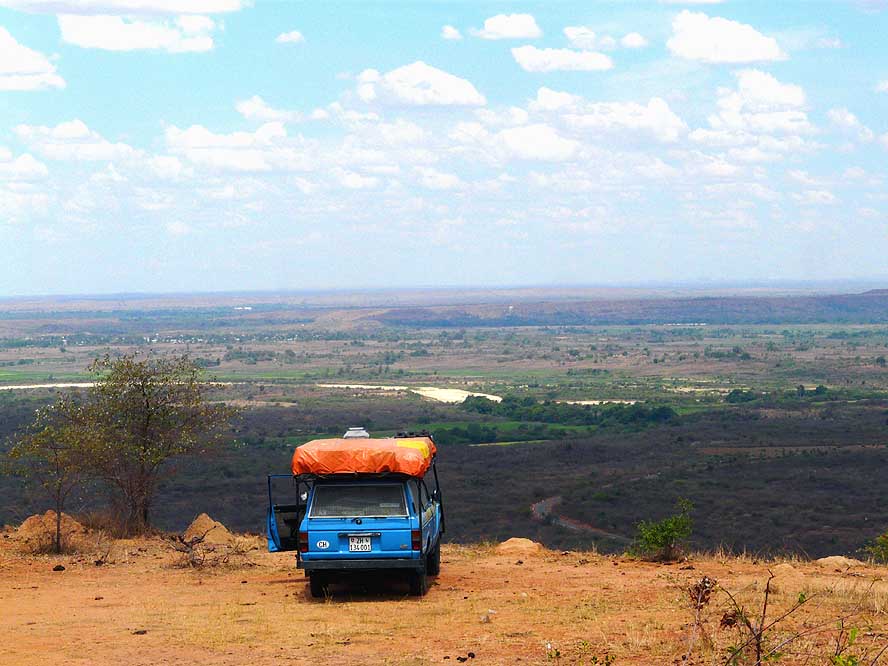
A viewpoint between Malaimbandy
- and Morondava is just perfect
- for our picnic
|
- 116
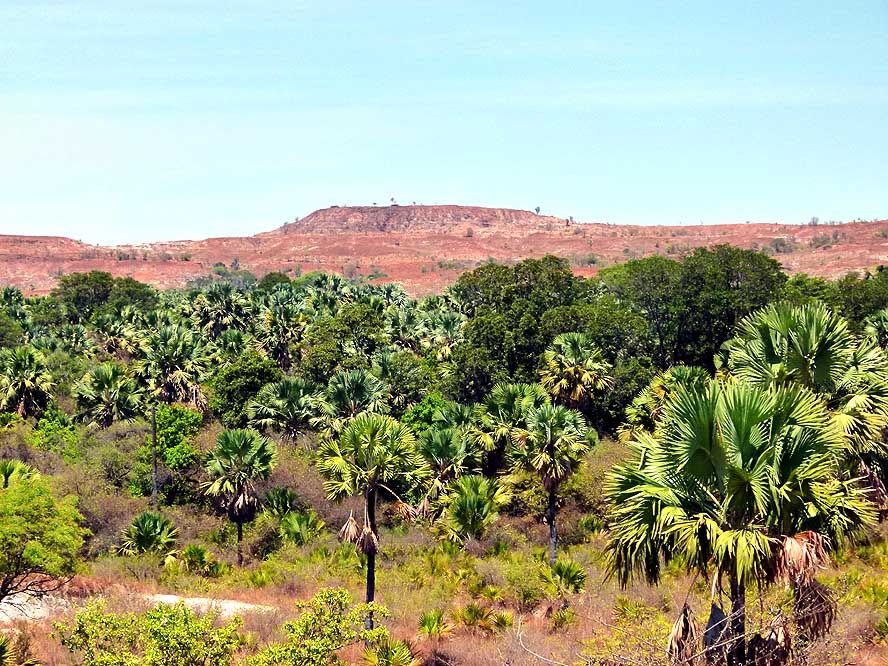
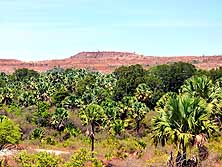
The arid grassland in the West
- is dotted with the lush green of the
- Bismarckia nobilis palms. They
- are endemic to Madagascar
|
- 117
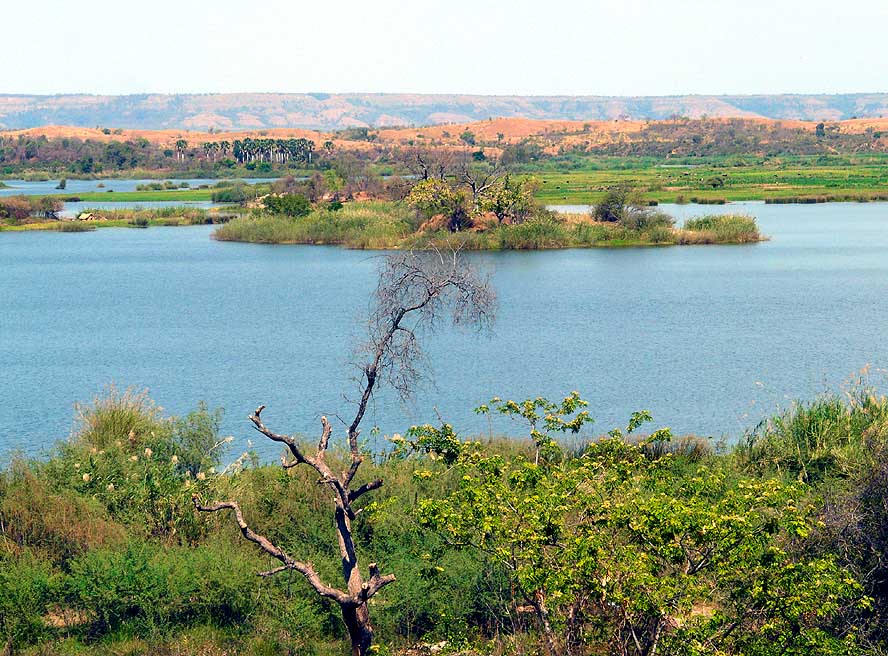
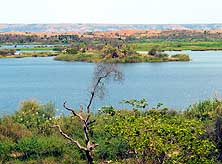
The Tsiribihina River with its green
- islets near Miandrivazo looks like an
- oasis in the arid landscape. Canoe river
- trips are offered from Miandrivazo
- to Belo before the West coast
|
-
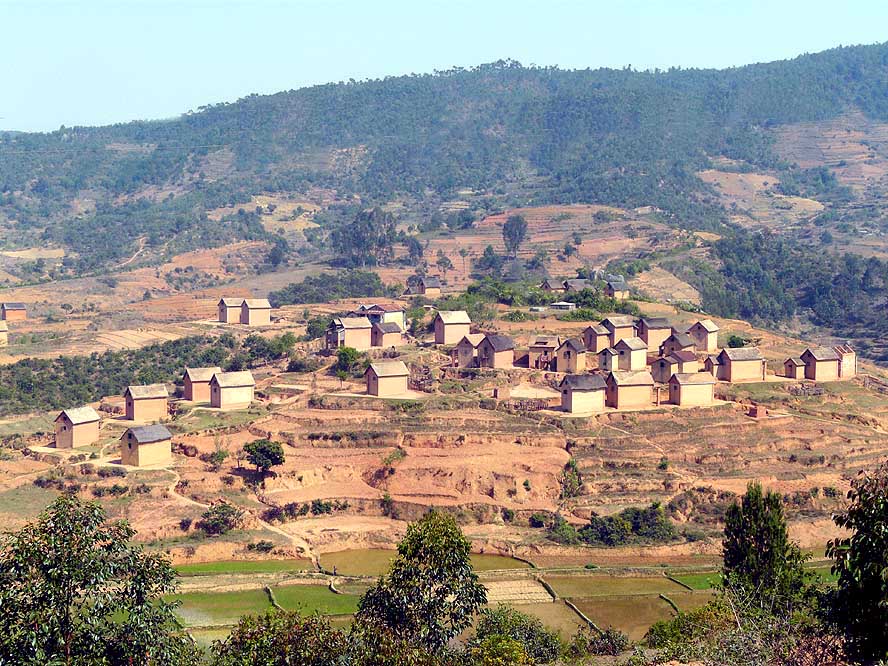
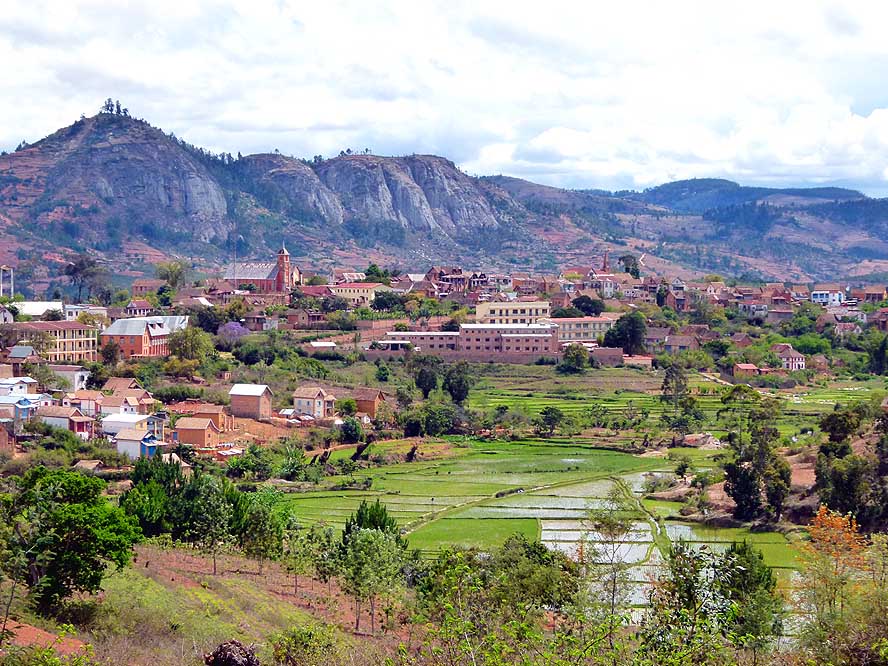
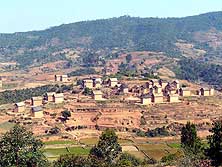
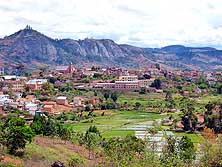
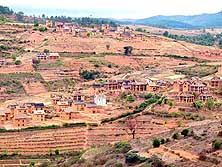
- Despite that the sun is hiding persistently behind dark skies it does not affect the
beauty of the landscape we are passing through with its typical picturesque mountain
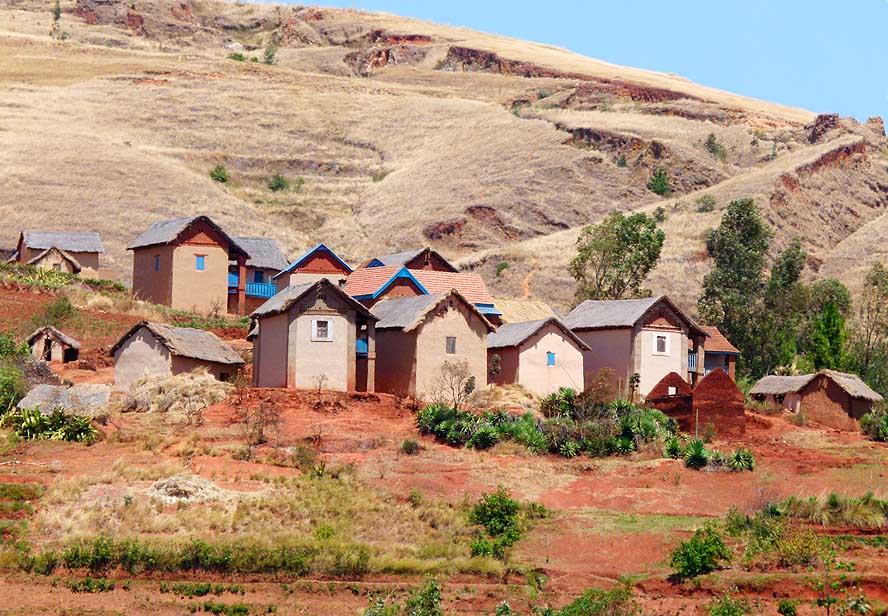
villages. The clusters of the two storey huts of red bricks blend perfectly with the brown
and beige of the soil. Some refreshing green dots are the newly planted rice fields.
|
-
-
|
-
-
|
-
-
|
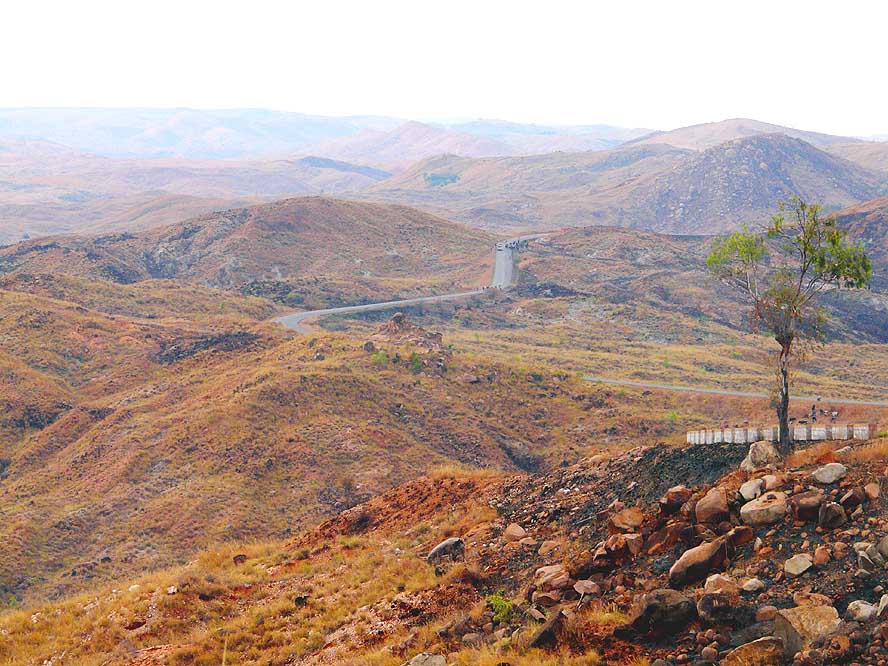
- 118
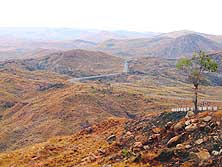
Solitude as far as our eyes reach:
- Between Miandrivazo and Antsirabe the
- black ribbon of the asphalt meanders through
- the mountains of the Central Highland
|
- 119
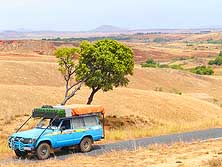
Scattered trees in the arid Central
- Highland near Antsirabe are pleasant green
- dots in the landscape. The most pleasant
- dot however is our LandCruiser!
|
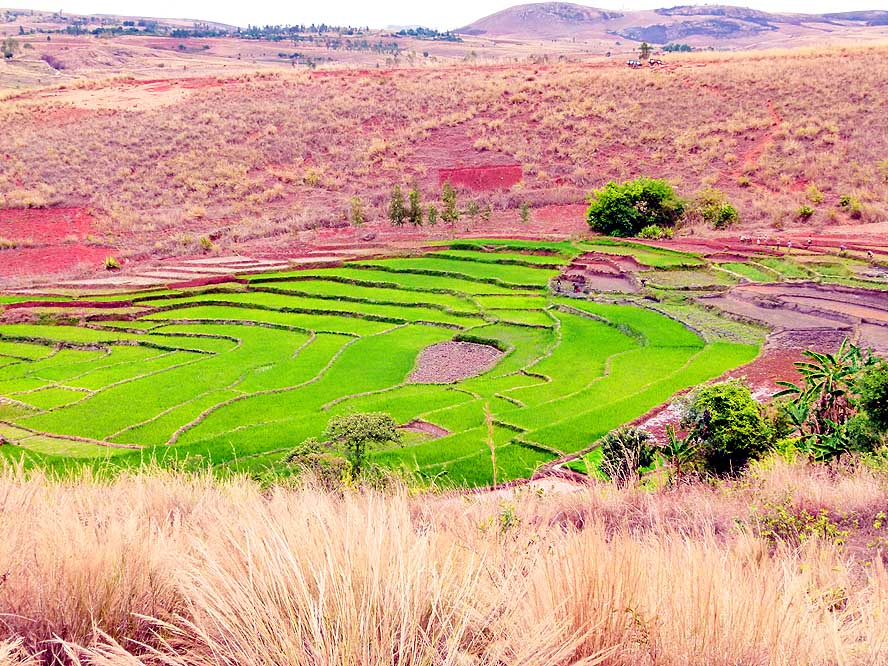
- 120
A work of art in the arid
- Central Highlands: A “spider net” of
- rice paddies surrounded by grassland
|
-
|
-
-
|
-
-
|
-
-
|
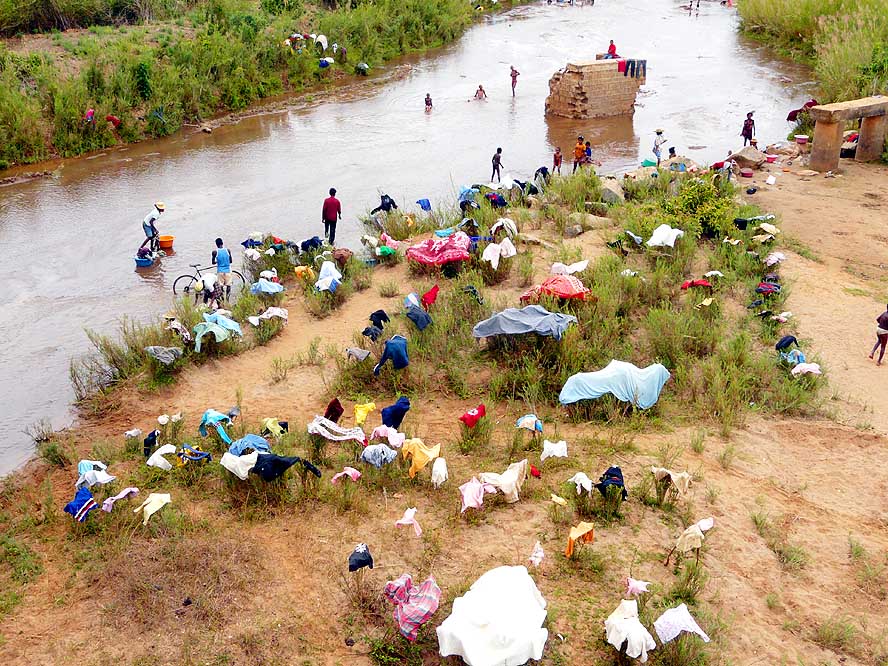
- 121
Obviously no washing line
- is needed to dry the clothes
|
- 122
A motif off the picture book
- for a painter: A small hamlet in
- the Central Highland between
- Miandrivazo and Antsirabe
|
- 123
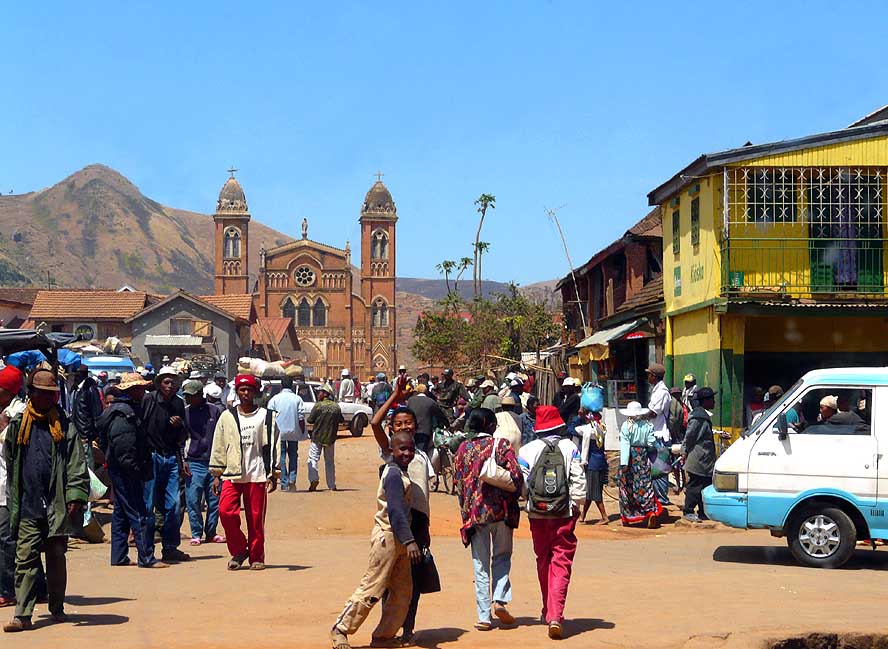
Busy life in Betafo, lying 14 miles
- East of Antsirabe along the nearly
- 370 miles long RN 34/35 via
- Miandrivazo to Morondava
|
-
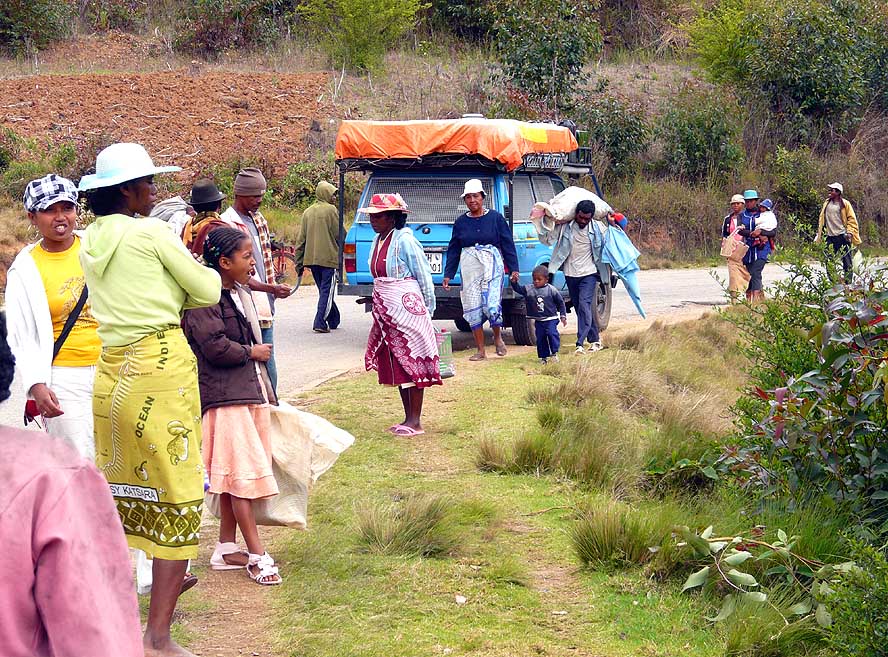
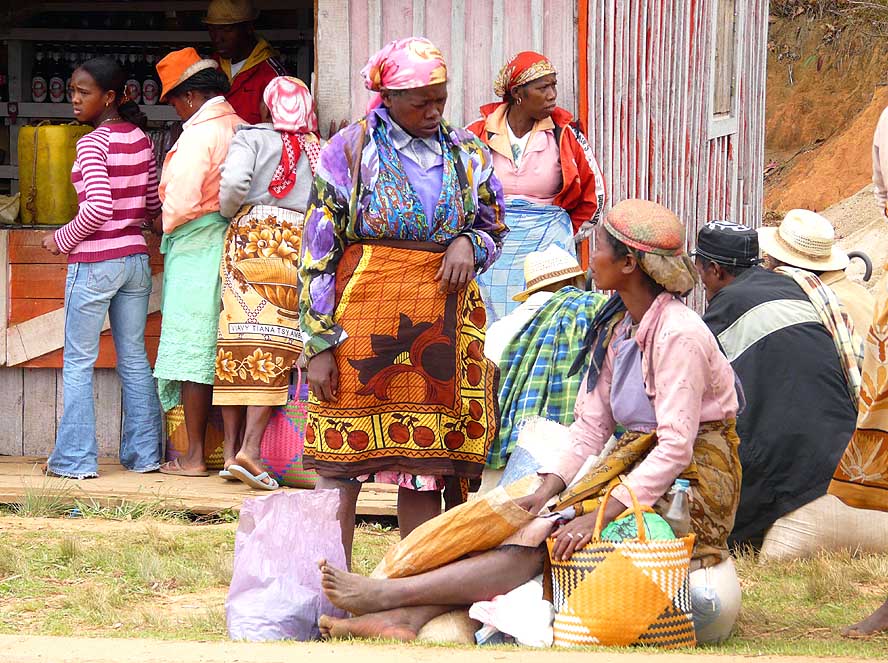
- It is a Sunday and people have gathered everywhere in small groups – herdsmen with
their typical hats and woolen “ponchos” and women with long black braids,
pleated skirts and straw hats, holding their small children by the hand or tied to their
back. Inevitably it recalls memories of the Bolivian highland.
|
-
-
|
-
-
|
-
-
|
- 124
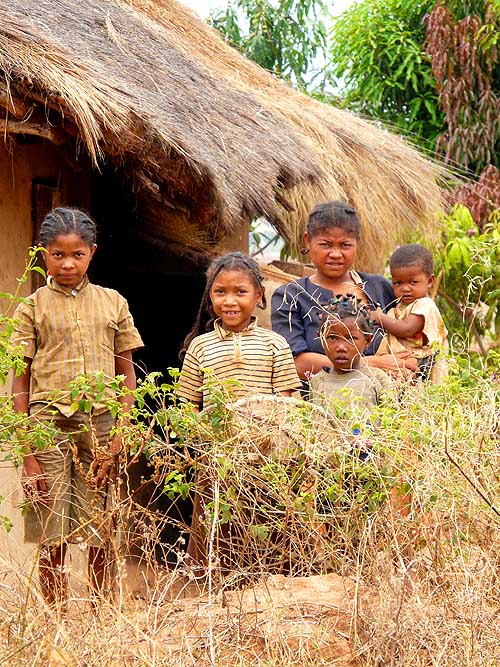
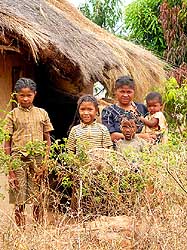
A rural scene like on the African
- continent: A family steps out of their
- thatched hut and admires our
- LandCruiser while we take pictures
|
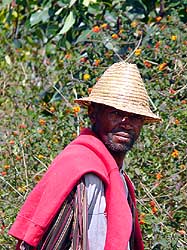
- 125
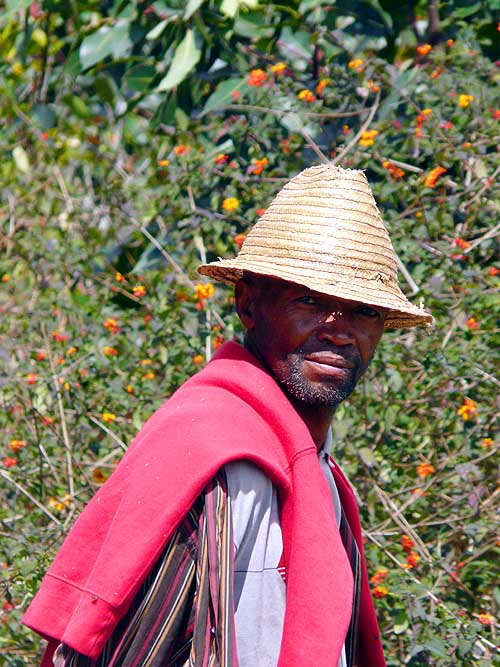
Herdsmen have a hard life
- in the highlands. In Southern
- winter time it can get pretty
- cold and humid
|
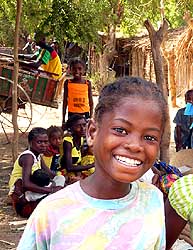
- 126
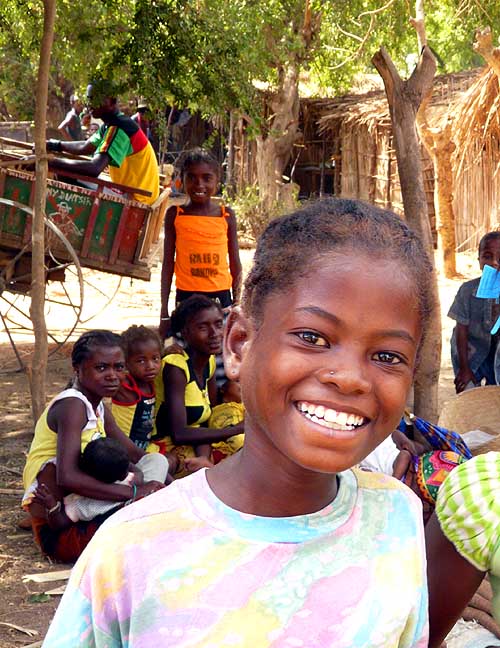
The hearty smile of this girl
- symbolizes the nation’s spirit.
- Despite of great poverty people
- show a joy for life
|
-
|
-
-
|
-
-
|
-
-
|
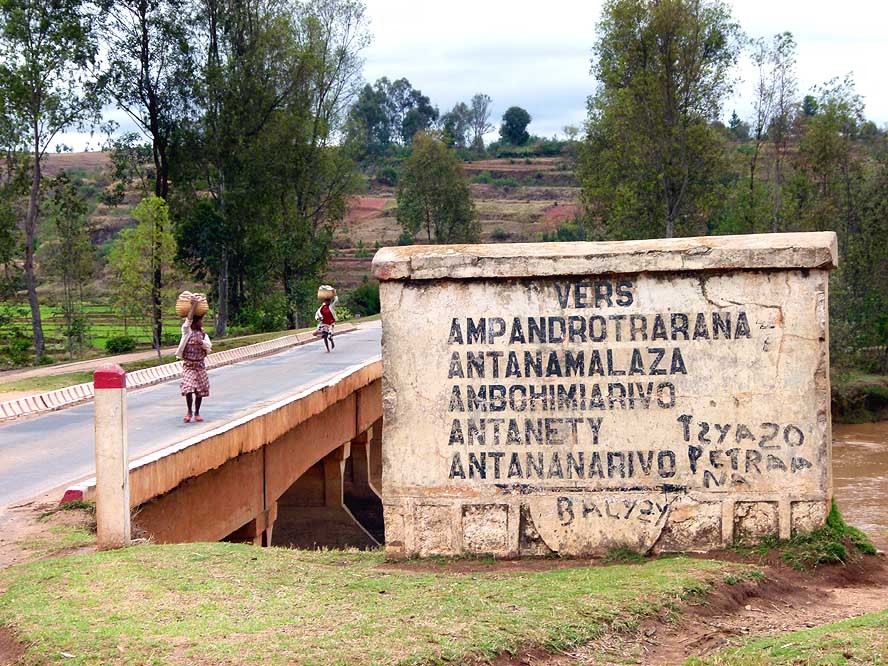
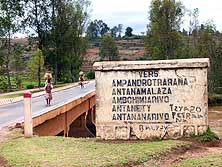
- 127
Who can probably keep in mind all
- those complicated and long village and
- city names. Like on this battered “road
- sign” on RN7 – the only road to the South
- – the majority starts with the letter “A”
|
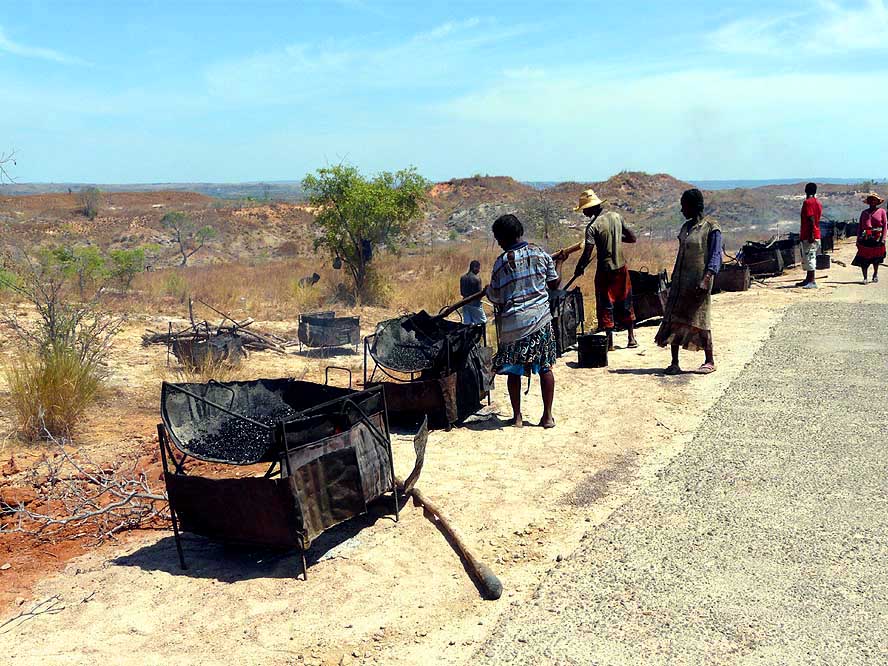
- 128
Potholes in the tarmac are
- repaired by hand the old fashioned
- way. Often also women do the
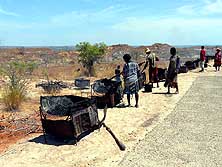
- roadwork to earn a few cents
|
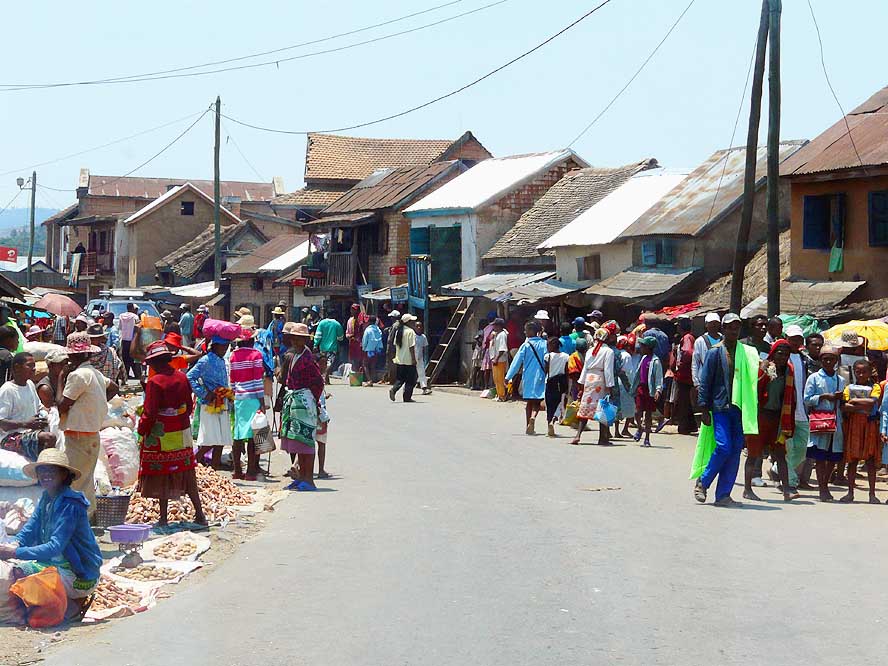
- 129
Crossing villages are always a
- challenge as they are exotic and
- crowded. People come from far to
- sell fruits and vegetables and
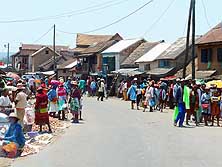
- buy the necessities of daily life
|
-
- Further to the South the view is much bleaker: Burnt down forests, smoking brick
factories, loads of bags with charcoal waiting to be hauled away at each corner and people
pushing piles of wood on self-made carts. How long will it take until the last tree is
lost? Apparently five acres of forest are disappearing daily only to heat the brick
factories, not to mention the firewood for heating and cooking or the one needed for the
luxury furniture for the foreign customers.
|
-
-
|
-
-
|
-
-
|
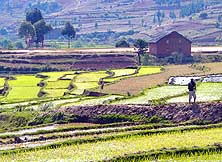
- 130
The long anticipated rain finally
- fell. The rice crops are planted, each
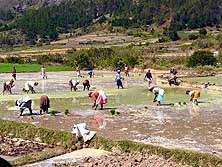
- single one by hand – it’s hard work
|
- 131
Golden glistening cornfields
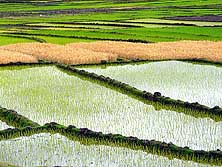
- are framed by rice paddies in
- different growing stages
|
- 132
We are driving across the
- picturesque highland of the “Betsileo”,
- the third biggest tribe of the country.
- Their planting skills allow three
- harvests a year instead of only two
|
-
- Will Madagascar become a desert island within the 20 years to come? It is a dilemma. How
can the poorest of the people survive without this questionable income? Many families
cannot even afford to pay the yearly school fee of US$ 27 per child. Their children will
never be able to read and write. The illiterate rate is said to be around 23%.
|
-
-
|
-
-
|
-
-
|
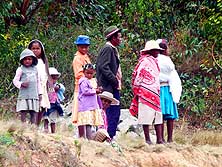
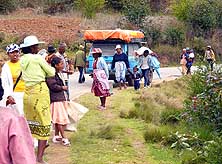
- 133
It is a Sunday: Families are on
- their way home from the church …..
|
- 134
….. many are waking towards us;
- others are heading in our direction, often
- for long distances. For the majority, feet
- are the only “way of transport”
|
- 135
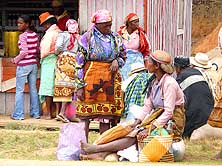
A group of people make a little
- break at a roadside kiosk where also
- big bottles of “Three Horses Beer”
- (THB) are sold. After all it is a Sunday!
|
-
- Fianarantsoa-Ranohira (Isalo NP) = 168 miles, 7.1 hours
In Fianarantsoa, the second biggest city of the island, we stop for a night at the Greek
hotel Cotsoyannis and continue next morning towards the West, to the Isalo National Park.
But we don’t make it that far. After 30 miles, in Ambalavao, we spontaneously decide
to visit the small Anja Lemur Reserve lying eight miles further South – a village
project to protect these animals found only in Madagascar and nowhere else in the world.
It won’t be a long time until these primates might be also listed on the red endangered list.
|
-
-
|
-
-
|
-
-
|
- Some villages along the RN7 between Ambositra and Fianarantsoa
|
- 136
Adapted to the surroundings
|
- 137
Sandwiched between
- granite rocks and rice paddies
|
- 138
Typical two-storey brick
- houses of the “Betsileo” tribe
|
-
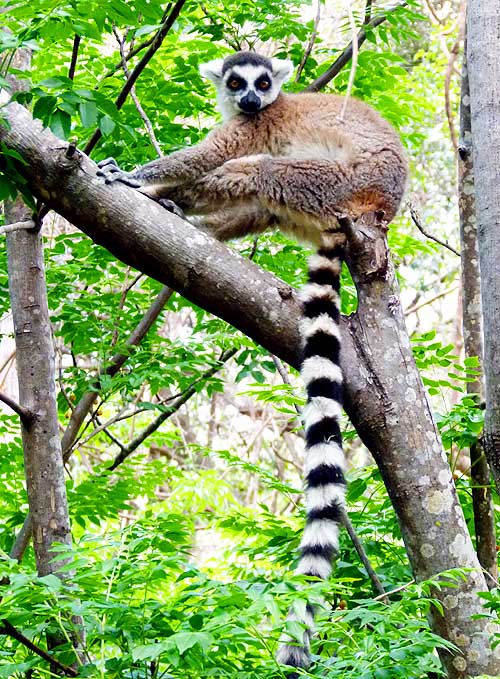
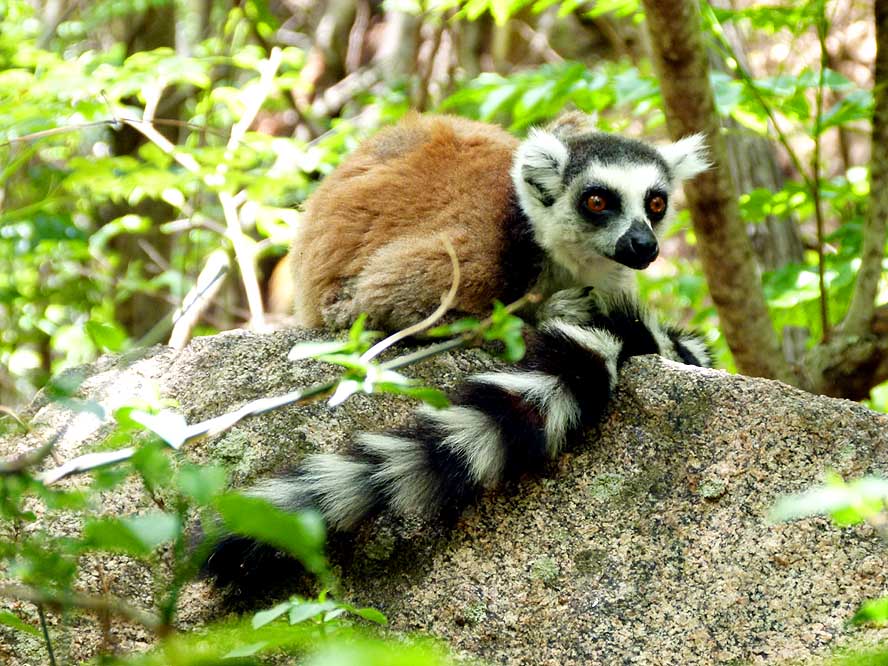
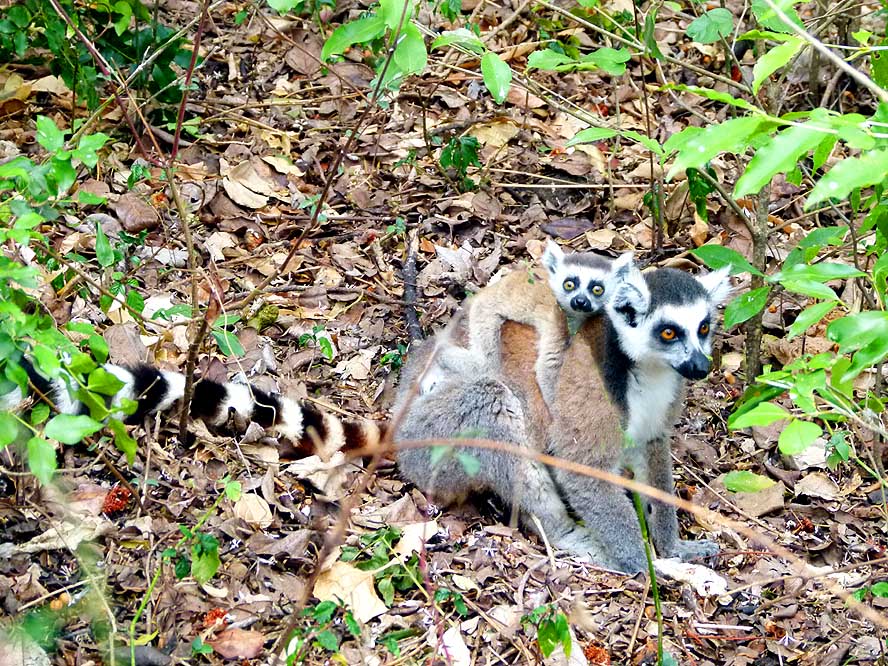
- It happens to be October 18th, 2011, our 27th anniversary of our epic journey around the world. Is there a lovelier jubilee
gift as our first encounter with these cute ringtail lemurs with their bushy white-black
tails that are two third of their body size? My heart is “leapfrogging”! We
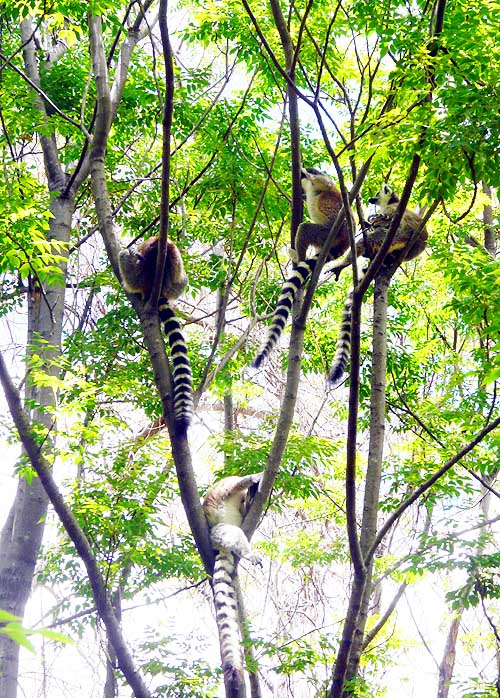
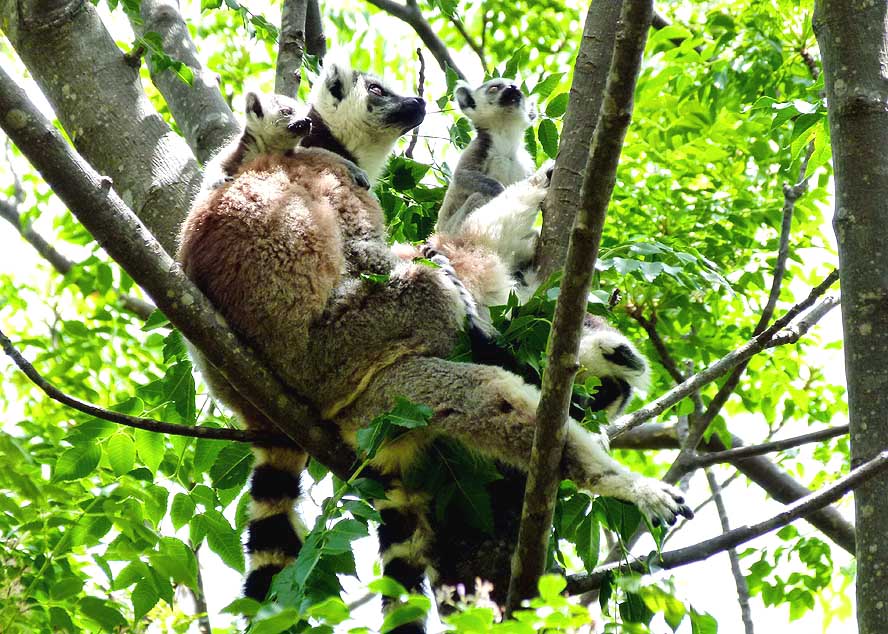
enjoy dozens – sitting on trees, on rocks and on the ground; adults, youngsters, a
baby riding piggyback on her mother, four one month old babies trying their first climbing
skills.
|
-
-
|
-
-
|
-
-
|
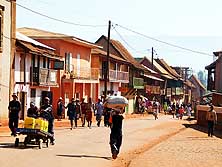
- 139
Ambalavao, situated on the
- tableland between Fianarantsoa
- and Tuléar (Toliara) is one of the
- most attractive highland villages
- with neat wooden balconies
- decorating their houses
|
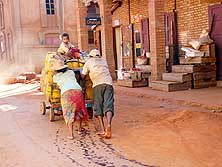
- 140
In Ambalavao a family pushes its
- full yellow jerry cans from the local water
- supply through the village street. Their
- little daughter sits proudly on the top.
- This scene is quite familiar, because there
- is no private water system in rural areas
|
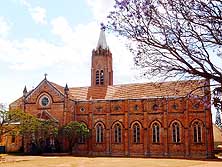
- 141
The cathedral built of red
- bricks is the centerpiece of the
- highland village of Ambalavao
- and a special sight during the
- flowering of the Jacaranda trees
|
-
- Our guide tells us that this reserve is currently home to around 300 of these primates,
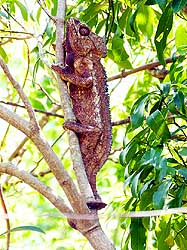
divided into 15 families, living in different territories. We also spot a camouflaged
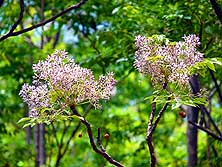
young Malagasy giant chameleon, tiny pink butterflies hanging like blossoms on branches
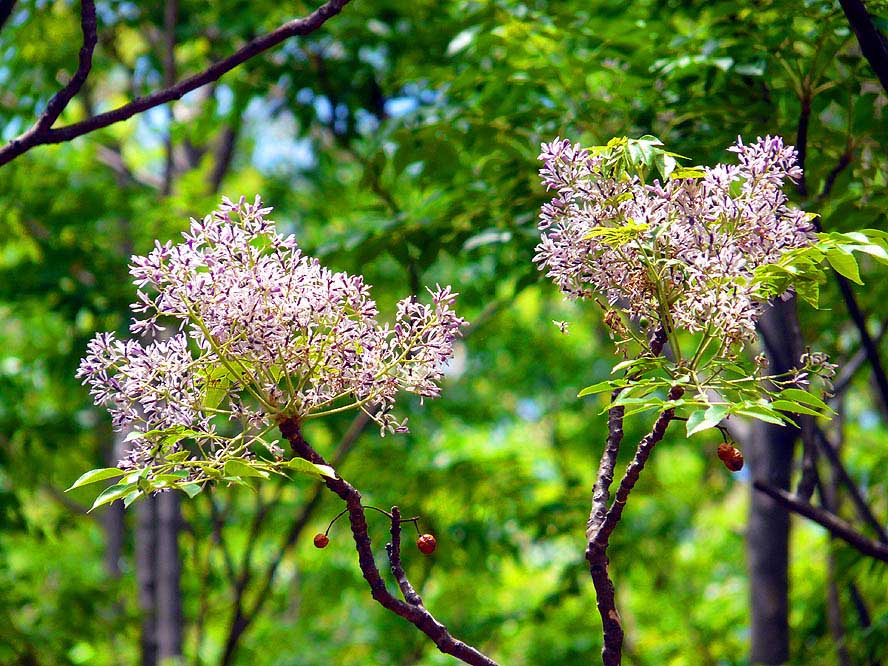
and a Persian lilac bush with delicate white-pink blossoms.
|
-
-
|
-
-
-
-
|
-
-
|
- 142
In the small Anja Reserve, 8 miles
- West of Ambalavao, we discover this
- lizard, a young Giant Malagasy
- Chameleon (Furcifer oustaleti), which
- in its camouflage is hard to see …..
|
- 143
….. also this blooming Persian
- Lilac bush (or also called Syringa)
- (Melia azedarach) is growing there …..
|
- 144
….. and then we see them,
- high up in the trees – the ringtail
- lemurs (Lemur catta) with their
- black and white bushy tails that
- are two third of their body size
|
-
- In the friendly small restaurant nearby with a stunning view over the huge granite
boulders we treat ourselves to a delicious local noodle dish and toast to our 27th travel
anniversary with a couple of “Three Horses Beer’s”. A few days later we
read that since our departure in 1984 the world population has grown by 2.2 billions (!),
or 45.8%, with Africa as the leader. Also during our long journey we noticed the
population explosion. Nowadays there are also many more people traveling, be it due to the
political openings or because they have more money at their disposal.
|
-
-
|
-
-
-
-
|
-
-
|
- The small Anja Reserve, 8 miles South of Ambalavao, is a village project
- to protect these cute lemurs found only in Madagascar and nowhere else in the world
|
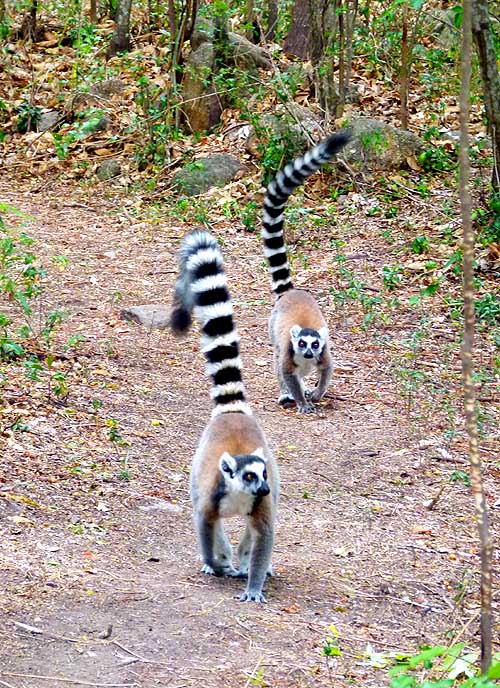
- 145
What a fascinating sight!
- Determined the first two primates
- come around the corner
|
- 146
What is so exiting higher up?
- A mother with her two cubs
|
- 147
The youngster makes it
- comfortable on a tree branch and
- looks what happens below
|
-
- The next day we roll through the endless prairie of the Horombe Plateau with its golden
shining grass towards the Isalo National Park in the “wild west” of Madagascar.
A couple of herdsmen are also today on their way. They guide big flocks of cattle in the
middle of the road to the abattoir, sometimes as far as the capital Antananarivo. These
“Malagasy cows” are one of the most identifiable symbols of Madagascar. They
belong to the “Bara” tribe. The assessment of a Bara man is measured by the
number of zebus he possesses. For him the zebu symbolizes beauty, strength, pride, fame,
prestige, health, happiness and security. Often they are valued higher than one’s
wife.
|
-
-
|
-
-
|
-
-
|
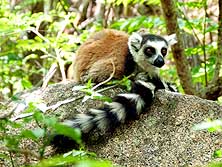
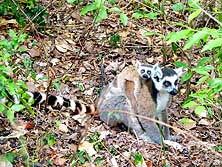
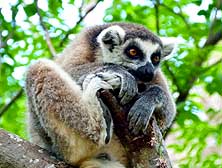
- Divided in 15 lemur families that live in different territories, the Anja Reserve
harbors 300 of these primates. By chance,
- our visit falls on October 18th, 2011 – the day of our 27th anniversary of our epic
journey. Is there a lovelier place to celebrate?
|
- 148
“I don’t let me disturb!”
|
- 149
“Riding on my mother’s
- back is really comfortable”
|
- 150
“Oh boy! - two more
- tourists are coming”
|
-
|
| More
websites from Madagascar:
|
|