-
-
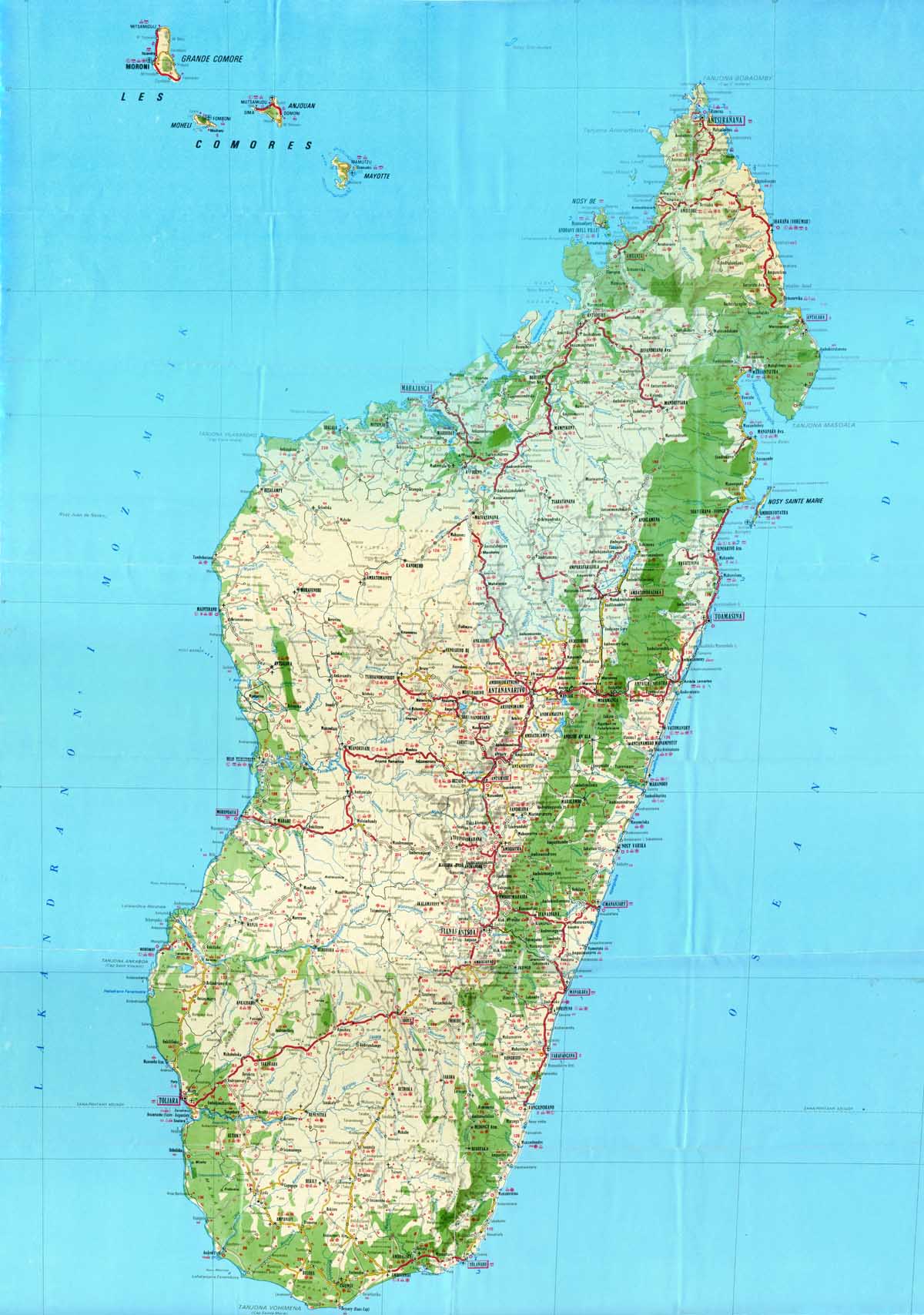
- Madagascar Map
|
-
-
-
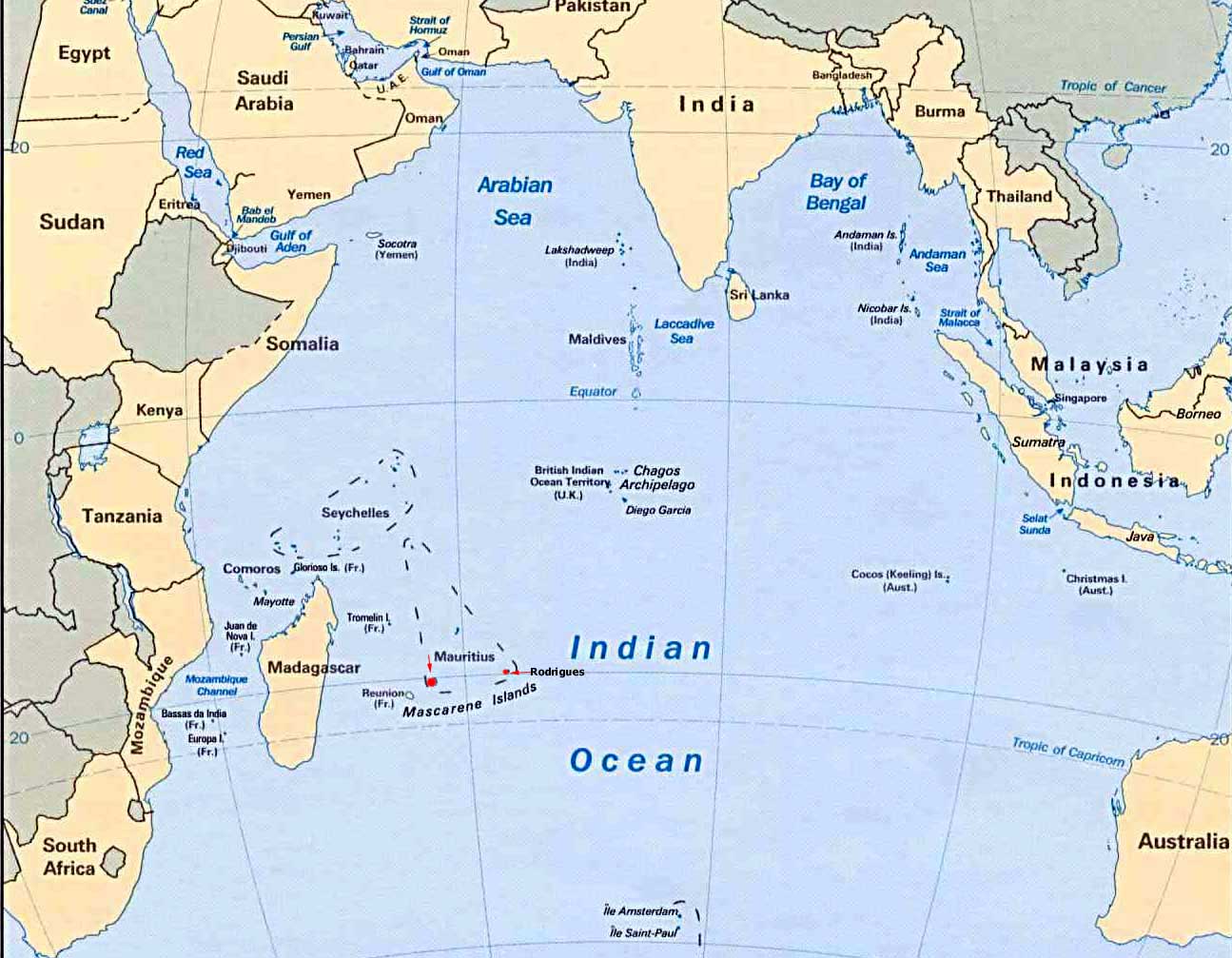
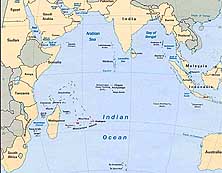
- Map of the Indian Ocean
|
|
-
|
- latest picture: November 2, 2011
|
|
-
-
|
-
-
|
-
-
|
- 151
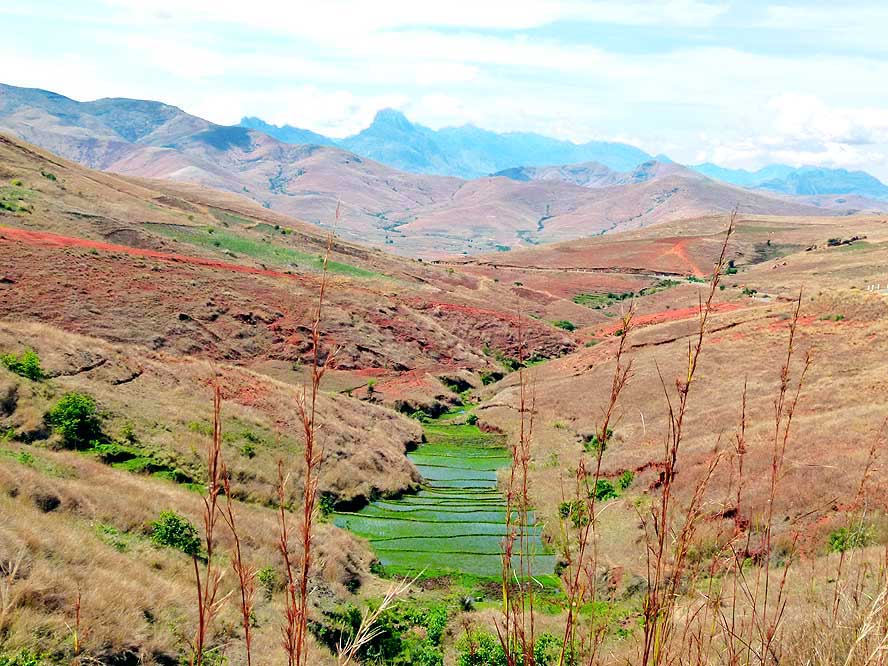
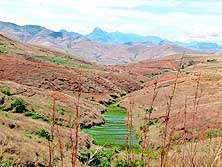
On the highland the land is brown
- and dry. On the spots, where the water-
- ways are not completely dried out, the
- hardworking farmers plant rice. Here
- close to Ankaramena between
- Ambalavao and Ihosy
|
- 152
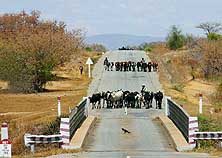
Herdsmen of the Bara tribe are
- guiding their cattle until the abattoir of
- the capital Antananarivo. The worth of
- a Bara man is measured by the number
- of zebus he possesses. Often they are
- valued higher than his wife
|
- 153
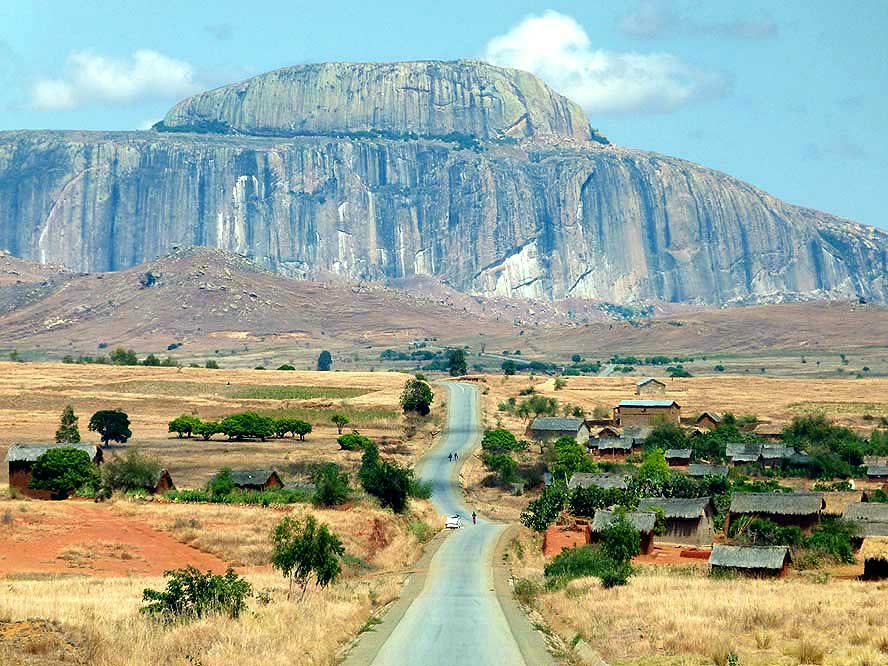
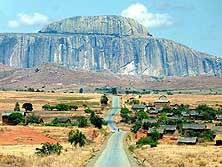
We are on our way from Ambalavao
- to the Isalo National Park near Ranohira,
- sitting west of Ambalavao. All of a
- sudden, an impressive towering rock
- boulder near Mahasoa pops
- up in front of us
|
-
- Abruptly, the first bizarre rocks appear. We reached our today’s goal: The Isalo
National Park. We end-up almost at the new Isalo Rock Lodge, which is beautifully embedded
into rock towers. Emil registers at the desk and I prepare the exact amount of money. The
receptionist checks and looks at me somewhat irritated. “Is something wrong?” I
ask him. The room costs 114 Euros (US$ 158) and not Aria 114’000 (US$ 53) he
explains. “But you may still look around the area” he adds when he sees our
disappointed faces.
|
-
-
|
-
-
|
-
-
|
- 154
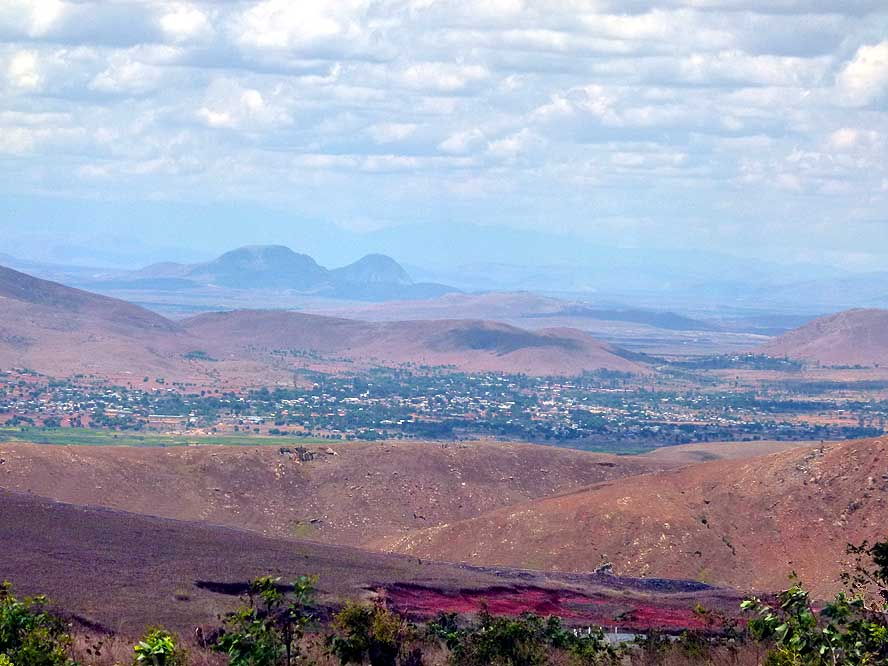
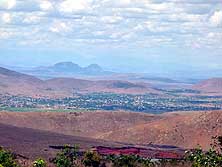
The villages sandwiched between
- barren mountain ridges look like fertile
- oases on our East-West crossing: Ihosy
|
- 155
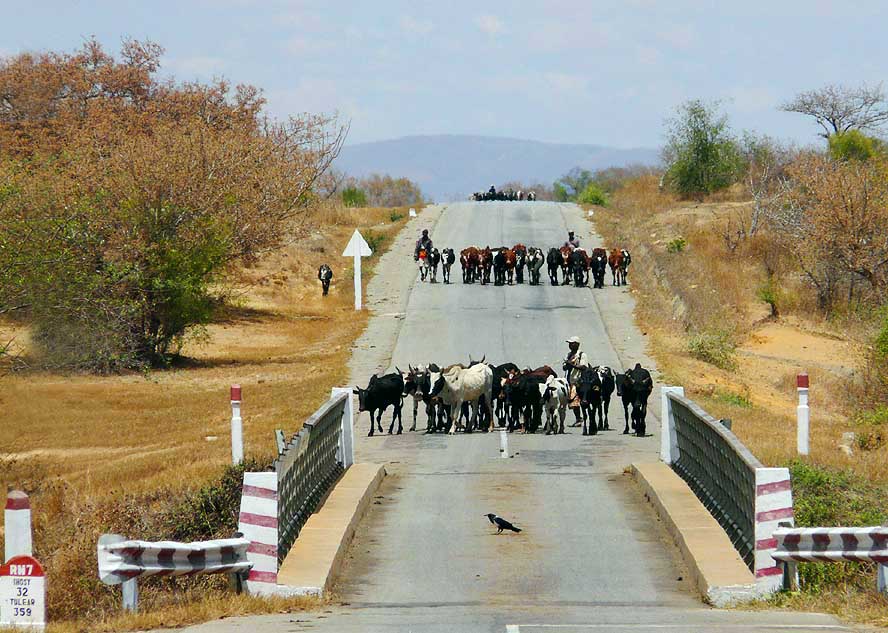
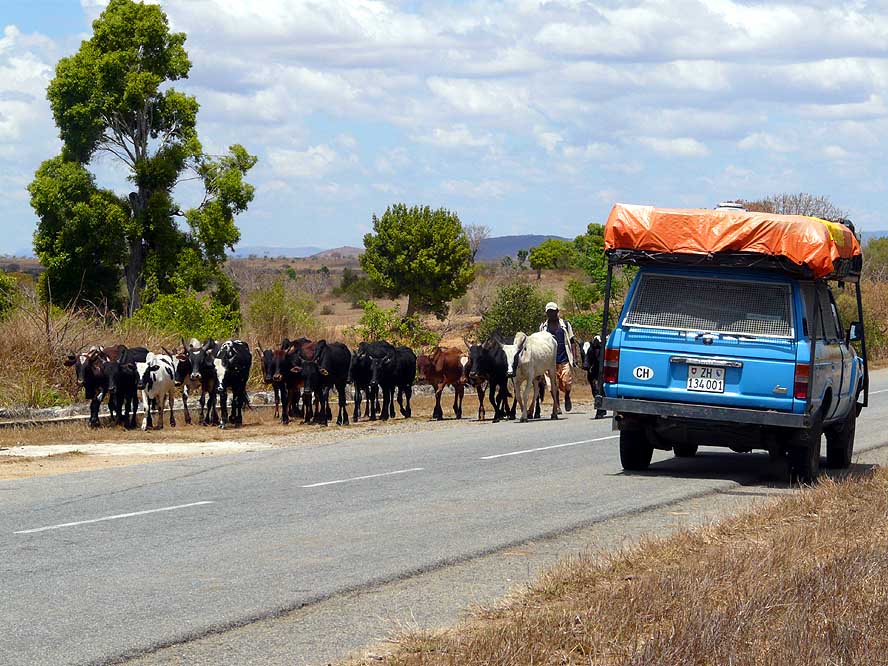
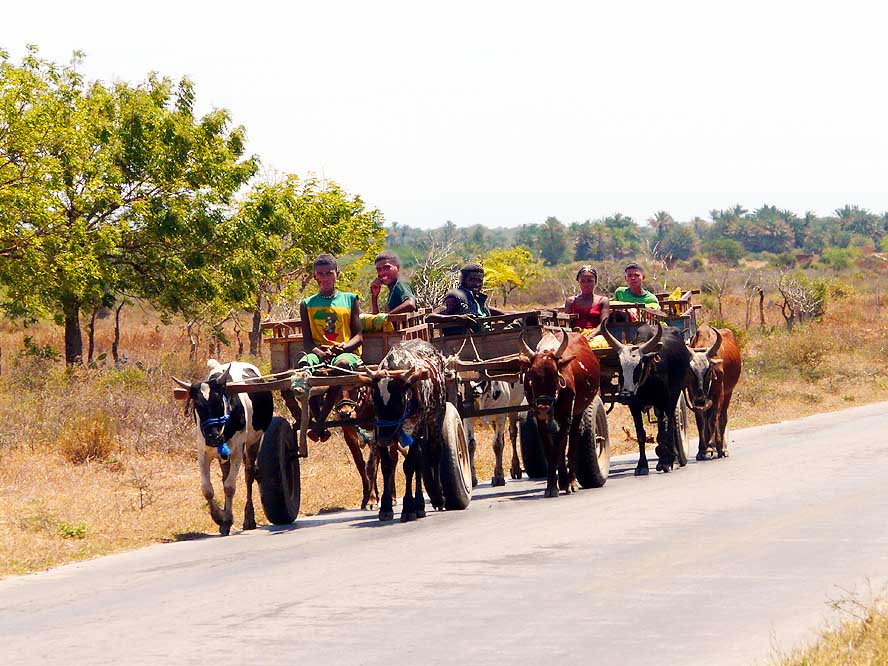
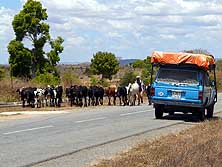
Now and then zebus (Malagasy cows)
- are herded in the middle of the road. They
- are one of the most identifiable symbols of
- Madagascar. We usually stop to let them
- pass what is appreciated by the herdsmen
|
- 156
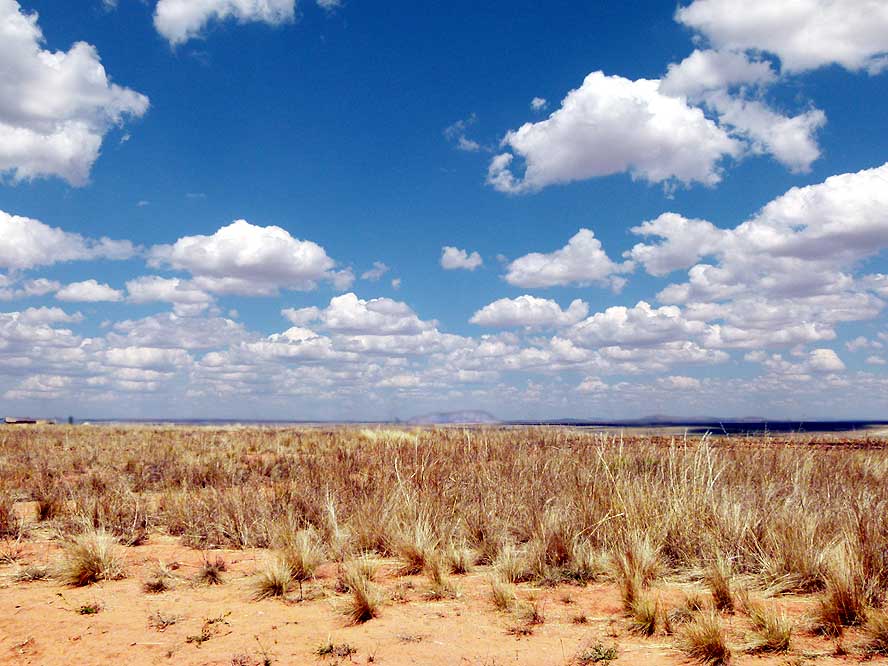
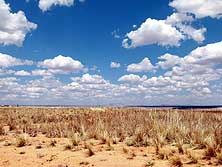
After crossing the Ihosy river near
- Ihosy, the road climbs up to the Horombe
- Plateau – an endless prairie of golden yellow
- grass in the “Wilde West” of Madagascar –
- which ends at the Isalo massif at Ranohira
|
-
- At the Isalo Ranch we come down to earth again. For 60’000 Aria (US$ 28) we get
bungalow No. 20 with shared facilities, which however we have for ourselves. It lies at
the end of the premises with just nature pure in front of us. While the tour groups –
and in the South there are many, especially French – gather around the restaurant and
the swimming pool, we have our little world for ourselves; watch the sunset transforming
the grey rocks into a warm golden brown; the shining stars at the dark night skies and
enjoy the silence around us.
|
-
-

|
-
-
|
-
-
|
- 157
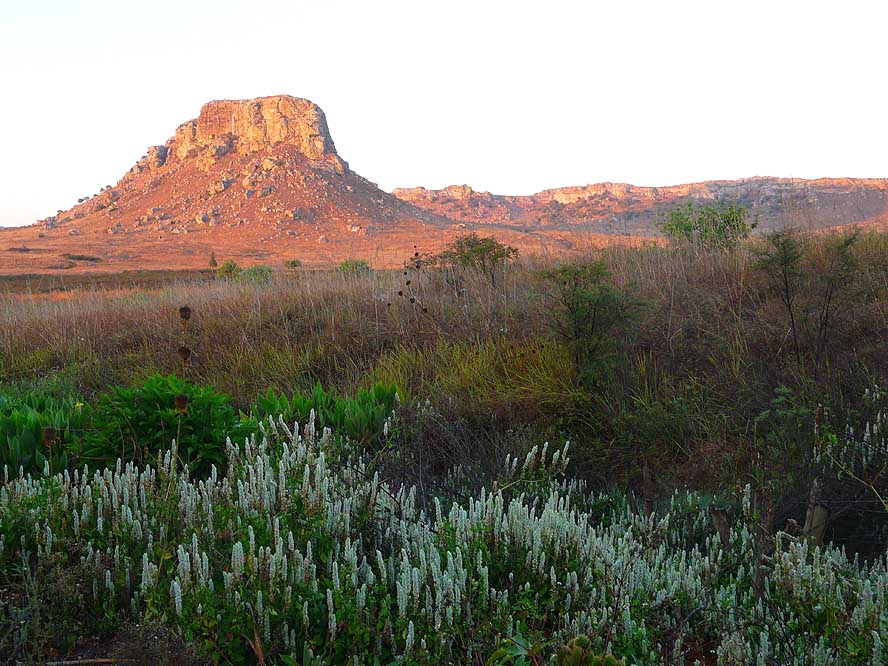
From our bungalow at the Isalo Ranch
- in Ranohira – situated at the border of the
- Isalo Nat. Park – we enjoy the sunset …..
|
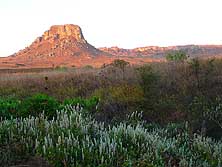
- 158
….. the setting sun is blushing
- the mountain in a warm red color …..
|
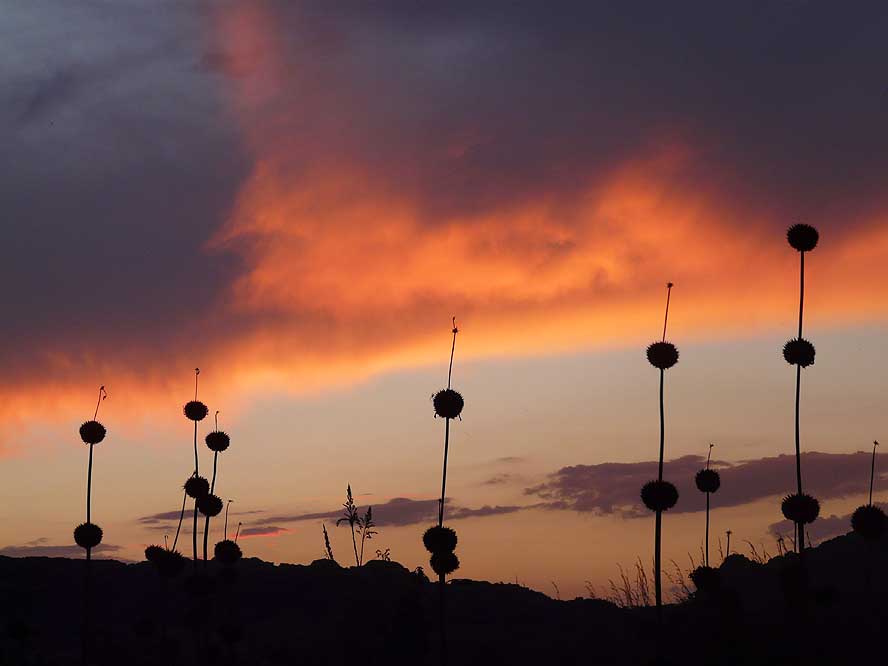
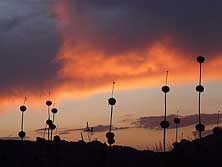
- 159
….. and the long-stemmed
- flowers are silhouetted wonderfully
- against the glow of the sky
|
-
- After the more than 30 tropical islands during the past five years in the Caribbean, the Pacific
and recently in the Indian Ocean we are craving to
see rocks, pinnacles, domes, canyons and bizarre geological formations like we remember
from the “Wild West” in the US. There is just one thing we do not want to do: To
follow a mandatory guide on the overcrowded trails within the park – the Isalo
National Park, covering 315 sq.mi., is Madagascar’s most visited park. Next day, we
find our own paths.
|
-
-
|
-
-
|
-
-

|
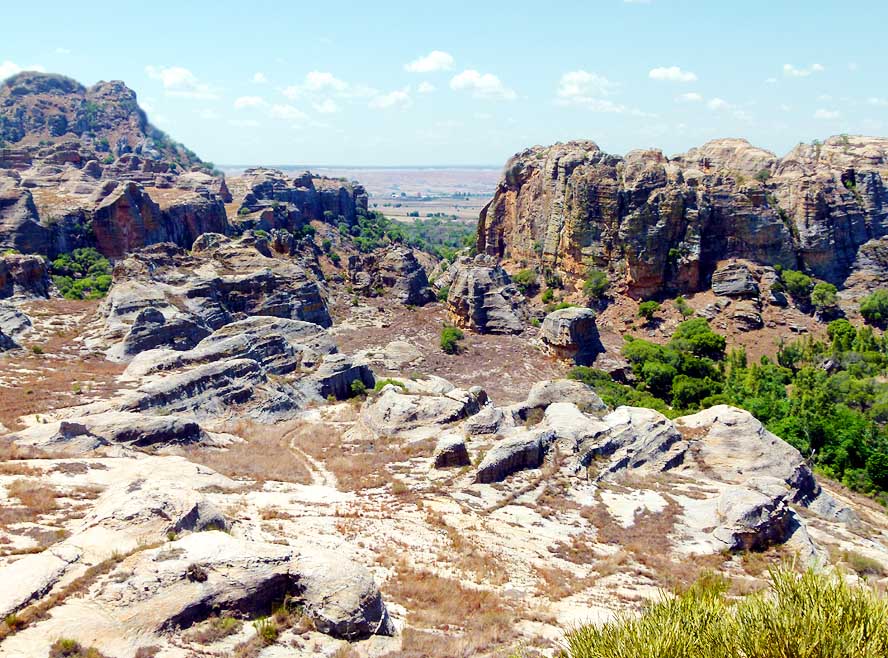
- 160
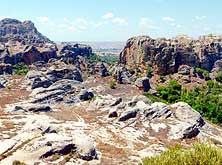
The sand stone massif of the
- Isalo National Park is towering harshly
- against the blue sky. It recalls memories
- of the Wild West of the USA
|
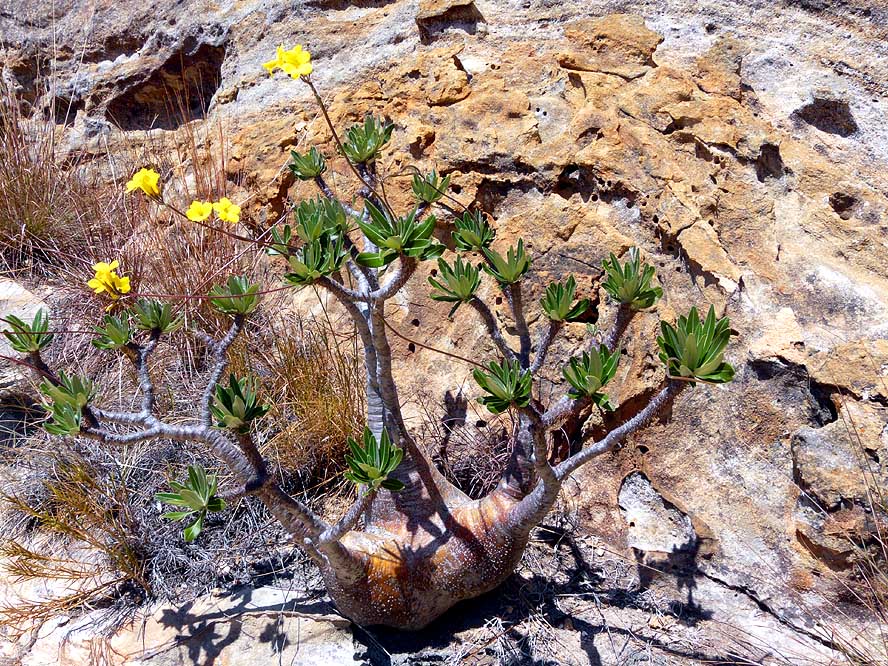
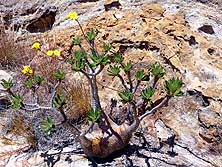
- 161
The endemic miniature Baobab
- (Pachypodium rosulatum) with its
- yellow blossoms grows at Isalo National-
- park. Its enlarged trunk is serving as a
- self-contained water reservoir
|
- 162
Striking geological formations
- form different landscapes within the
- 315 sq.mi. of the Isalo National Park
|
-
- “Can nature be more beautiful?, we ask ourselves again and again. The white patches
of clouds dotting the blue skies are within our grasp, when we wander at our own pace
through the remote labyrinth of sand stone formations. We discover the endemic miniature
Baobab with its yellow blossoms and its enlarged trunk serving as a self-contained water
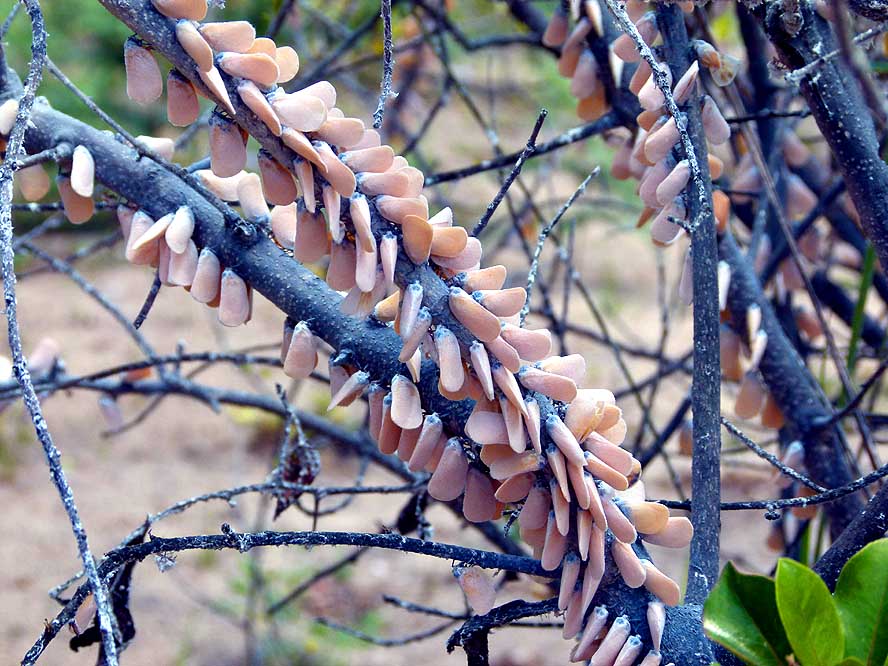
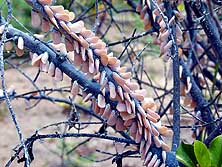
reservoir. Colonies of tiny adult flatid leaf bugs that at first glance look like delicate
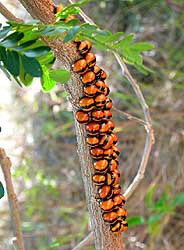
flowers. Orange-brownish beetles clustered side by side at a trunk and white bugs looking
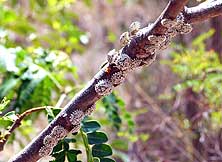
like delicate laces.
|
-
-
|
-
-
|
-
-
|
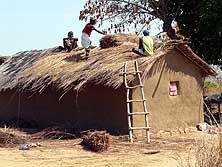
- 163
The roof of a traditional hut
- gets freshly thatched
|
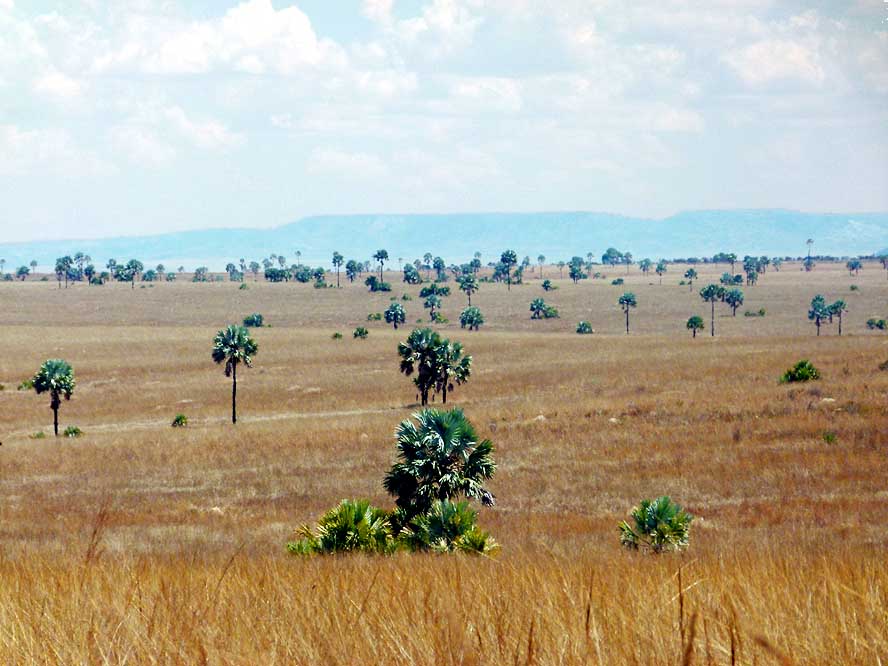
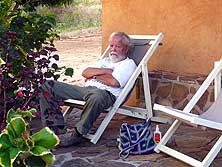
- 164
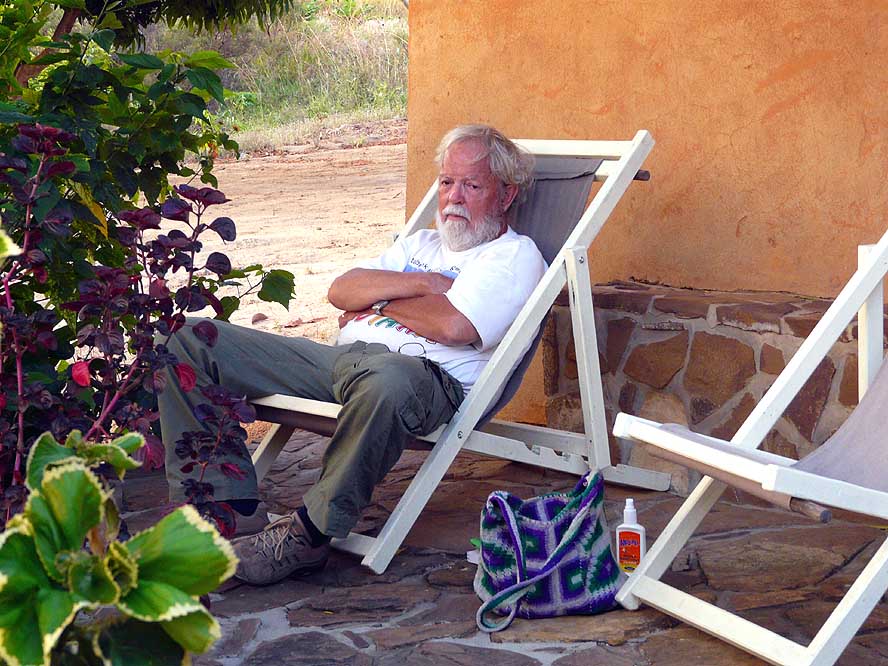
Emil is relaxing in front of our
- bungalow at the Isalo Ranch in Ranohira
|
- 165
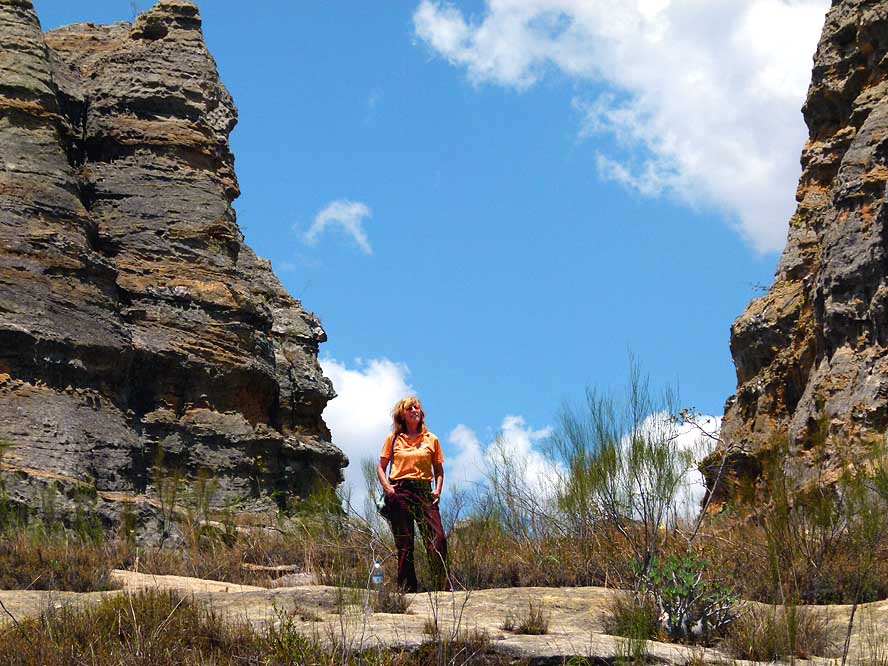
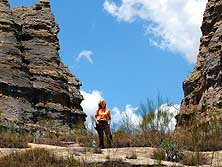
Liliana is enjoying hiking between
- the pinnacles of the Isalo National Park
|
-
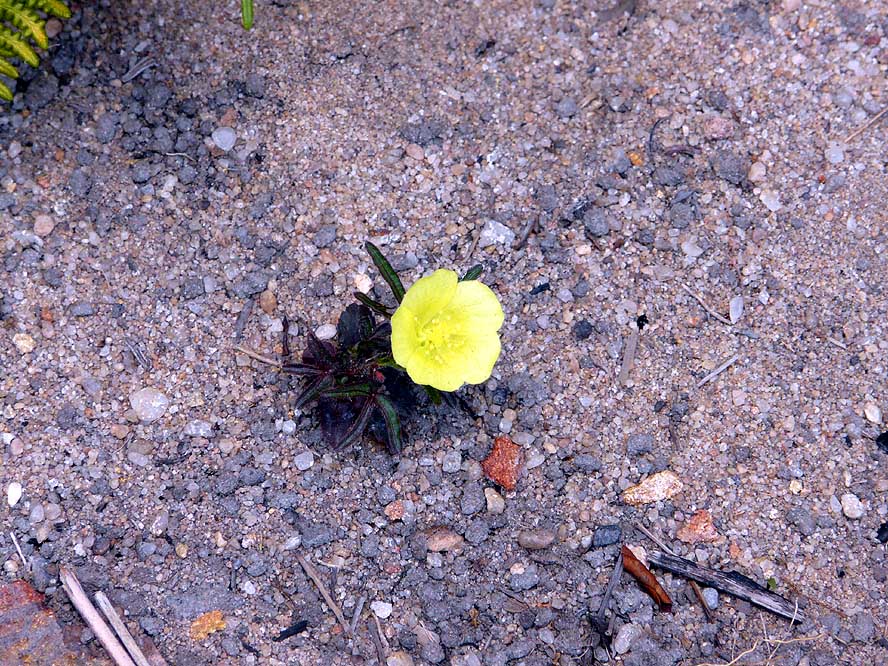
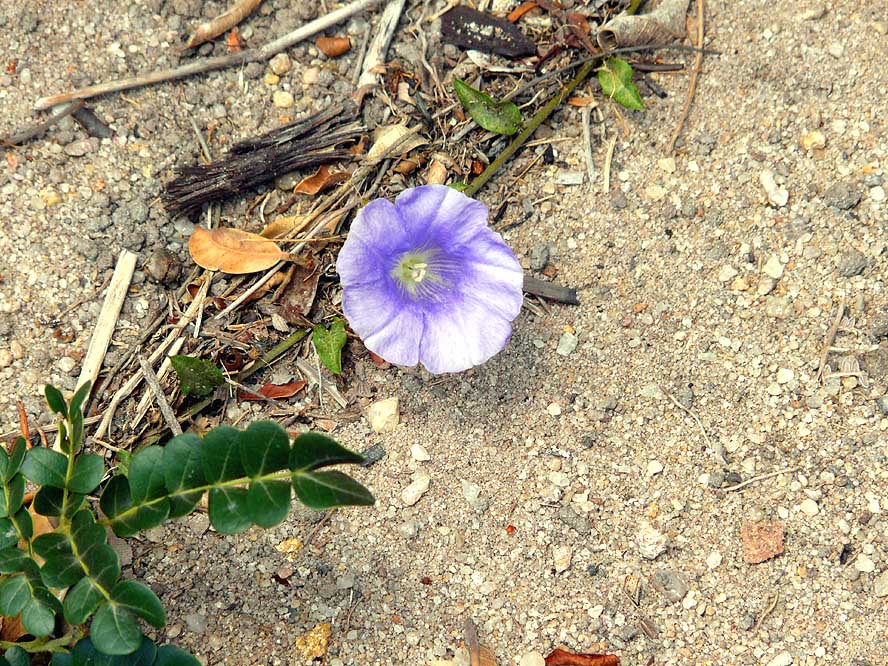
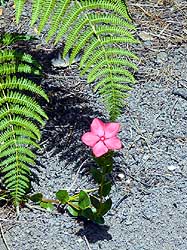
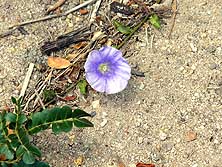
- And on the sandy ground lovely flowers are sprouting now and then – in red, yellow
and blue colors. The French lady owner of the Hotel ‘Relais de la Reine’, one of
the oldest hotels in Madagascar, directed us to the track leading from her hotel into the
canyon land. We also talk about the political situation of the island and about tourism.
Since last year the visitors have increased again, she tells us. But they have not yet
reached the volume of 2009 before the coup. The government has really to make efforts to
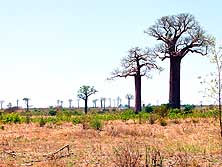
attract tourists to Madagascar before the last lemurs have died-out, the last turtles have
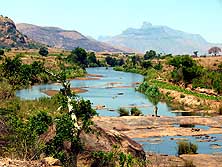
been eaten and the last rosewood and baobabs have been cut down.
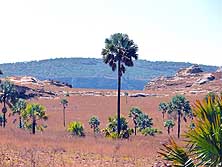
|
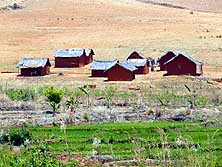
-
-
-
-
|
-
-
-
-
|
-
-
|
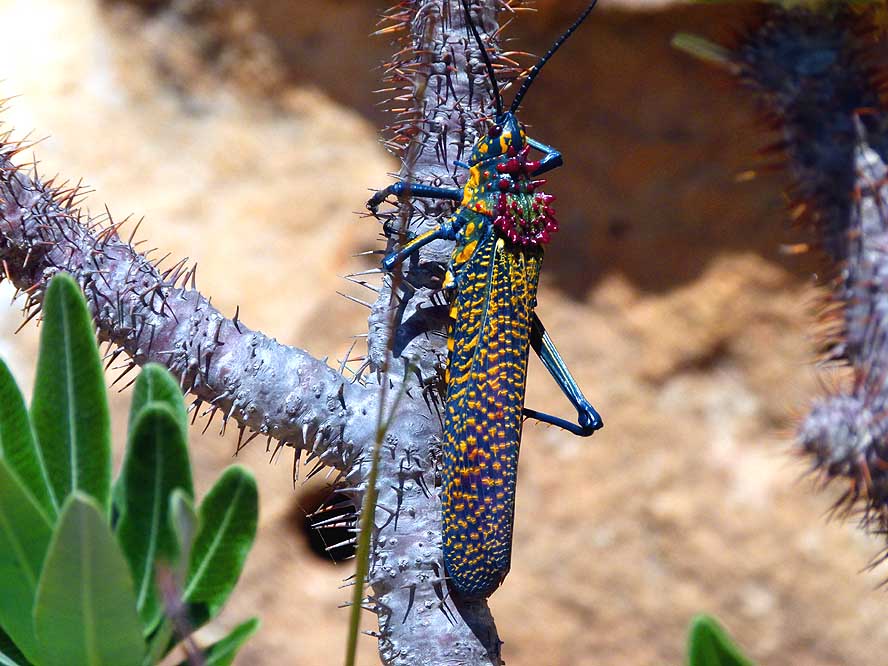
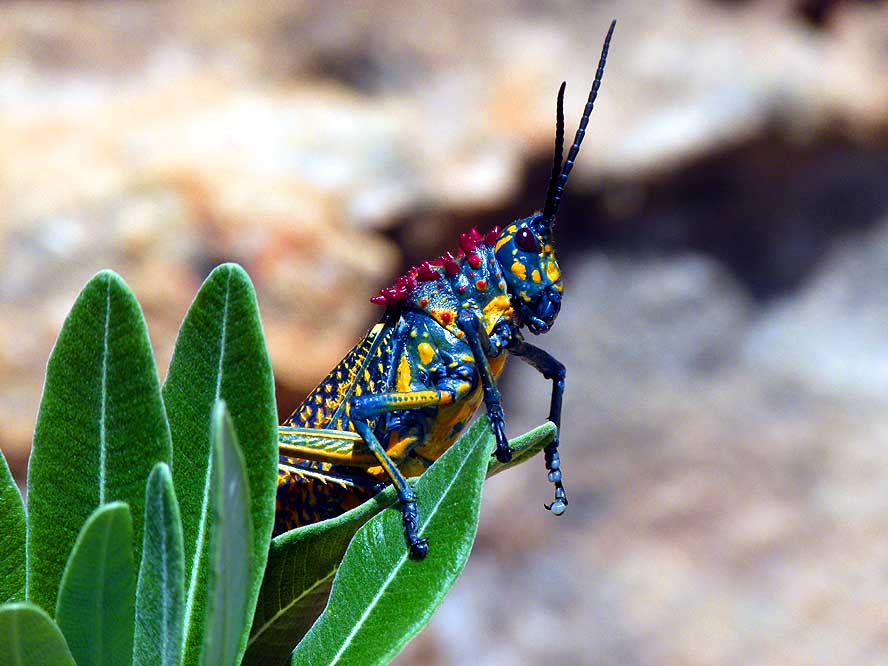
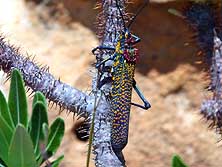
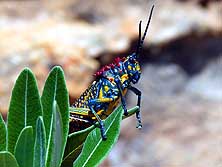
- 166
We discover the colorful Rainbow
- Milkweed Locust (Phymateus saxosus)
- crawling up a spiny tree …..
|
- 167
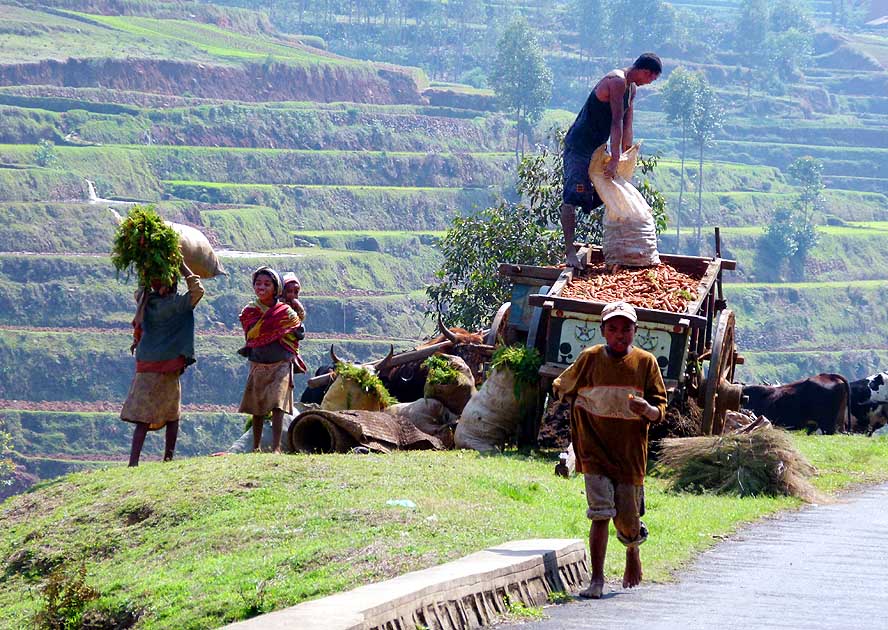
….. reaching the top, it peeks
- out between the leaves
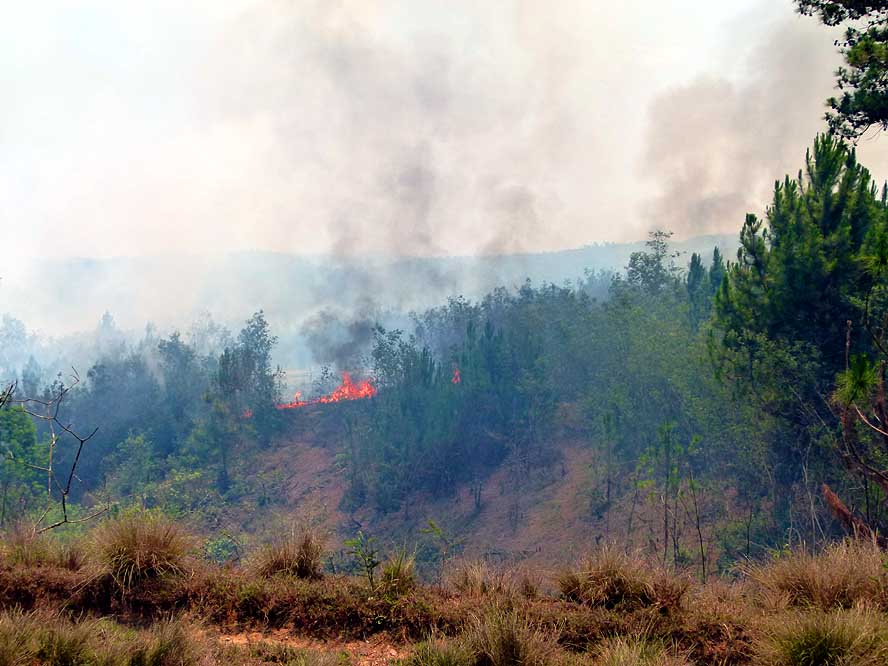
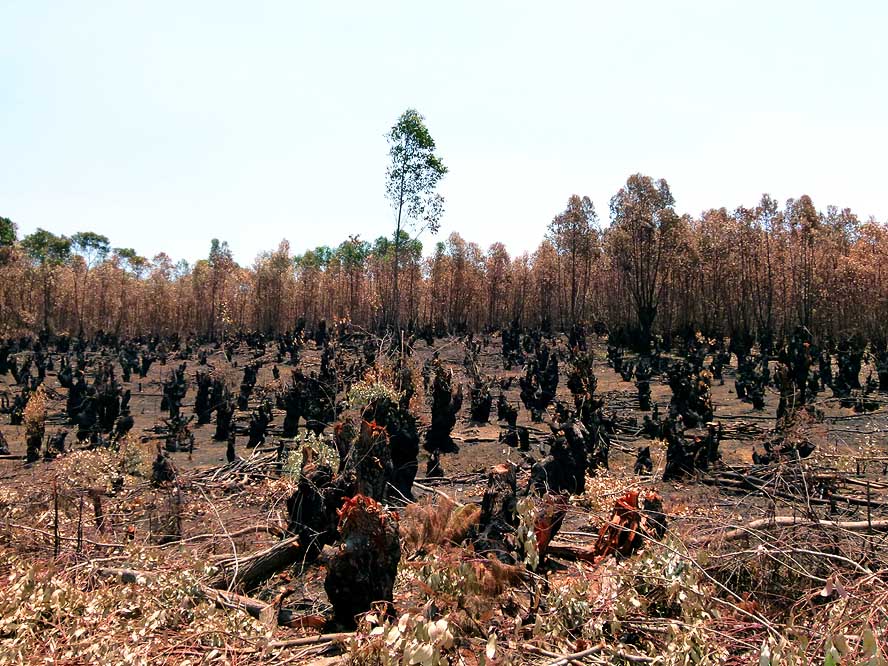
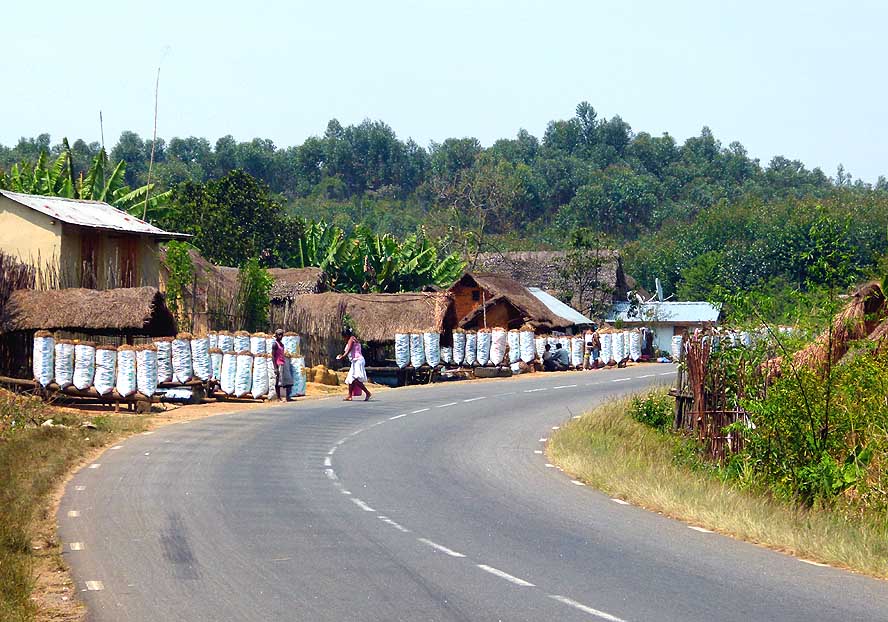
|
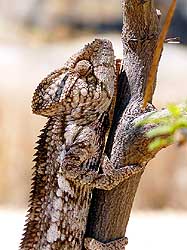
- 168
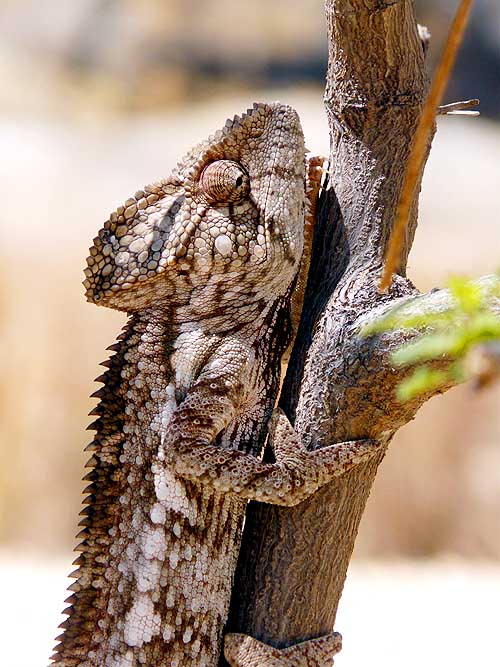
Madagascar is also home to many
- species of chameleon: Giant Malagasy
- Chameleon (Furcifer oustaleti)
|
-
- Ranohira-Tuléar (Toliara) = 143 miles; 5 hours
On the third day, on October 21st, (the day when Ghadaffi was shot in Sirte) we finally
move on. The black ribbon of asphalt runs almost dead straight through
“Madagascar’s Wild West” towards the West coast. For us it’s the
second crossing to the West, this time more Southerly. Soon we reach Ilakaka – a
village in the middle of the endless yellow prairie. In the early 90s, sapphires were
discovered in this region. Piles of the dug-up dirt of the open sapphire mines still line
the river outside the town for miles. Since then the hamlet has advanced to a prosperous
town.
|
-
-
-
-
|
-
-
|
-
-
-
-
|
- Wonders of nature in the gullies of Isalo National Park:
|
- 169
Colonies of tiny adult flatid leaf
- bugs (Phromnia rosea). At first glance they
- look like clusters of delicate flowers
|
- 170
Orange-brownish bugs
- (Libyaspis coccinelloides) – adults
- – clustered together at a trunk
|
- 171
Flat white bugs (Libyaspis
- coccinelloides) – young ones, a kind
- of nymphs of the bugs shown on the
- left – looking like laces
|
-
- Modern shops selling precious gemstones sprang up like mushrooms. The expensive
limousines parked in front of neat villas are also testimony of the fast earned money.
Nonetheless: Also here people still live without electricity and water supply. We even
doubt that the newly discovered oil and gas will finally bring a better life to the entire
population. Apparently more than 70% still have to cope with 1 US$ a day.
|
-
-
-
-

|
-
-
|
-
-
-
-
|
- Also in the barren canyons of Isalo National Park delicate flowers are sprouting in many
colors
|
- 172
|
- 173
|
- 174
|
-
- In Tuléar on the Tropic of Capricorn, we have no luck with the motels mentioned in the
Lonely Planet 2008: We find the doors of the highly recommended “Le Capricorn”
closed, apparently already since 2009. And the “Sax’Aphone” is surrounded
by near-slums with the basic rooms having seen better times. But the bar and the
restaurant are cozy and the food is good. Since 2010 it is managed by an elderly French
guy. Well, we will survive one night – we think.
|
-
-
-
-
|
-
-
|
-
-
-
-
|
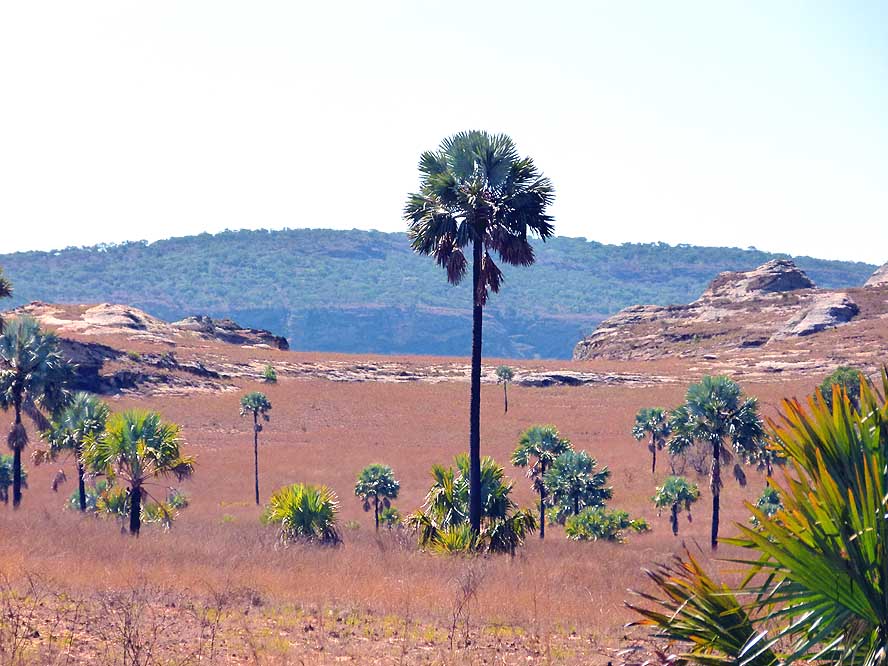
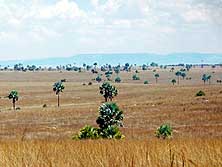
- 175
Outside of the bizarre Isalo National
- Park we find ourselves again in the almost
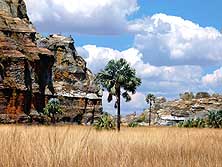
- endless prairie with its Bismarck palms
- (Bismarckia nobilis)
|
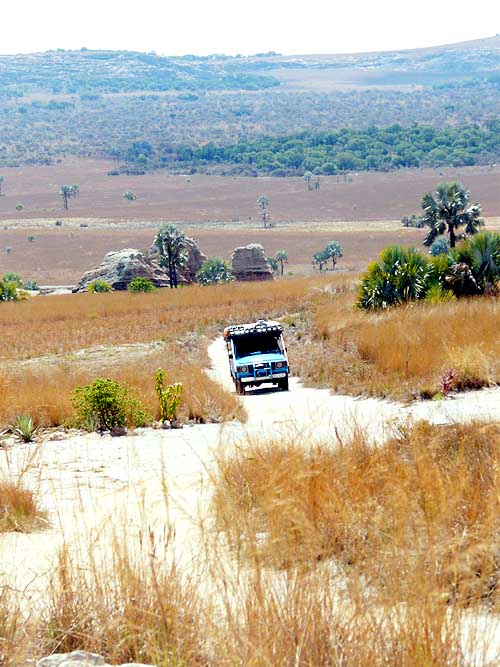
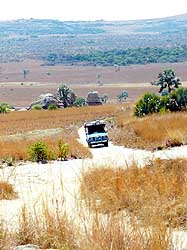
- 176
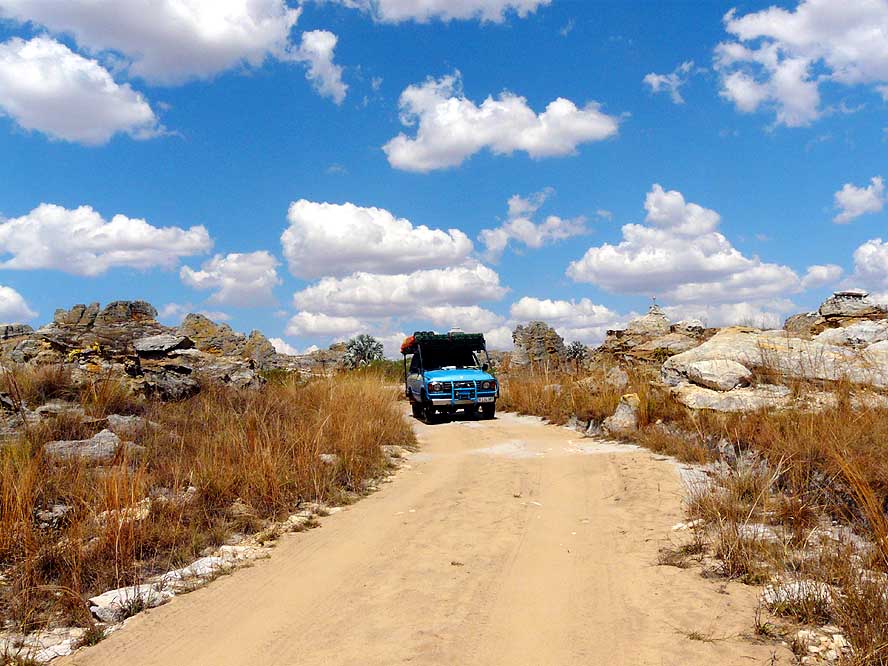
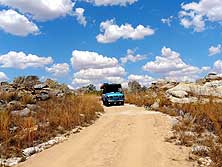
We love to explore with our Land
- Cruiser the narrow dusty sandy tracks
- surrounding the Isalo NP. Guides are
- always mandatory within the park borders
|
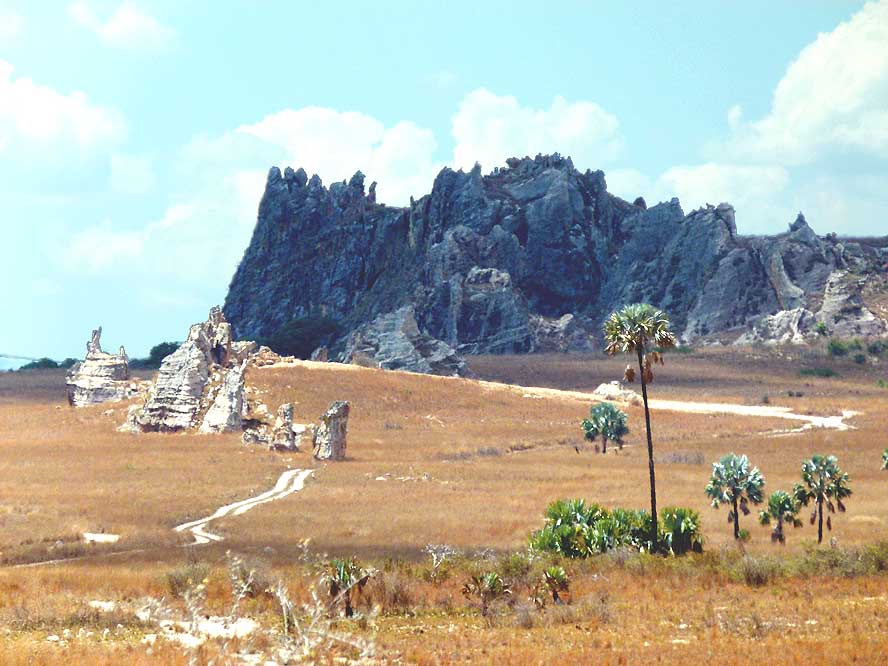
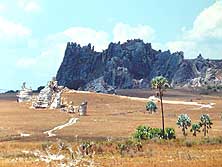
- 177
Bizarre rock formations tower
- ghostly from the prairie on the
- outskirts of Isalo NP
|
-
- Yes we survive – but how! Right beside there is a celebration going on the whole
night and the rhythmic beat of drums and singing keeps us awake most of the time. It just
sounds like in the deep African bush. Next morning we move to the Hotel “Le
Palétuvier” and come from bad to worse. Firstly, there is a party going on until
11pm and afterwards a disco starts until dawn in the neighborhood that we overlooked. When
next day the heavily potholed road to Ifate in the North – a kind of tourist place
with a lovely palm beach – becomes a 15-miles-nightmare for our almost 30 years old
LandCruiser, we decide to leave this dusty coastal area and drive back to Fianarantsoa,
also called “Fiana”.
|
-
-
|
-
-
|
-
-
|
- 178
Exploring the surroundings of the
- Isalo Nationalpark. Can nature be
- more beautiful?
|
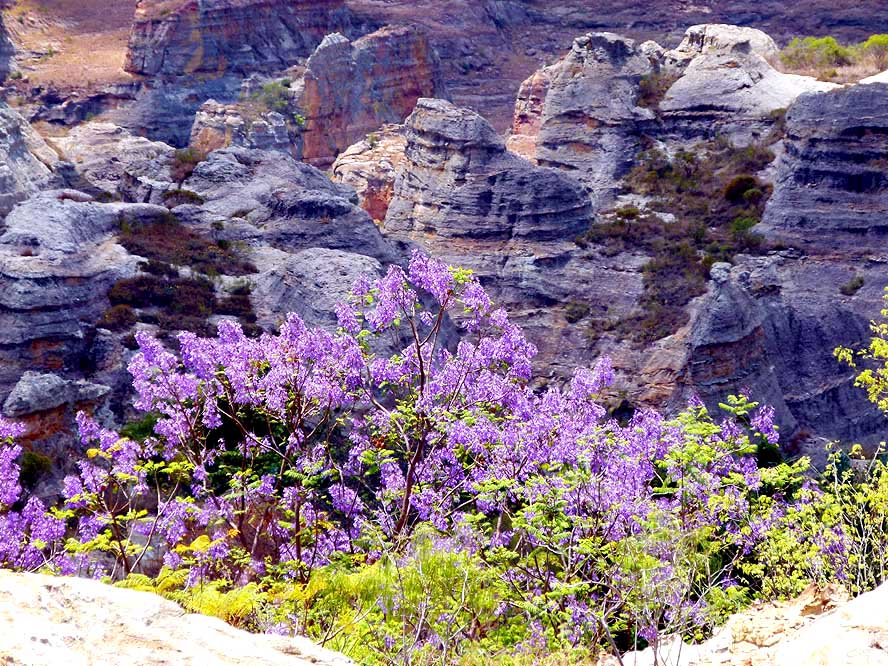
- 179
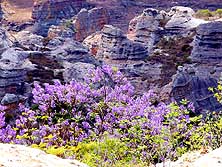
Lilac flowers of a Jacaranda tree
- contrast wonderfully against the grey
- rock formations of the Isalo NP
|
- 180
The white clouds sailing right above our
- heads intensify the beauties of nature. “Free”
- tracks, again outside of the Isalo Nationalpark
|
-
- Fianarantsoa- Ranomafana 45 miles; 2.7 hours
There, we book for the second time into the pleasant Greek “Hotel Cotsoyannis”
and relax in the cozy small garden restaurant with a few beers and a delicious pizza
– the specialty of the house. 32 miles West of Fiana lies along the RN45 the
Ranomafana National Park on the way to the East coast. There the German primatologist
Bernhard Meier discovered in 1986 the golden bamboo lemurs that are not found elsewhere
(it’s said there are another few lemur species on the Comoros and on Mayotte). To
protect them, this park was established in 1990. It is the fourth biggest national park in
Madagascar.
|
-
-
|
-
-
-
-
|
-
-
-
-
|
- 181
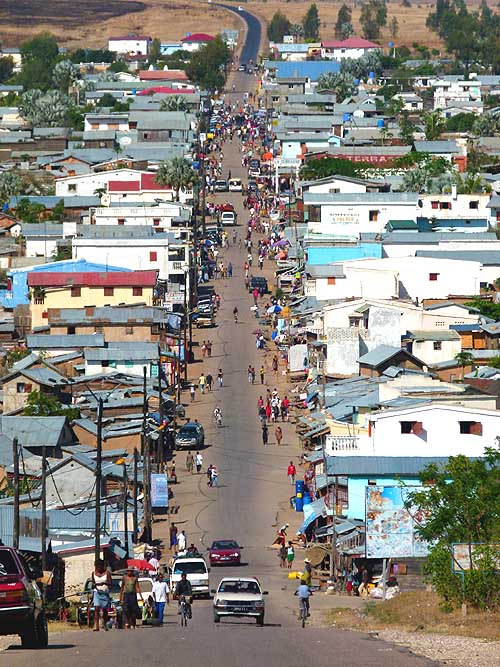
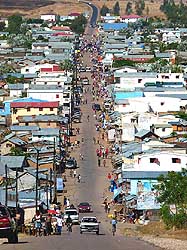
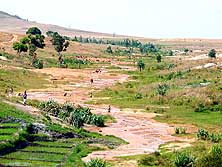
Ilakaka – a village in the middle of
- the endless prairie between Ranohira and
- Tuléar. Since in the nineties sapphires
- were discovered in the region, the tiny
- hamlet advanced to a prosperous town
|
- 182
Along the river at the outskirts
- of Ilakaka City, earth dug up from
- the open sapphire mines is piled for
- miles, still being washed for hidden gems
|
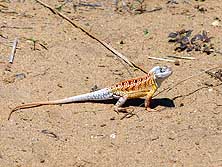
- 183
The lizard remains stock-still when
- we get closer. But as soon as we retreat,
- it speeds away into the bush
|
-
- Hoping to spot also this rare lemur species, we decide to make the detour, passing once
more through lovely scenery with bright rice fields, surrounded by an imposing mountain
chain. On this stretch, we also get our second flat tire in Madagascar, the 168th on our
world tour. We use here as a precaution the second new tube bought some time ago in
Morondava.
|
-
-
|
-
-
|
-
-
|
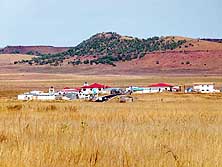
- 184
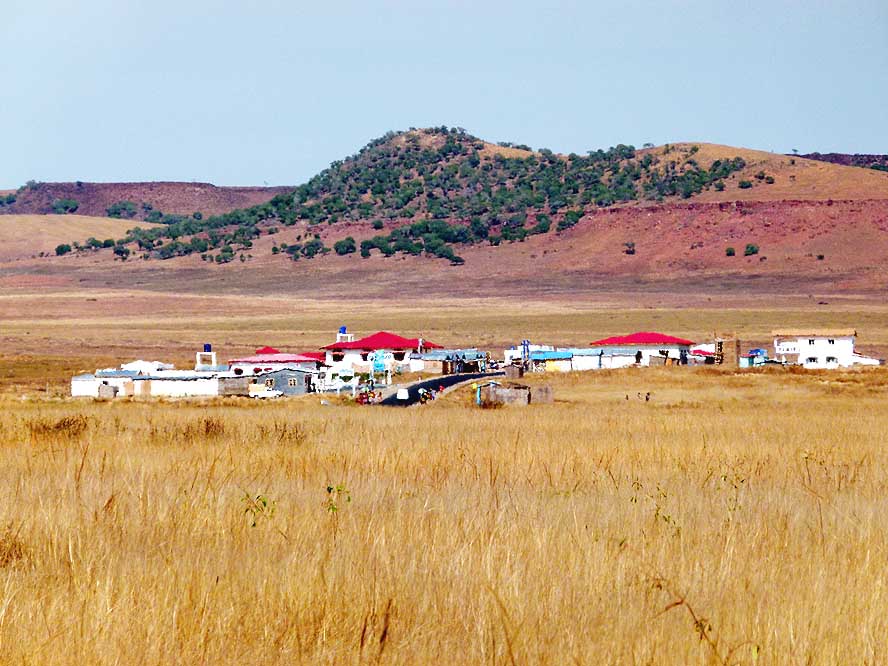
A modern settlement was built in
- the grassland outside of Ilakaka during
- the sapphire boom – mostly consisting
- of luxurious houses of the traders
|
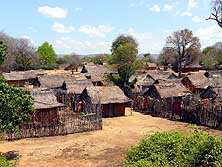
- 185
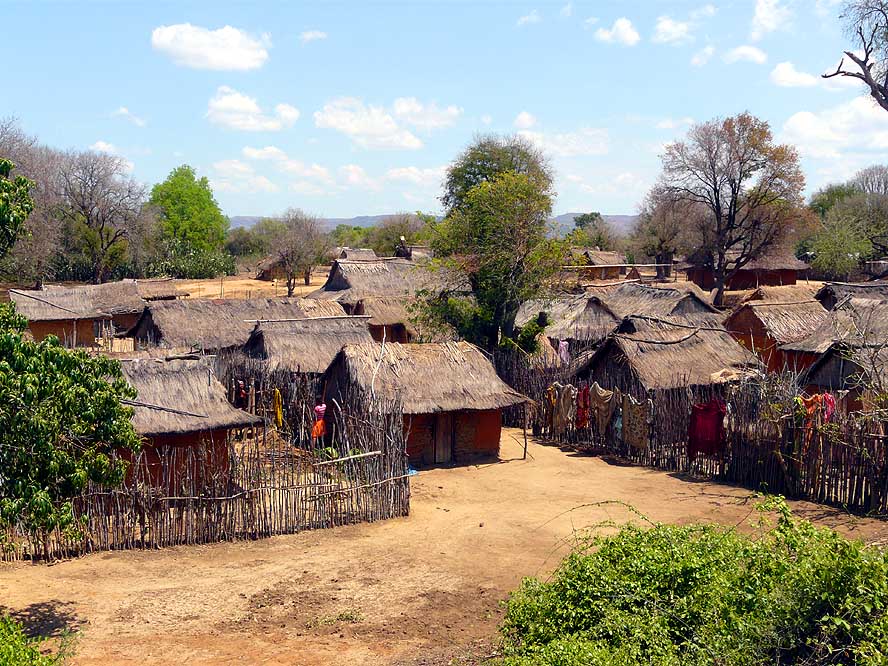
Far from the modern world:
- A traditional and impoverished
- thatched village East of Tuléar
|
- 186
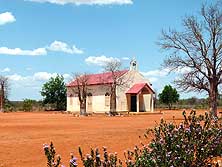
The village church of Andranohinaly,
- surrounded by peaceful nature
|
-
- It is noon when we arrive at the sleepy village of Ranomafana and we immediately feel
comfortable at the “Manja Hotel” situated at the far end. With a lovely view to
the lush green of the rainforest from the terrace restaurant, we first quench our thirst
with one-two local THB beers and order cheese pasta and cheese omelets. Then, with much
anticipation, we head to the National Park and pay our entry fees: Aria 25’000
(US$12) per person and Aria 15’000 for the mandatory guide for two hours.
|
-
-
|
-
-
|
-
-
|
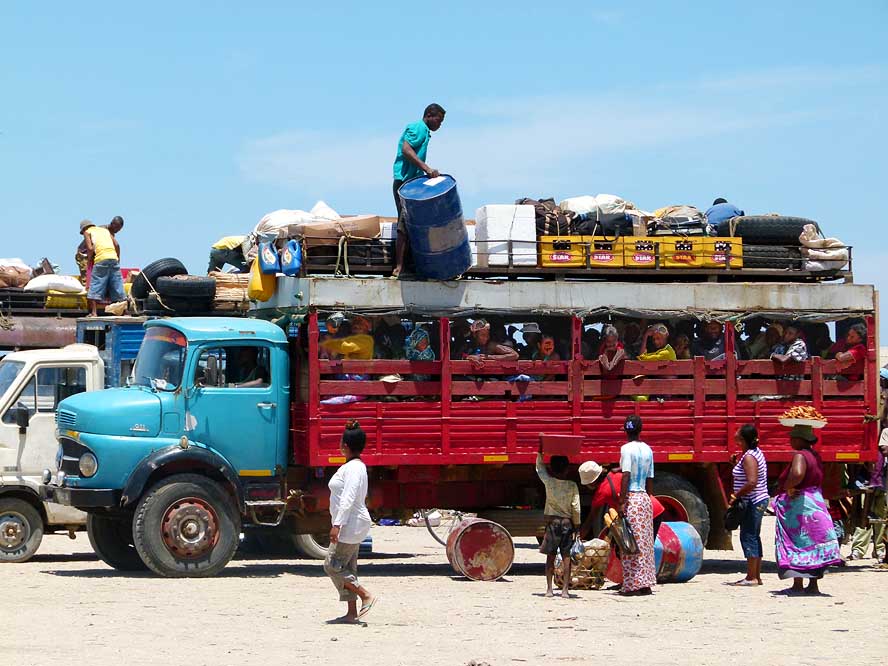
- 187
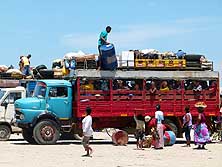
A “camion brousse” – a 4wd bush
- truck – is loaded at the bus terminal in
- Tuléar. It drives to places, which are not
- anymore reachable by a normal bush taxi
|
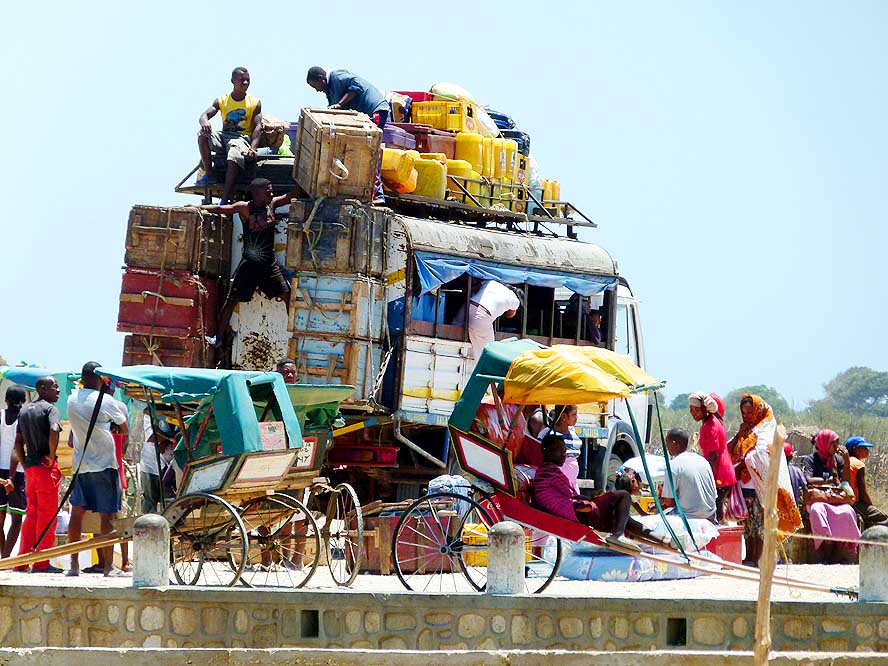
- 188
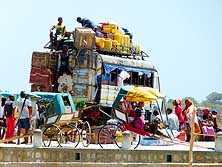
Bus terminals are always fascinating.
- It is incredible how much and what is lifted
- to the roof of the “bush trucks” and even
- strapped to all sides; but it means supplying
- the most inaccessible regions
|
- 189
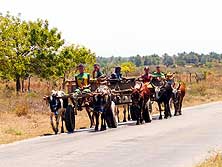
Slowly but steadily also this
- youngsters will reach some
- when their destination
|
-
- There is no way around taking a guide. “Take it or leave it!” is the rule.
Soon we find ourselves criss-crossing the secondary rain forest, not seeing much wildlife,
instead learning more about medicinal plants. A small family of Brown lemurs once crosses
shortly our way and two other species are eating and climbing. Two different birds, a rat
and a frog complete our meager spotting.
|
-
-
|
-
-
|
-
-
|
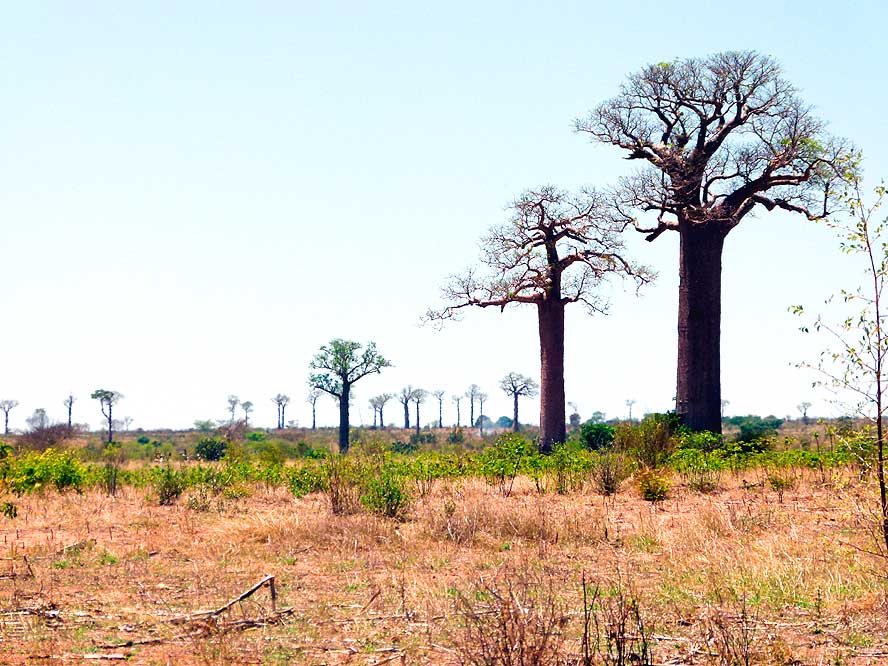
- 190
Not only in Morondava but also
- in Tuléar we see the Baobabs, the bottle
- trees, that can get as old as 1’200 years
|
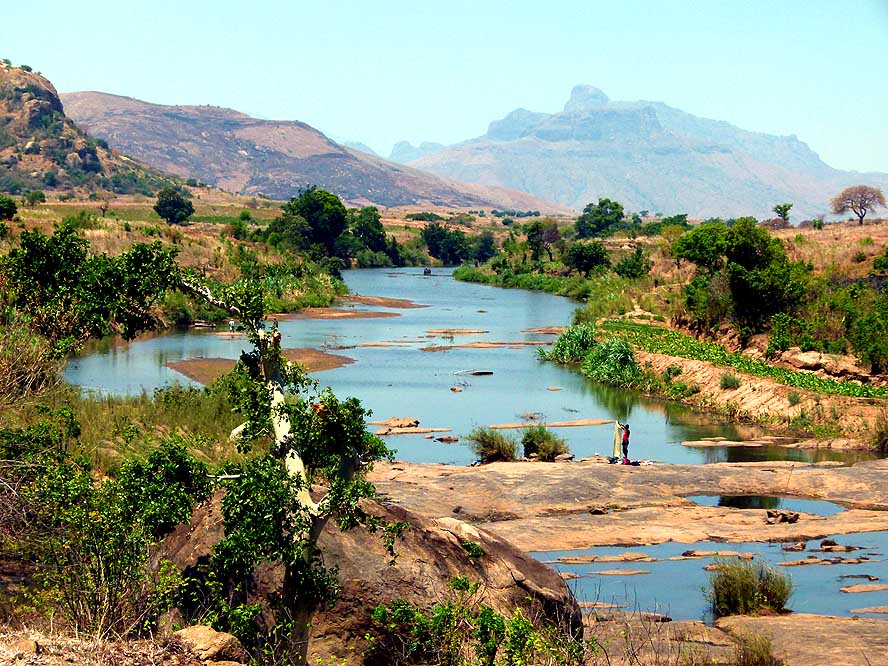
- 191
After the dry and bleak plains, the
- green river scenery is a pleasant sight
|
- 192
One more shot of one of our favorite
- places, the Isalo National Park, on our
- journey back from Tuléar to Fianarantsoa
|
-
- Our booked two hours are long overdrawn, but our guide still continues to look for the
rare lemur type. Suddenly he waves excitedly and points to a tree top. Half hidden by
leaves one of these Golden Bamboo fellows is foraging from branch to branch. Unfortunately
it is too far away to identify it clearly. Well, that was it then and we began to realize
the difference between National Park and a private sanctuary: In the national park the
animals live their life of wilderness – a private reserve tries to show them closer
to the visitor, what is done usually with food. The result of both cases can be pictured
oneself.
|
-
-
-
-
|
-
-
|
-
-
-
-
|
- 193
Lonely and forgotten: A couple of
- thatched huts in “no man’s” land, with-
- out running water – without electricity.
- Famine occurs frequently in this region
|
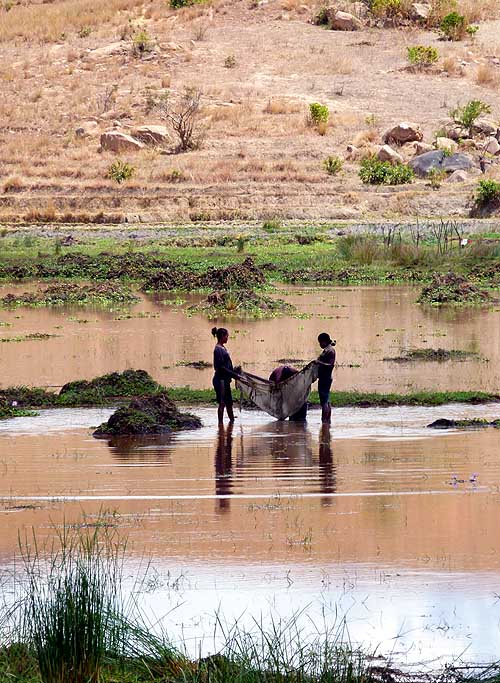
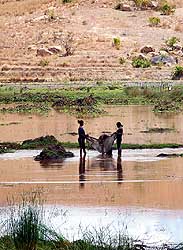
- 194
Everywhere where there is
- a pond people hope that some
- fishes get caught in their net
|
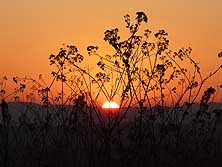
- 195
The morning glow rings in another
- day with new encounters and adventures
|
-
- Back at the park entrance, the guide looks to his watch. Of course, he gets the
additional hour paid! Trenched in sweat and tired we drive the few miles back to our
hotel. It is already getting dark and at three different locations, huge wildfires draw
our attention. All these hills will soon be left only with tree trunks rising ghostly
towards the sky – and this happens right at the National Park border! Nobody
intervenes, nobody cares!
|
-
-
|
-
-
|
-
-
|
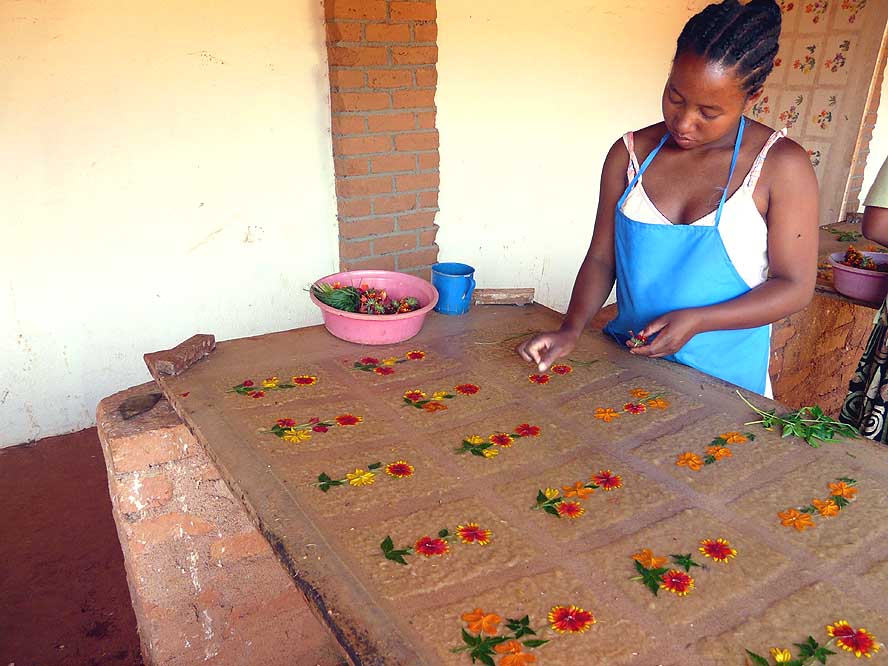
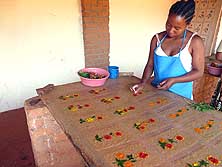
- 196
At the Antaimoro Paper Factory
- in Ambalavao a young woman is pressing
- fresh flowers into the still damp paper made
- from the bark of the Avoha bush. Once
- dried in the sun, it is made into cards
|
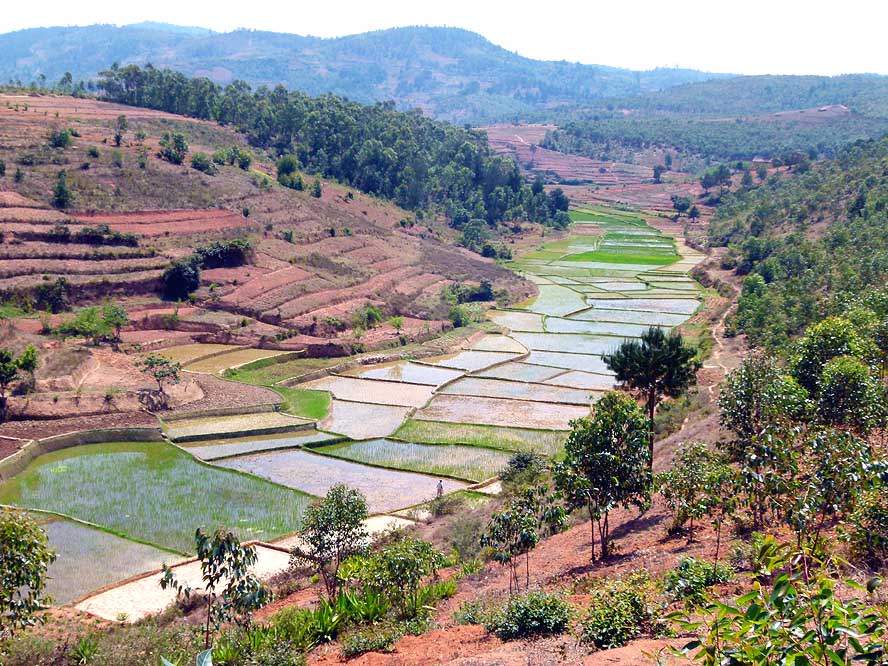
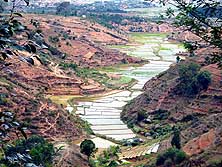
- 197
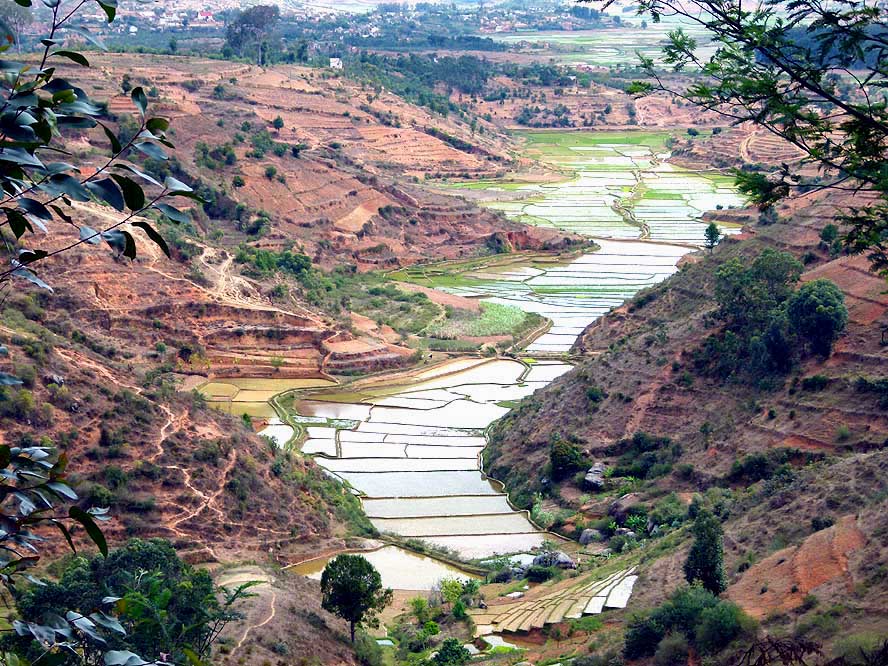
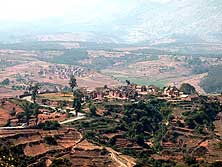
In Fianarantsoa elaborated paddies
- adorn a river valley, cultivated by the
- Betsileo tribe, the third biggest tribe
- of the island of Madagascar
|
- 198
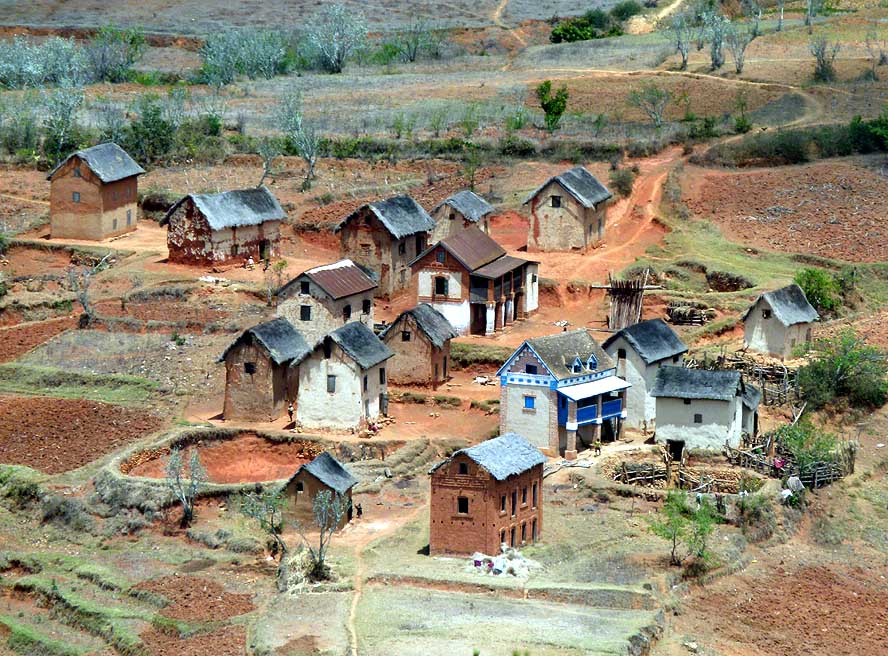
The picturesque traditional hamlets of
- the highland people are small and compact;
- here North of Alak-Ambohimaha, some
- 20 miles North of Fianarantsoa along the
- RN7. Often people are related in one
- way or another to each other
|
-
- Next day on our way back to Antsirabe more to the North, we see the same shocking
scenes: Burning forests, trails of smoke and burnt-off hills. The overexploitation of
nature is just unbelievable. Besides of the fast growing Eucalyptus trees also beautiful,
healthy pine forests are slashed-and-burnt mercilessly. All the more we enjoy all the
masterpieces of rice terraces, which due to the lately heavy rainfall are now shining in a
refreshing green. Three weeks ago, they still were uncultivated.
|
-
-
|
-
-
-
-
|
-
-
|
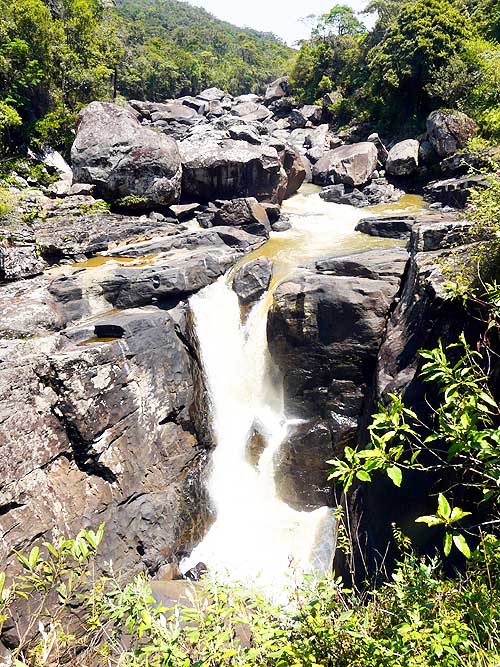
- 199
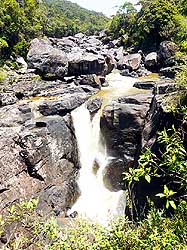
West of Fianarantsoa, in the
- Ranomafana National Park, the
- Namorana River tumbles over
- the Andriamamovoka falls
|
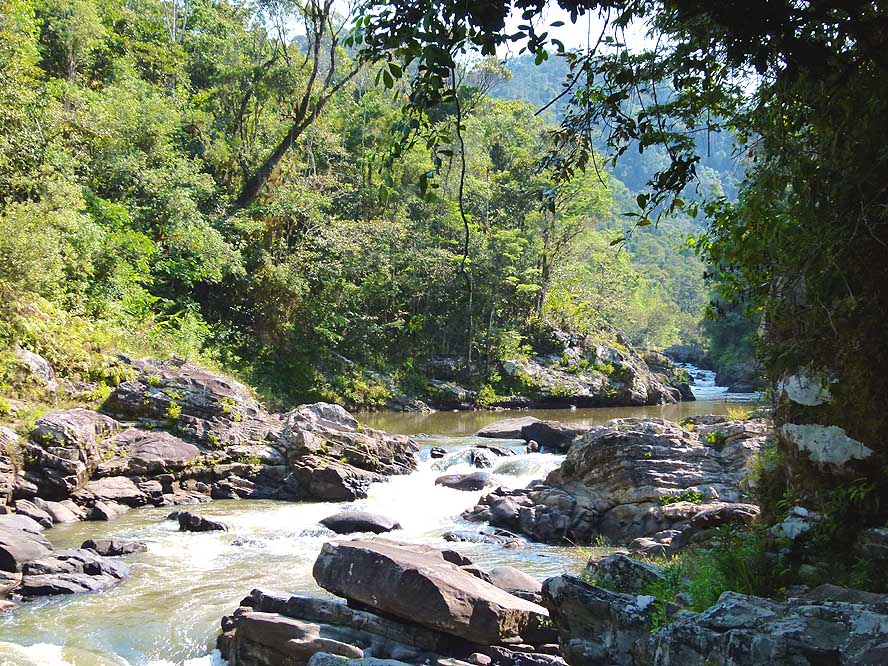
- 200
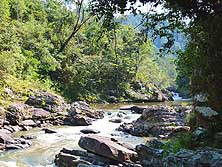
The Namorana River is meandering
- through the stony river bed of the
- Ranomafana National Park. This park
- was set up in 1990 to protect the
- golden bamboo lemurs (Hapalemur
- aureus) that are found only here
|
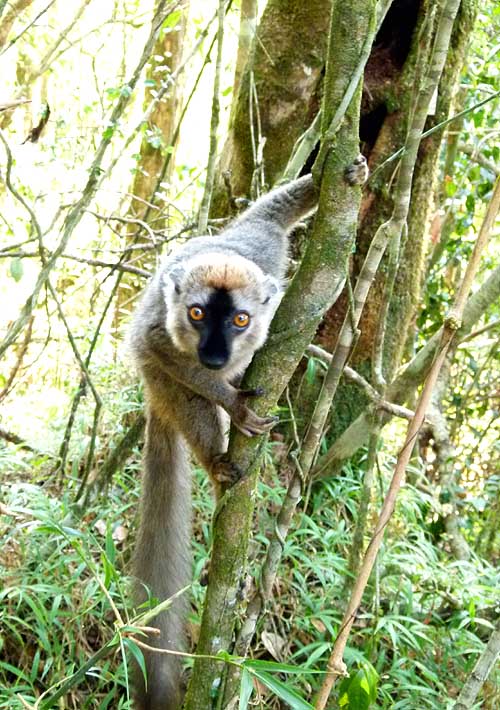
- 201
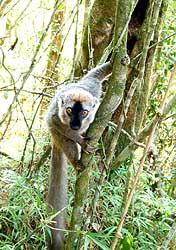
A Common Brown Lemur
- (Eulemur fulvus) eyes us curiously
- on our guided tour through the Rano-
- mafana National Park. It remains the only
- close-up contact. The other species
- are foraging high up in the tree tops
|
-
- Antsirabe is greeting us with heavy downpours, lightening and thunder. Is the rainy
season starting earlier? At the hotel “Le Retrait” we find a room for Aria
45’000 (US$ 21) a night and a secured fenced-in parking for our LandCruiser. After we
have parked, we spot a big water puddle underneath our car: “Is it from us?” we
wonder. Emil checks immediately. “ Yes it is. A rubber plug of the radiator is
broken”, is his diagnose. Not having any replacement means to improvise.
|
-
-
|
-
-
|
-
-
|
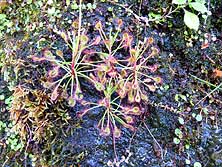
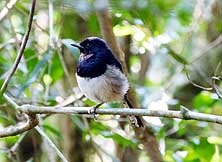
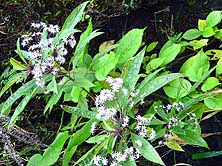
- On our tour through the Ranomafana National Park we discover:
|
- 202
A carnivorous plant (Drosera
- capensis). The insect is attracted by the
- scent of the mucilage glands and gets stuck
|
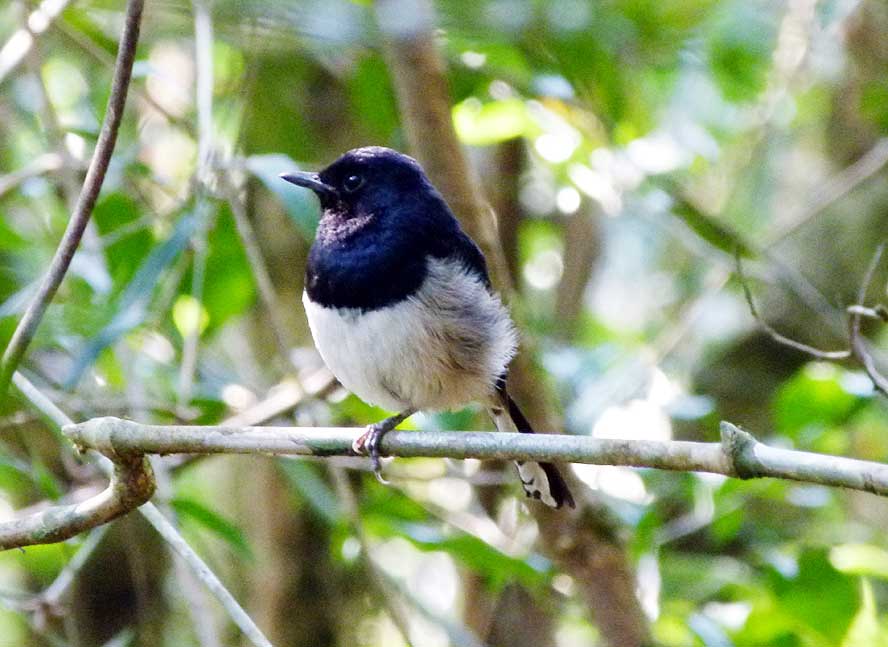
- 203
A bird is resting on a tree branch
- – how might it be called?
|
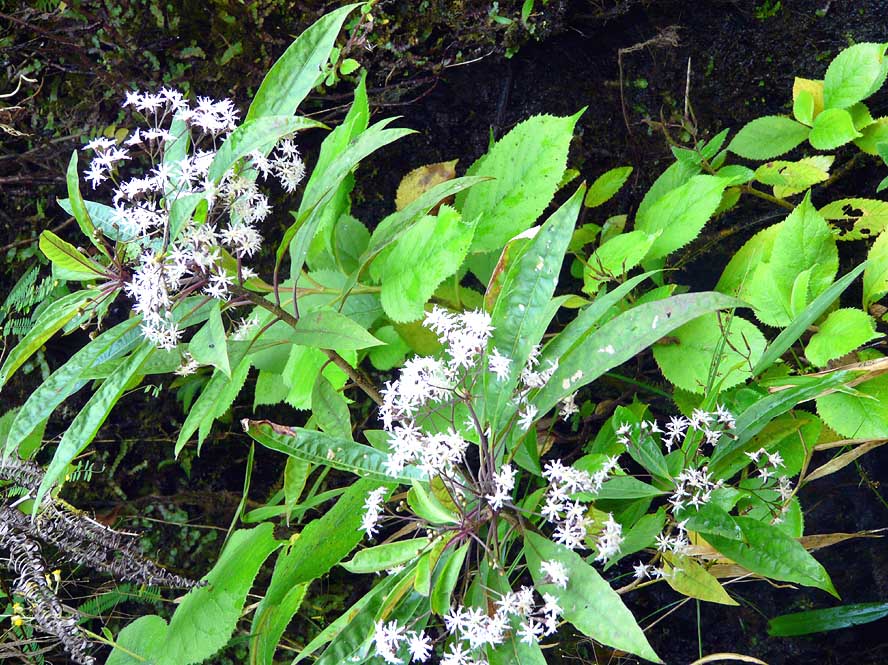
- 204
Delicate white flowers
- grow on humid soil
|
-
- During all those years of traveling, Emil has become a true master on emergency repairs.
Soon he finds a solution also here: An old spark plug, a lot of tape wrapped around and a
clamp – that’s it! “Should it not withhold and should we lose the entire
radiator water on the road, we at least still have our 5¼ gallons of shower water on the
roof” he appeases my worries. But astonishingly it does work – for many more
months and many miles!
|
-
-
|
-
-
-
-
|
-
-
-
-
|
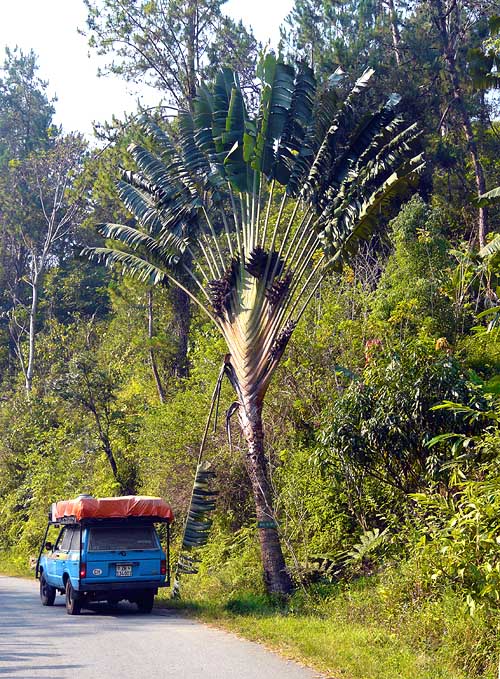
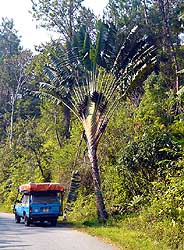
- 205
In the Ranomafana National Park,
- our LandCruiser crosses a “Traveler’s
- Tree“ (Ravenala madagascariensis)
- that got its name from the water
- storage in its leaves
|
- 206
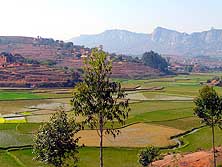
Lush green rice fields and scattered
- brown highland huts against the backdrop
- of a grey mountain range make the valley
- 20 miles North of Fianarantsoa very
- attractive
|
- 207
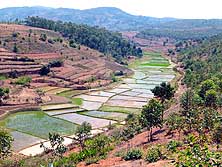
Just more awesome paddies,
- cultivated by farmers of the
- Betsileo tribe near Fianarantsoa
|
-
- Since almost one month, we are continuously driving each day for at least 8 hours. Now
we are ready for a break. And our LandCruiser needs some maintenance: The usual oil change
after 5’000 miles (here it is done with expensive South African oil), measuring the
compression (is fine), cleaning the spark plugs and readjust the valves. We also need to
do some laundry, answer emails, write the October News
for our website, put our first Madagascar pictures online
and, and, and .....
|
-
-
|
-
-
|
-
-
|
- 208
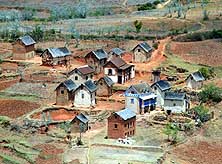
We never get tired to admire
- the peaceful hamlets of the Betsileo
- tribe on our way back from
- Fianarantsoa to Antananarivo
|
- 209
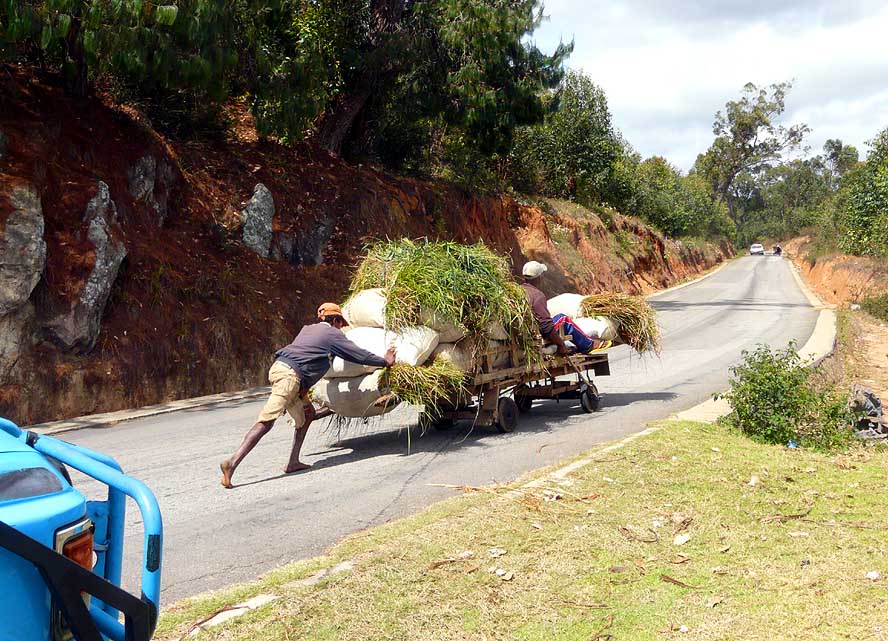
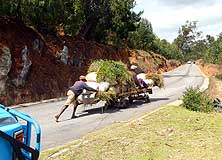
A load of grass is pushed by hand
- on a very simple wooden cart along the
- street. This “poor man’s mean of transport”
- is common on Madagascar’s roads
|
- 210
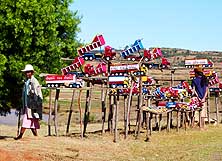
Vehicles made of wood and in
- every size are offered along the road
|
-
- Right around the corner is the “Zandina Restaurant” with Madagascan and
European dishes – crowded around by street vendors, who are selling embroidered table
clothes, vanilla pods, necklaces, sunglasses, exotic plants and a lot more. Very young
girls with babies strapped to their back are peeking through the windows, fully focused on
the eating tourists. They wait until they leave, make the “hungry”-sign and beg
for money. All a bit depressing!
|
-
-
|
-
-
|
-
-
|
- 211
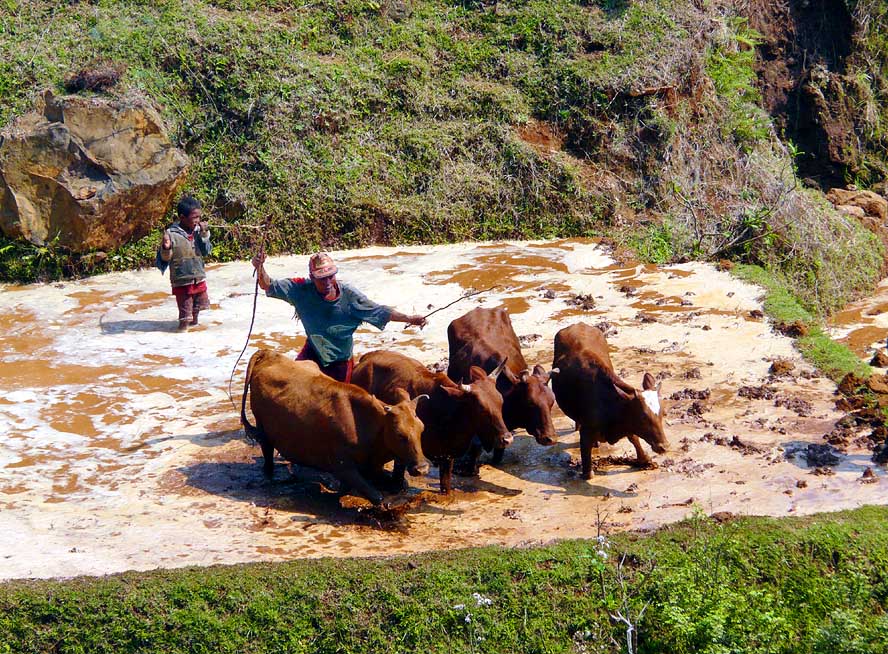
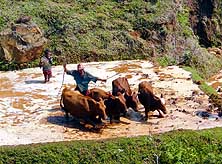
Oxen are chased around and
- around in a circle to aerate
- the soil for a new paddy
|
- 212
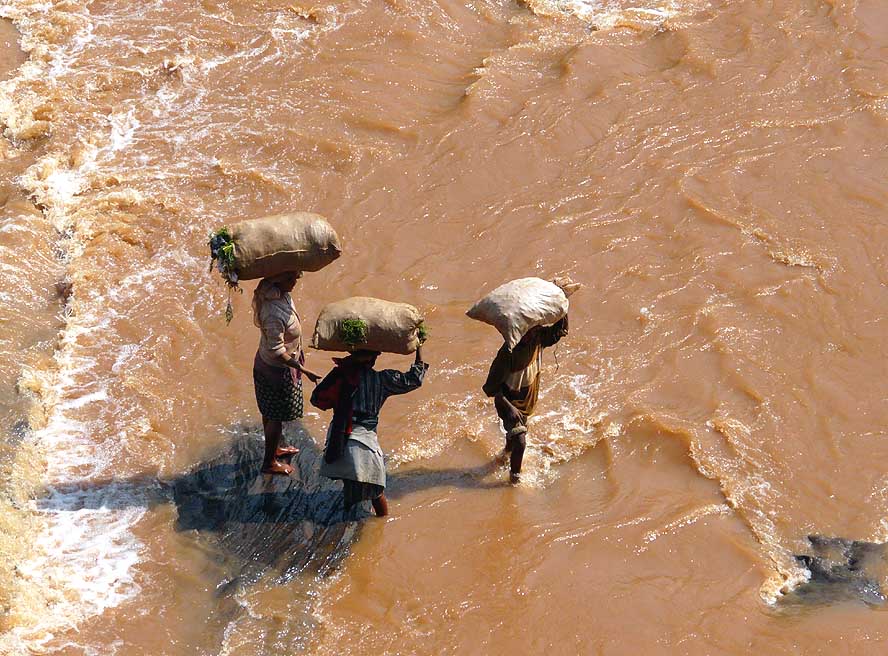
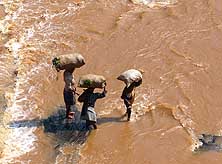
Three women have to do the
- hazardous crossing of the river with
- their harvested carrots .....
|
- 213
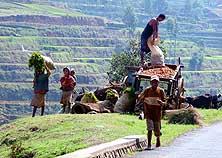
..... where they are loaded
- onto a wooden cart
|
-
- After six nights, at 8am, we are on the move again, towards the North, towards Tana
– the monster. After the fresh rainfalls of the last days, everywhere farmers attend
their paddies with teams of oxen and archaic wooden plough. New seedlings are planted
– all by hand.
|
-
-
|
-
-
|
-
-
|
- 214
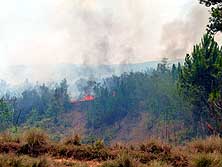
Forests are continuously burnt down
- to get wood for cooking, firewood to burn
- bricks, and charcoal. 80% are already
- irreversibly gone. Consequence: No
- more forests – no more lemurs – no
- more tourists – no income anymore!
|
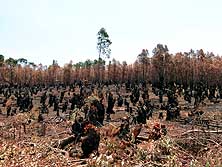
- 215
A sad and distressing sight: Charred
- tree stumps rise ghostly against the sky
|
- 216
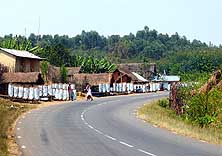
At the entrance of villages loads
- of bags with charcoal line the streets
- waiting to be hauled away
|
-
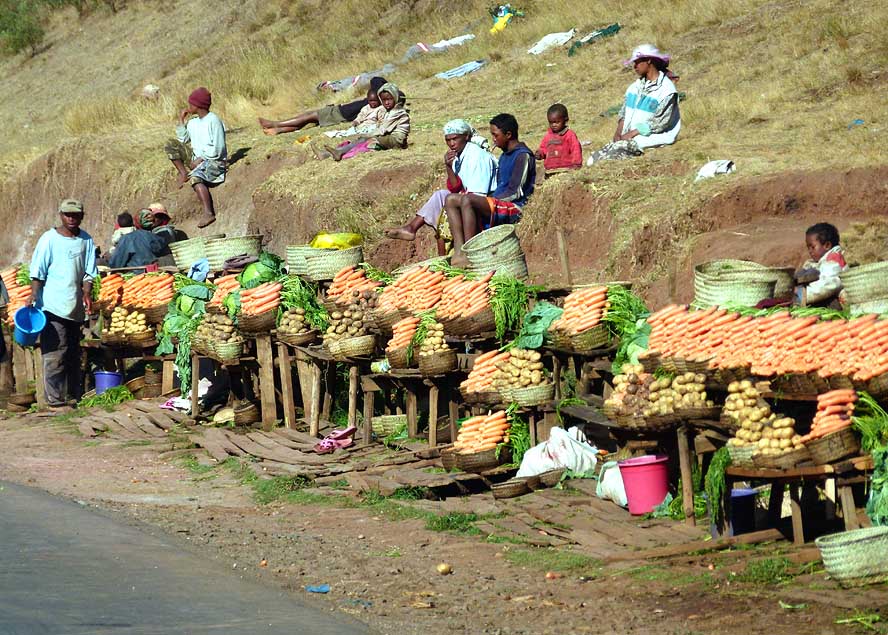
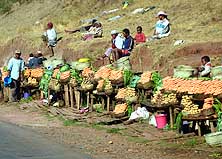
- In the fertile plains, carrots, potatoes and cabbage are growing. The already harvested
vegetable is displayed along the roadside. Now and then, someone stretches a dangling
duck, chicken or rabbit towards us hoping to make some business. And everywhere crowds of
people with bag and baggage are walking along the street.
|
-
-
|
-
-
|
-
-
|
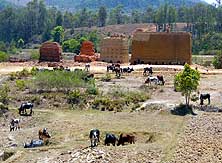
- 217
Typical brickworks between
- Fianarantsoa and the capital Antananarivo,
- where with the already scarce wood
- bricks are burnt to construct houses
|
- 218
Waiting for customers: Farmers
- sell their fresh carrots along the road
|
- 219
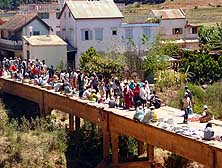
Market life on an old bridge. In
- rural areas there are not many shops.
- Most goods are traded in local markets
|
-
- After many bends and 4½ driving hours, we reach the capital’s gate. What a
different sight from one month earlier when we left the city. Back then the sky was deep
blue and the view was clear. Today it’s hazy and everything looks oppressively drab
and grey. Once more we stock up our supplies at the supermarkets of Leader-Price and
Jumbo-Score – lying at the outskirts of the city – and have a bite of cheese and
spicy salami at the parking area, which we bought at a reduced price. Well, in the evening
at the “Auberge du Cheval Blanc” near the airport, I get a strong diarrhea and
Emil lies three full days in bed after a really bad night. Was it the reduced salami?
|
-
-
-
-
|
-
-
|
-
-
-
-
|
- 220
|
- 221
|
- 222
|
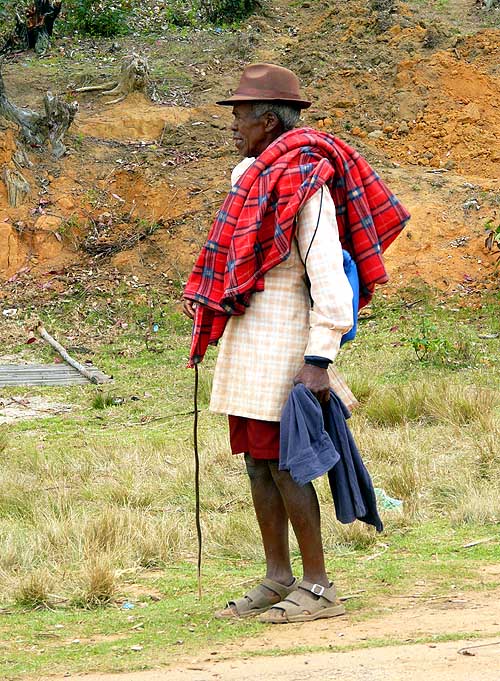
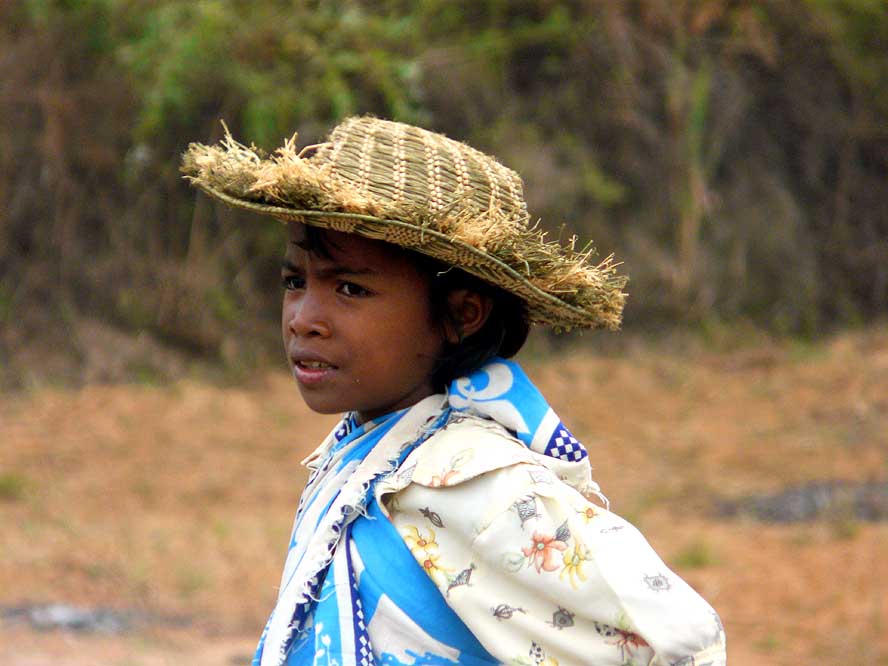
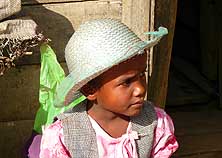
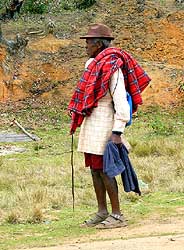
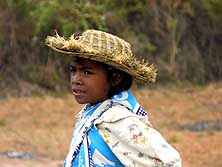
- Personal adornment is important to the Malagasy. Big care is taken to the hats.
- They are worn with pride. From baby to grandfather, almost everyone wears them in all
kind of variations
|
-
|
| More
websites from Madagascar:
|
|